Fading alphabet to fresh paint: How the Dogri script is returning to Jammu’s signboards
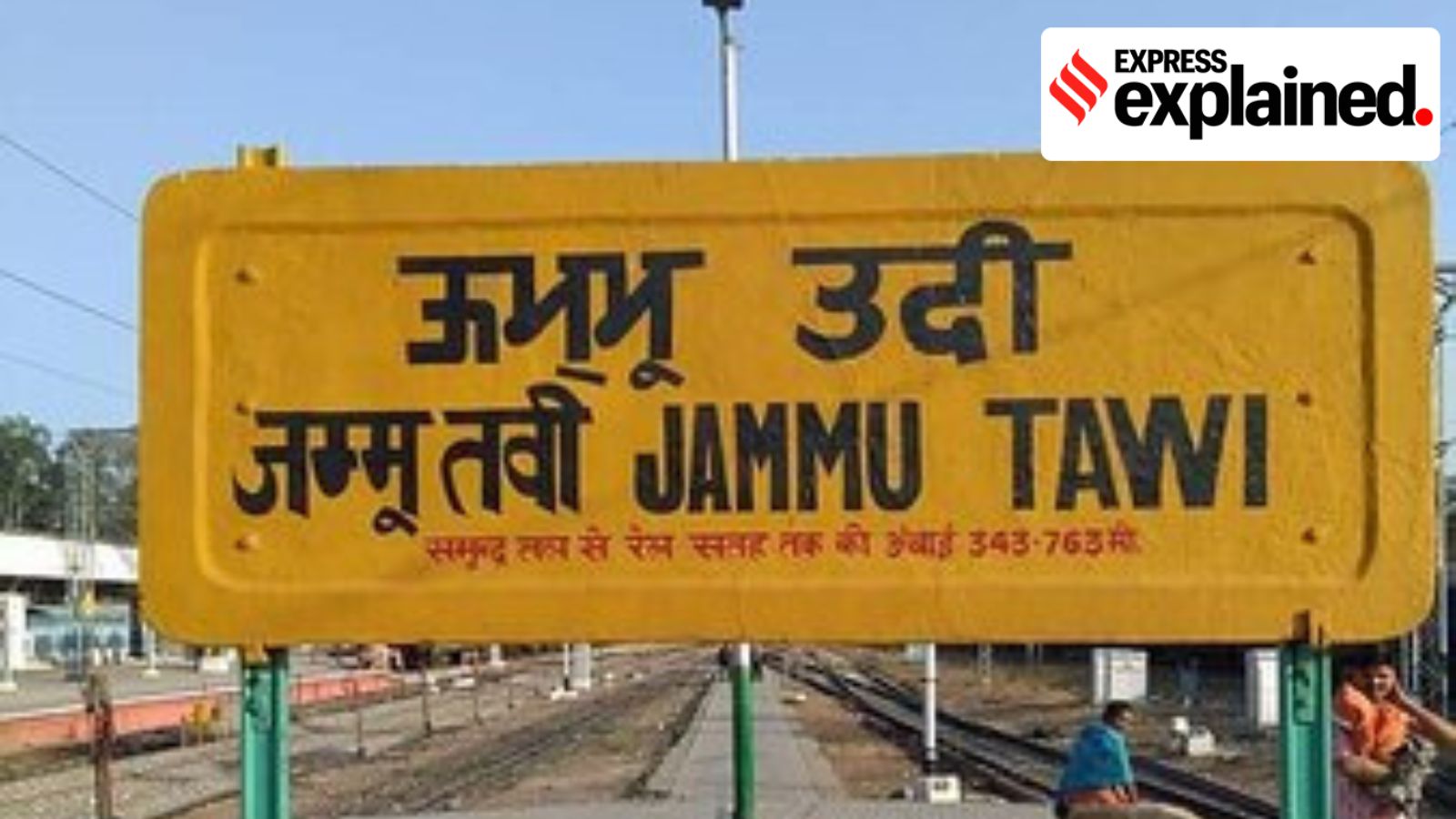
Last week, several new public signboards appeared in Jammu, featuring area names in a third script alongside Devanagari for Hindi and Roman for English. This script is known as "Namey Dogra Akhar," the script of the Dogri language. Dogri, an Indo-Aryan language belonging to the Western Pahari group, has primarily been written in Devanagari, but now civic authorities in Jammu are making efforts to revive it by installing signboards at prominent locations and institutions.
Dogri, spoken by the Dogras, primarily inhabits Jammu division. It is also spoken in smaller groups in Punjab, Himachal Pradesh, and Pakistan-occupied Kashmir. According to the 2011 census, Dogri was the primary language for nearly 2.6 million people in India. Recognized as one of the 22 scheduled languages in India in 2003, it became an official language of the Union Territory of Jammu & Kashmir in 2020.
Namey Dogra Akhar is derived from Takri, the original Dogri script, which was used until Maharaja Gulab Singh, the first Dogra ruler of Jammu and Kashmir, ascended the throne in 1846. Gulab Singh's son, Ranbir Singh, compiled the civil and criminal laws into the famous Ranbir Penal Code during his rule. In 1847, Ranbir Singh asked writers to borrow vowels from Devanagari to make transcription of official orders and documents possible.
This led to the emergence of the Namey Dogra Akhar, or "new Dogri script," in administrative work alongside Persian.
However, the use of Namey Dogra Akhar started declining after Maharaja Pratap Singh, who ruled from 1877 to 1885, replaced Persian with Urdu as the official language of Jammu & Kashmir to simplify administrative work. The script continued to be used by many locals for several years. When Hari Singh became the ruler in 1926, he also promoted Devanagari and Roman scripts alongside the Perso-Arabic script used for Urdu.
In 1944, the Dogri Sanstha adopted Devanagari to popularize Dogri literature, and subsequently, efforts focused on promoting the language, but not the script.
Written by urgent.news from The Indian Express's reporting — not their text. Machine-written — may contain errors; check the original before relying on it.