China’s memories of Mao fade to nostalgia 50 years after his death
The crimson flags on Nanjie village’s “East is Red” Square hang limp in the sweltering summer heat as a trickle of tourists take photos with a towering statue of Chairman Mao Zedong, still gleaming white almost 50 years after he died. The Great Helmsman, who died September 9 1976, is still very much a fixture […]
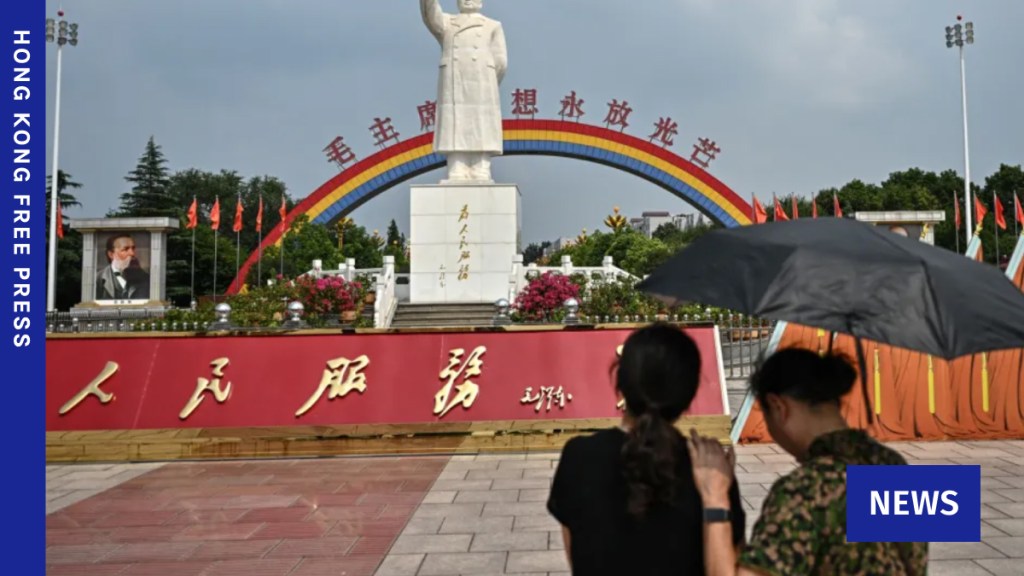
Crimson flags drape the "East is Red" Square in Nanjie village, a relic of Chairman Mao Zedong's legacy, as tourists gaze at his towering marble statue. More than half a century after his death on September 9, 1976, Mao remains a central figure in Henan province, often referred to as "China's last Maoist village." Nostalgia for Mao's egalitarian ideals is growing in a country grappling with slowing economic growth and widening inequality.
Mao, a Communist Party leader who orchestrated the 1949 revolution, championed collectivised ownership to fuel industry and unify the nation. However, his policies are also blamed for mass starvation and millions of deaths during his rule. While the Party still regards Mao as a revolutionary hero, it has acknowledged the Cultural Revolution, a period of Mao's rule, as a "grave mistake." This admission aligns with the views of subsequent leaders.
In Nanjie, Maoist principles of shared ownership persist, while the rest of China has moved past that economic model. Residents reverently maintain murals of Mao and live under his principles, while tourists flock to the village to relive its history. Nearby, visitors meander past uniform apartment blocks adorned with socialist slogans, guided by officials who explain how cooperative ownership funds residents' free housing.
Further north, in the mountain village of Dazhai in Shanxi province, tourists reminisce about Mao's influence. Once touted as a national model under Mao, the village is now overrun with Mao paraphernalia, from posters to ceramic dishes. However, references to the Cultural Revolution are strictly censored. The decade-long purge targeted intellectuals as "class enemies," shuttering schools and stalling China's education and development progress.
The sanitised history of Mao has provided fertile ground for youthful romanticisation among those frustrated by long working hours and intense academic competition. A recent viral Bilibili video series criticised the 2017 movie 'Youth' for subtly glorifying the Cultural Revolution, sparking controversy. Despite the censoring of Mao's darker chapters, his face adorns Chinese banknotes, his portrait gazes over Tiananmen Square, and he rests in a preserved mausoleum.
Written by urgent.news from Hong Kong Free Press - China's reporting — not their text. Machine-written — may contain errors; check the original before relying on it.