Who will control the Arctic? Growing power struggle between Russia, China and the US | Explained
The Arctic is becoming increasingly important because of its strategic location, military value, shipping routes and natural resources.
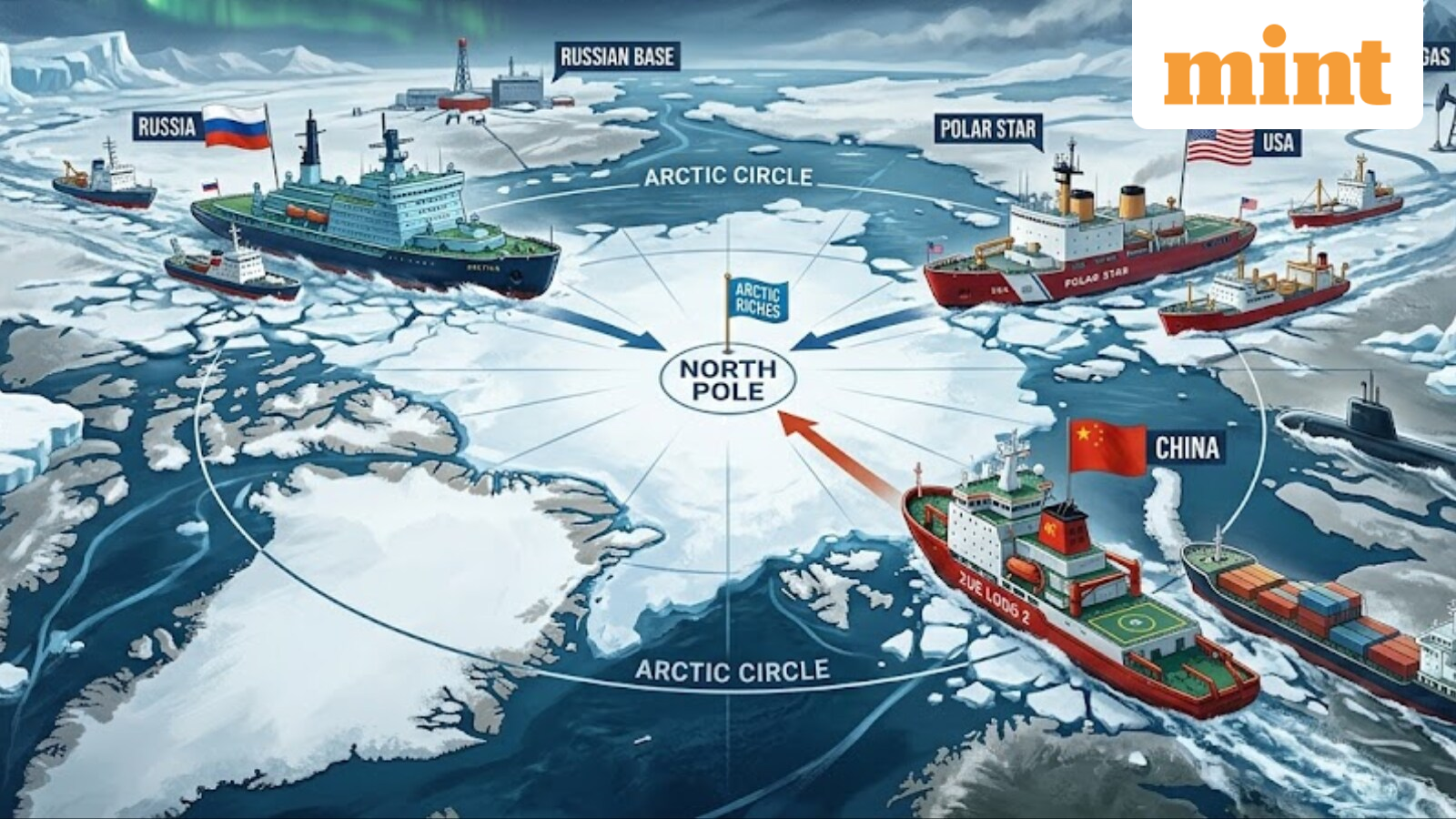
The Arctic region is becoming a focal point of geopolitical competition among major powers, particularly the United States, Russia, and China. While the United States has recently sought to strengthen its presence in the Arctic through talks of potential acquisition of Greenland, Russia maintains a significant military presence in the region.
With the melting of polar ice due to climate change, the Arctic's strategic value has intensified. New shipping routes, such as the Northern Sea Route and Northwest Passage, have opened up, offering potential commercial benefits. Nonetheless, the environmental impacts of this thawing are considerable, bringing both threats and opportunities.
Russia's military presence has been bolstered, with the Royal United Services Institute highlighting investments in modern submarines, radar, drones, and missile systems. However, Western nations are concerned about the pace of Russia's expansion in the Arctic, particularly in the wake of Russia's invasion of Ukraine and subsequent suspensions of Arctic cooperation.
China, while not having territorial claims in the Arctic, has shown growing interest due to its strategic location, potential maritime trade routes, and its alliance with Russia. Greenland, a strategic territory of Denmark and a close US ally, is a source of contention as well, with US President Donald Trump arguing for its acquisition for national security reasons, despite Denmark's military capabilities.
In conclusion, the Arctic's changing dynamics, driven by geopolitical interests, climate change, and resource potential, are reshaping the global strategic landscape, with significant implications for international relations.
Written by urgent.news from Live Mint's reporting — not their text. Machine-written — may contain errors; check the original before relying on it.