Starts With A Bang podcast #133 – The Milky Way’s center
Here in our Universe, there are all sorts of places where stars are actively forming right now. Our galaxy is going through a relatively quiet phase at present as far as star-formation is concerned, but that rate was much higher in the past: perhaps 30 (or more) times higher than what it is today. If we want to understand what our galaxy was like earlier on, we have two ways to go about it: look…
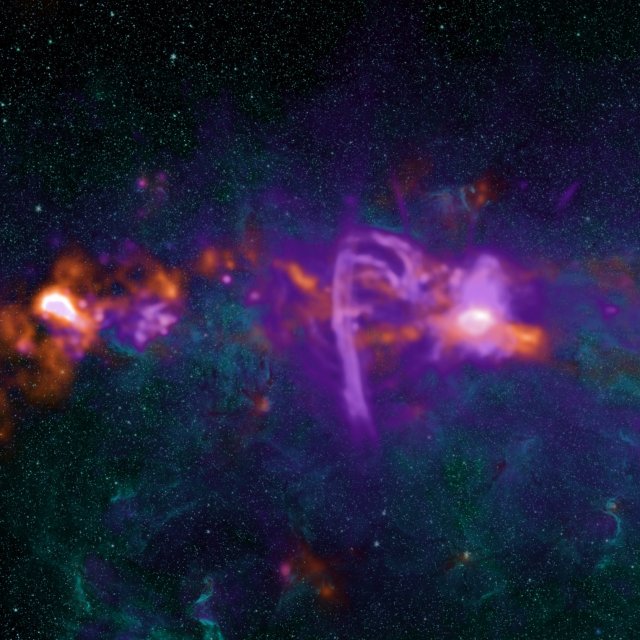
In the universe, numerous areas witness active star formation. However, our galaxy, the Milky Way, is experiencing a relatively calm period currently for star formation. This rate was significantly higher in the past, possibly up to 30 times more than it is today.
To comprehend what our galaxy looked like in the past, researchers can either observe distant places, which poses the challenge of not being able to study those areas in detail, or focus on the galactic center, which has the highest star formation rate among all regions in the Milky Way. The central molecular zone (CMZ), located approximately 26,000 light-years away from Earth near our supermassive black hole, experiences the most activity.
This area, which measures just two degrees across and half a degree high, has remained hidden from humans for most of the universe's history due to interference from neutral matter and cosmic dust that blocks optical light.
In recent decades, as multiwavelength astronomy has evolved, the mysteries of the galactic center have begun to be uncovered like never before. To discuss this fascinating region, Starts With A Bang podcast #133 features an interview with Dr. Cara Battersby, a professor from the University of Connecticut. This episode delves into the CMZ and explores the various aspects that make it a subject of intense scientific interest.
Written by urgent.news from Big Think's reporting — not their text. Machine-written — may contain errors; check the original before relying on it.