Scientists Put Caterpillars in an Ultraquiet Chamber to Learn How They Hear Without Ears
The research could do more than help unlock the mystery of caterpillar hearing. It could also help make microphones better.
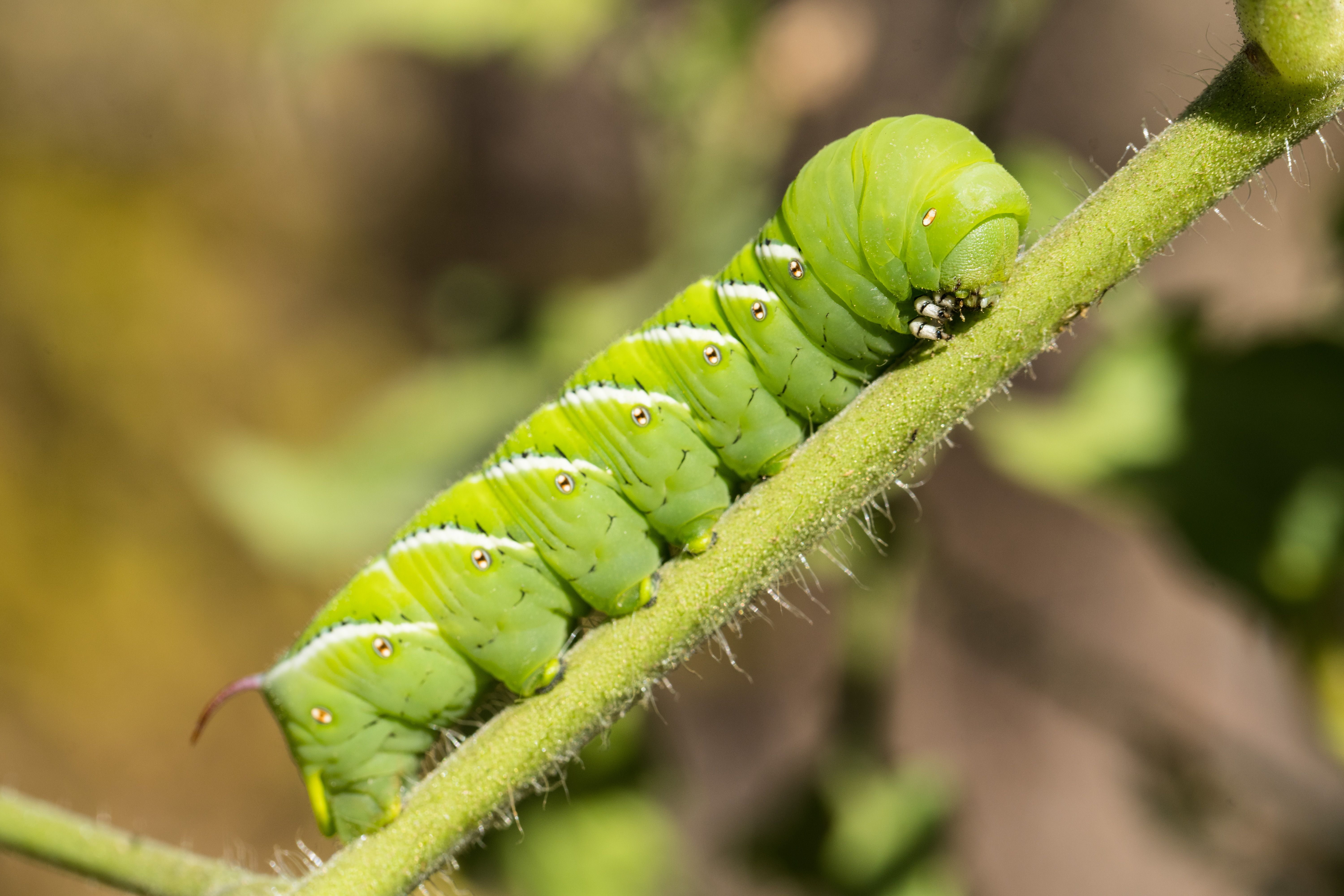
Scientists have discovered that tobacco hornworm caterpillars, despite lacking visible ears, possess the ability to sense predators like wasps. Researchers from a team of biologists and engineers are investigating how these caterpillars perceive their surroundings, with a particular focus on their supersensitive hairs. These hairs enable the caterpillars to react to vibrations, but they also respond to airborne sounds, even when vibrations are minimal.
To study this unique sensory system, scientists conducted experiments in an anechoic chamber, an environment designed to block out all external noise. In this chamber, caterpillars were exposed to various vibrations, and their reactions were meticulously recorded using an accelerometer. When the vibration intensity fell below a certain threshold, the caterpillars exhibited no visible response.
However, when exposed to airborne sound, even below this threshold, the caterpillars continued to react. This observation suggests that the caterpillars are hearing the airborne sounds rather than merely sensing the corresponding vibrations through the platform. The caterpillars' "ears" are actually tiny, microscopic hairs. Despite their lack of visible tympanal organs, found in most mammals, these hairs play a crucial role in the caterpillars' hearing ability.
By removing these hairs, researchers found that the caterpillars' reactions to sound decreased significantly across different frequencies. This finding highlights the critical role these specialized hairs play in the caterpillars' ability to detect sound frequencies. The study of caterpillar hearing could potentially pave the way for the development of new, more affordable microphone technology.
By mimicking the caterpillars' biological hearing system, future microphones could be designed to measure air particle velocity, in addition to sound pressure levels. This would enable the microphones to determine the direction of the sound source, which is particularly useful for applications such as hearing aids. The research into how insects hear using specialized hairs not only sheds light on the natural world but also inspires innovative technological solutions.
Written by urgent.news from Wired Science's reporting — not their text. Machine-written — may contain errors; check the original before relying on it.
This story
This is one outlet's version. Read the fullest account.