Scientists Put Caterpillars in an Ultraquiet Chamber to Learn How They Hear Without Ears
The research could do more than help unlock the mystery of caterpillar hearing. It could also help make microphones better.
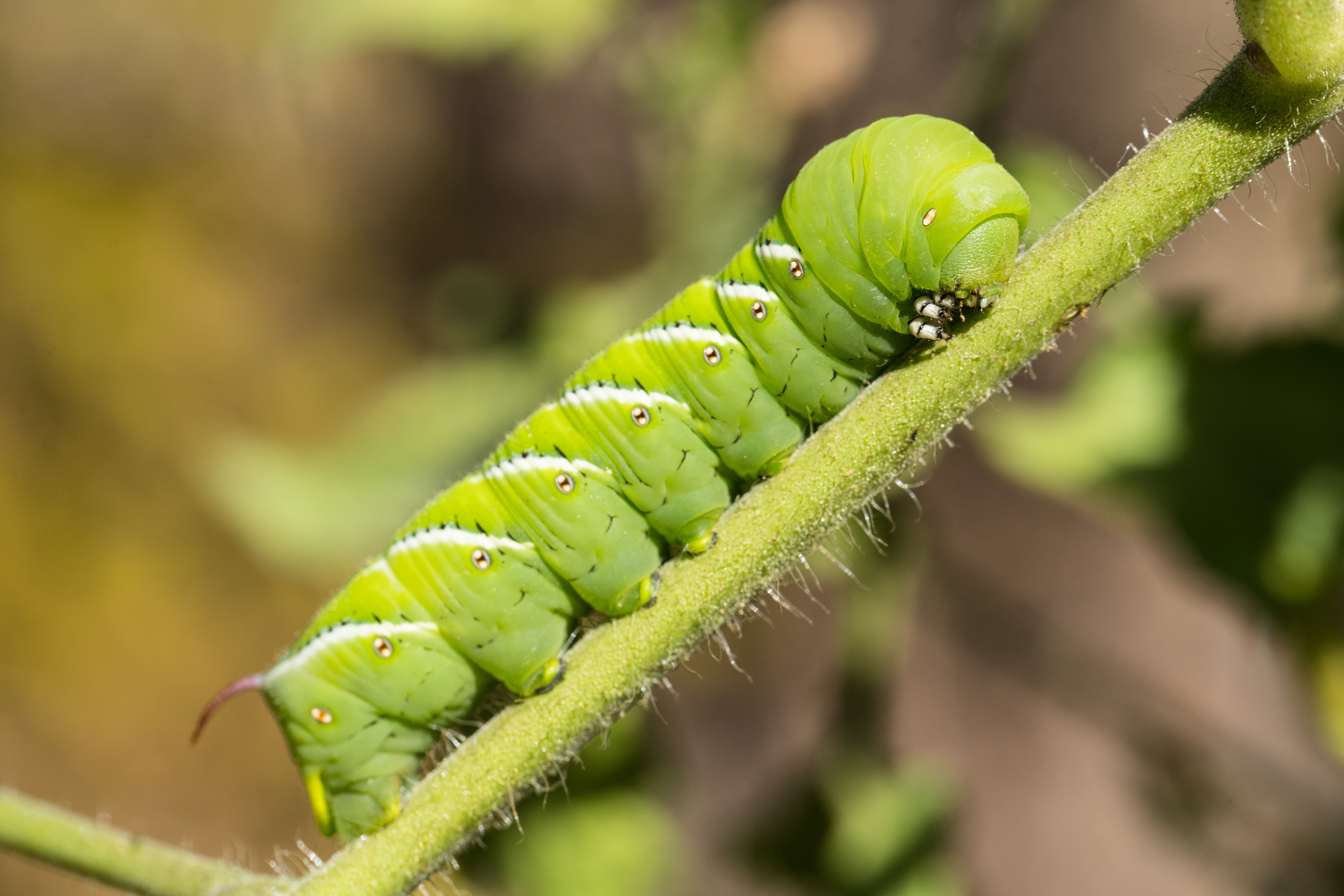
Scientists have discovered that tobacco hornworm caterpillars can sense predators like wasps without traditional ears. The researchers put these caterpillars in a lab with ultra-quiet conditions to study their unique hearing mechanism. These caterpillars possess tiny, highly sensitive hairs on their bodies, which they utilize to detect sounds and vibrations.
The team observed that the caterpillars responded to airborne sounds and vibrations differently. They noticed that caterpillars only react when exposed to sounds below a specific threshold, indicating that their sensitivity to sound is indeed distinct from their response to direct vibrations. The caterpillars' hearing is not based on traditional tympanal organs found in most mammals and insects.
Instead, they have specialized hairs that react to sound waves' vibrations. The researchers discovered that when they removed these hairs, the caterpillars' responses to sound decreased significantly. This finding suggests that these hairs could be the caterpillars' "ears." Studying caterpillars' hearing mechanisms could lead to the development of new, more cost-effective microphone technology by replicating the caterpillars' specialized hairs in place of traditional microphone membranes.
Such microphones could have a variety of applications, including improved hearing aids that can detect both the volume and direction of sound.
Written by urgent.news from Wired's reporting — not their text. Machine-written — may contain errors; check the original before relying on it.