iPhone 18 Pro: Everything M6 Tells Us About the A20 Chip
Apple announced the M6 chip last week, just ahead of its September iPhone event, providing the clearest indication yet of what the A20 will bring to the iPhone 18 lineup. Apple silicon generations share much of their architecture across the A-series and the M-series, so a new A-series chip normally functions as a partial preview of the M-series chip that follows it. This year the order reversed;…
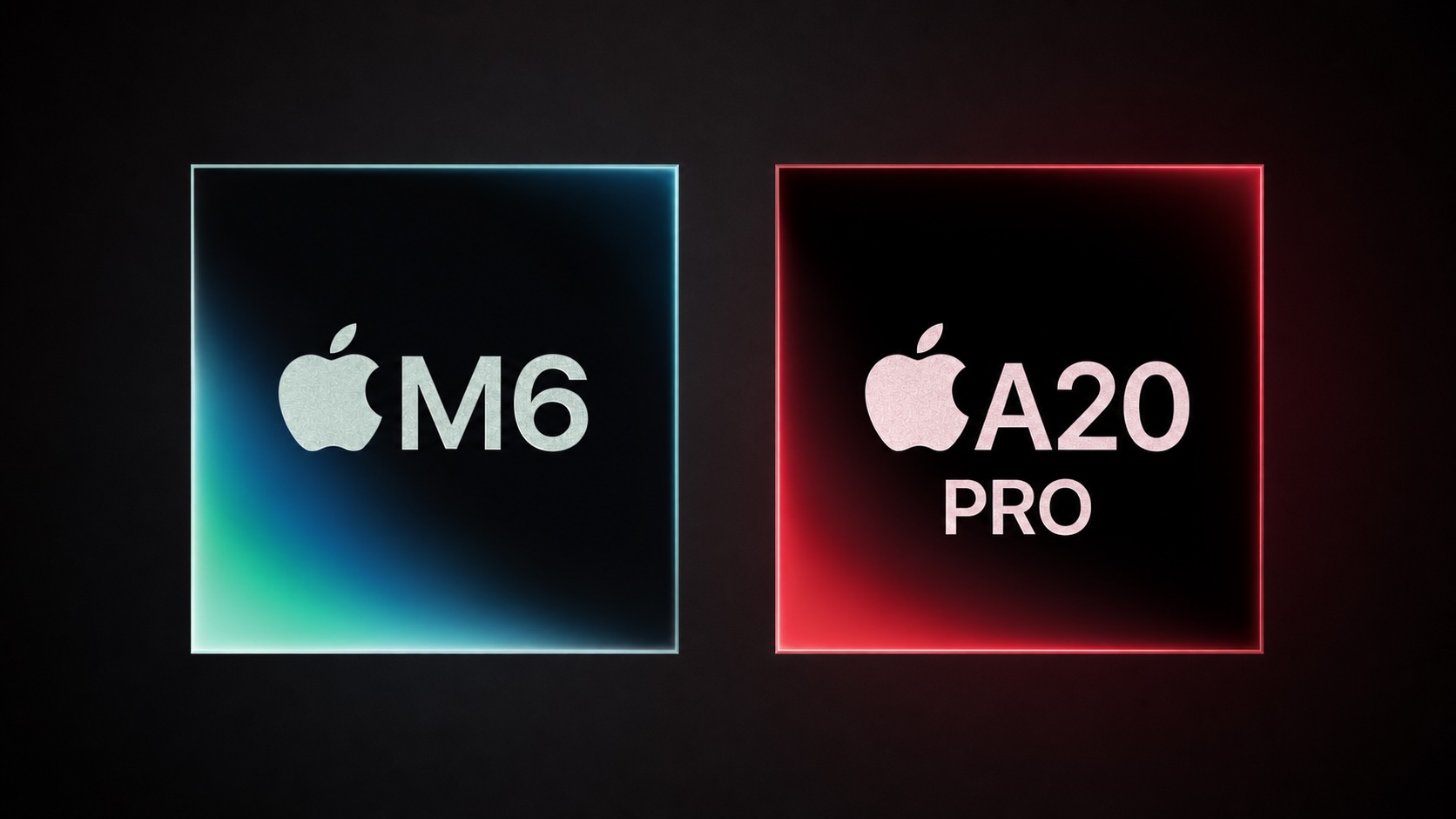
Apple unveiled the M6 chip last week, signaling a potential preview of the A20 chip set to power the upcoming iPhone 18 Pro. Similar to how previous Apple silicon generations, the M6 seems to foreshadow the M20 chip. The M6 marks Apple's first utilization of TSMC's 2nm (N2) process, suggesting that the A20 will also be built on this advanced manufacturing technology.
Apple's shift to a smaller 2nm process has allowed the M6 to achieve higher transistor density, leading to increased performance within a smaller area. This change in manufacturing process has been previously seen in Apple's A-series chips, which typically debut new nodes on the A-series to validate yields, a strategy that now applies to the M6 as well.
The announcement of the M6's dual 16-core Neural Engine implies a doubling of processing power compared to the previous 16-core version found in the A17 Pro. This advancement aligns with reports of Apple's move to a new WMCM (Package-on-Package) architecture, which integrates memory onto the same wafer as the CPU, GPU, and Neural Engine for faster data transfer.
While the M6's GPU and AI capabilities exhibit a modest 30% improvement over the M5, the A20 Pro's enhancements are expected to be incremental rather than a significant leap. The M6 GPU offers 50% increased geometry rates, new shader core architecture, revised Dynamic Caching, and hardware-accelerated ray tracing, all of which are expected to carry over to the A20 Pro.
Memory bandwidth improvements on the M6 are reported to be around 10% higher than the M5, with Apple sourcing high-speed LPDDR5X memory from Samsung for the iPhone 18 lineup. This modest increase in memory bandwidth suggests that any notable performance boost for the A20 Pro in handling on-device models will likely stem from the WMCM packaging and other architectural enhancements rather than the memory itself.
Notably, the M6 Media Engine supports hardware-accelerated H.264, HEVC, ProRes, and ProRes RAW formats, but there is no mention of AV1 encode, making it unlikely that the A20 Pro will introduce AV1 encode capabilities on a new process node.
Written by urgent.news from MacRumors's reporting — not their text. Machine-written — may contain errors; check the original before relying on it.