I asked kinesiology expert and 15-time Ironman finisher, Jen Rulon, for a mobility workout to start in your 40s. Here’s what she said
Here's the simple mobility routine to try twice per week.
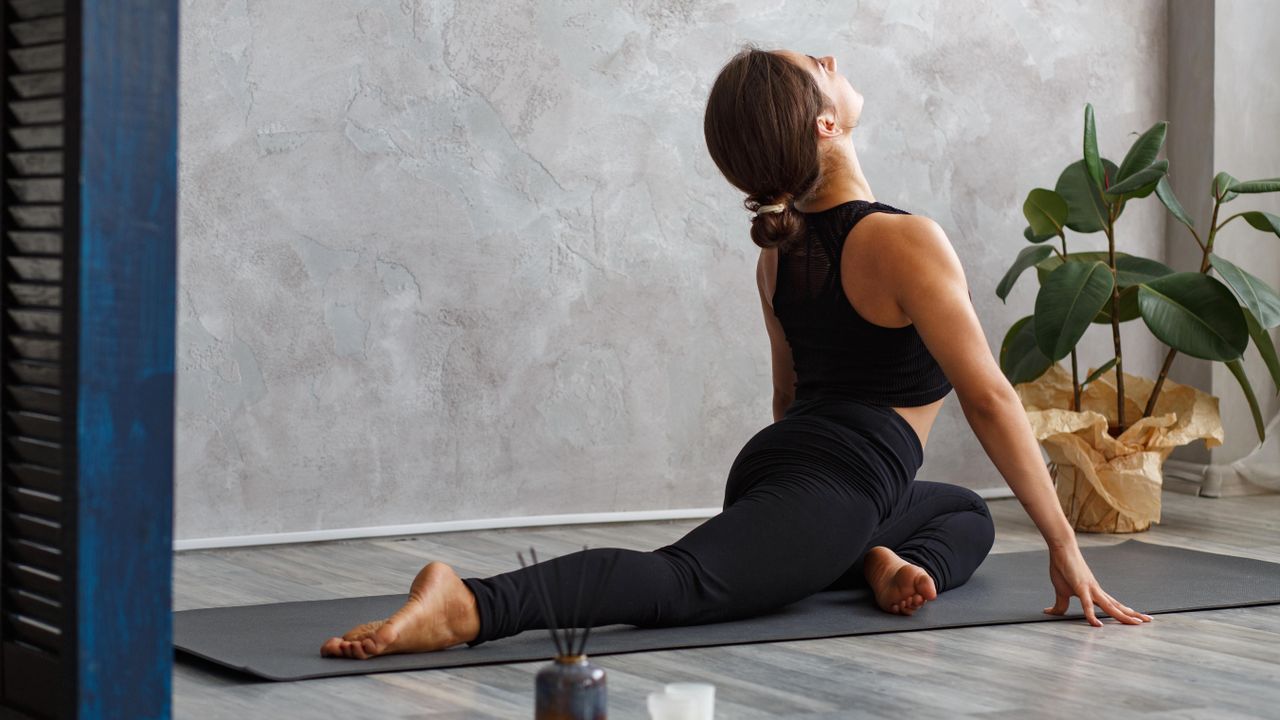
Mobility exercises are crucial for maintaining joint health, preventing injuries, and building muscle strength as we age. They differ from flexibility exercises, as they involve active movements through a joint's full range of motion. Jen Rulon, a 15-time Ironman triathlon finisher and kinesiology expert, recommends incorporating a simple mobility circuit into your routine, especially if you're in your 40s or beyond. This circuit requires no equipment and can be done two to three times a week.
The circuit consists of four exercises: glute bridge, scorpion, pigeon pose, and cat-cow. The glute bridge targets the hips and opens the front of the hip joint, helping restore correct pelvic alignment. To perform the exercise, lie on your back, bend your knees, and lift your hips off the mat, engaging your core and squeezing your glutes.
The scorpion exercise works on the hips, lower back, and chest muscles. Lie face down, extend your legs, and lift one leg while bending the knee to a 90-degree angle. Drive your heel up and across your body, tapping the floor with your foot if possible. Repeat on each side for 60 seconds.
Pigeon pose opens the deep hip rotators and flexors, improving pelvic alignment and squat depth. Start on all fours, bring your right knee forward, and extend your left leg back. Keep your hips square and hold the pose for 60 seconds on each side.
Lastly, the cat-cow exercise focuses on spine mobility, relieving stiffness from prolonged sitting. Begin on your hands and knees, inhale to arch your back and look up (cow pose), then exhale to round your spine and tuck your chin (cat pose). Repeat the movement, focusing on the spine's segments rather than rushing the motion.
Written by urgent.news from Tom's Guide's reporting — not their text. Machine-written — may contain errors; check the original before relying on it.