The Extinct “American Cheetah” Wasn’t a Cheetah After All
And, unlike African cheetahs, it was a flexible carnivore The post The Extinct “American Cheetah” Wasn’t a Cheetah After All appeared first on Nautilus .
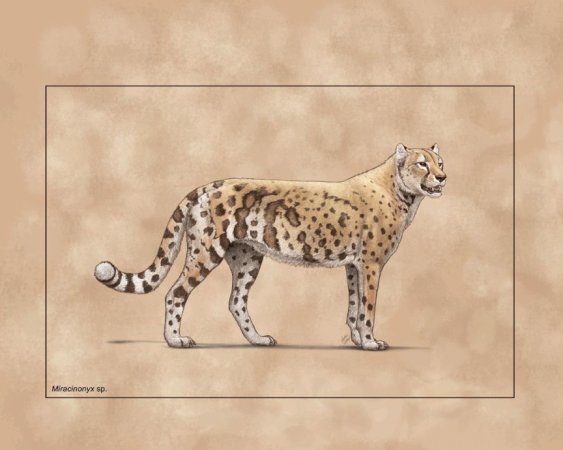
A study published in the journal Current Biology has revealed that the extinct "American Cheetah" (Miracinonyx trumani) was not, in fact, a cheetah. The big cat roamed the North American grasslands from 2.5 million years ago to 16,000 years ago, and its fossils reveal a streamlined body, long legs, and large nostrils, indicating an animal adapted to chasing prey across savannas like an African cheetah.
However, new research suggests the American cheetah was a flexible carnivore, capable of adapting its hunting strategies based on available prey. Co-author Molly Cassatt-Johnstone noted that it's challenging to imagine a prehistoric species without comparing it to something familiar. The study found that M. trumani had no need for huge nostrils for rapid oxygen intake, as it primarily fed on fish in the Arctic steppe tundra where it competed with gray wolves, short-faced bears, and scimitar cats.
Genetic analysis showed M. trumani to be more closely related to modern pumas (Puma concolor) than to African cheetahs (Acinonyx jubatus). The divergence from a common ancestor occurred approximately 2.6 million years ago. The researchers now aim to find a suitable new name for this unique predatory species.
Written by urgent.news from Nautilus's reporting — not their text. Machine-written — may contain errors; check the original before relying on it.