Tesla starts Cybercab rides in Austin, prompting US safety agency evaluation
CEO Elon Musk has said the Cybercab is key to transforming Tesla into a dominant force in driverless vehicles. The National Highway Traffic Safety Administration, meanwhile, sets and enforces rules for auto safety, including for new vehicles.
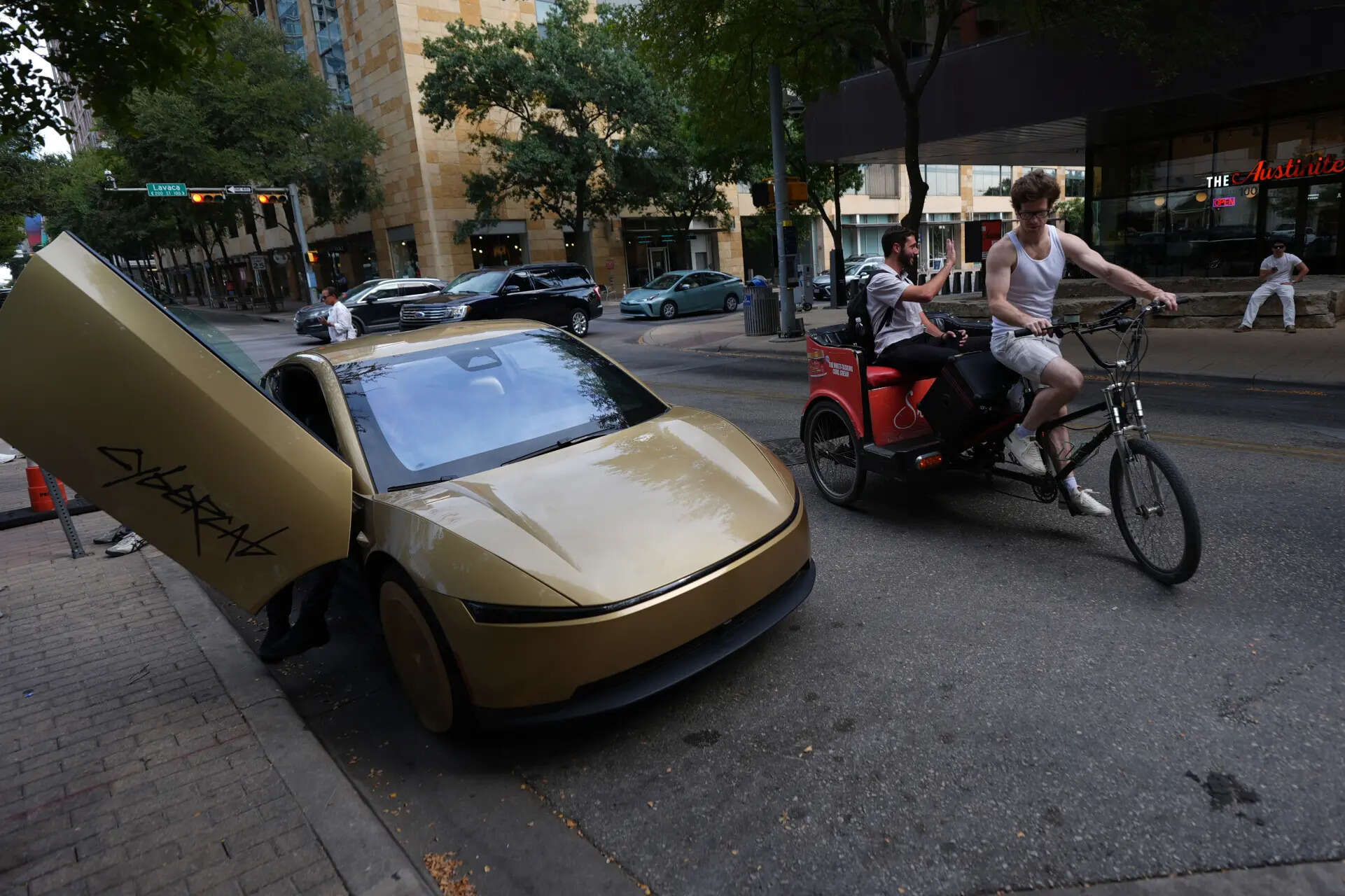
Tesla began offering limited rides in its Cybercab, a two-seater vehicle without a steering wheel or pedals, in Austin, Texas on Thursday. The National Highway Traffic Safety Administration (NHTSA) stated that it is evaluating the situation. CEO Elon Musk has emphasized the Cybercab's importance in making Tesla a leader in driverless vehicles.
The Cybercab is part of Tesla's expanding robotaxi service, which has been piloted in Austin since June 2025 and has since expanded to a few other cities. Despite Musk's promises of imminent driverless Teslas, the rollout has been slower than expected, with some analysts pointing out the slower growth. However, analysts and investors view driverless vehicles as crucial to Tesla's future, contributing significantly to its $1.4 trillion market value.
Production of the Cybercab began in April 2026, though Musk had expressed concerns about the initial slow pace of production. Federal regulations limit the number of vehicles a manufacturer can sell without a steering wheel and pedals for commercial use, except for testing purposes. In California, where Tesla faces restrictions on robotaxi services and testing without a safety driver, the Cybercab's deployment remains uncertain.
The service issues and slow growth in robotaxi deployment have led to Musk's more cautious stance recently. As of Wednesday, Tesla had registered 420 autonomous vehicles in Texas, including 45 Cybercabs, while Alphabet's Waymo leads with 988 registered vehicles in the state.
Written by urgent.news from Economic Times Tech's reporting — not their text. Machine-written — may contain errors; check the original before relying on it.