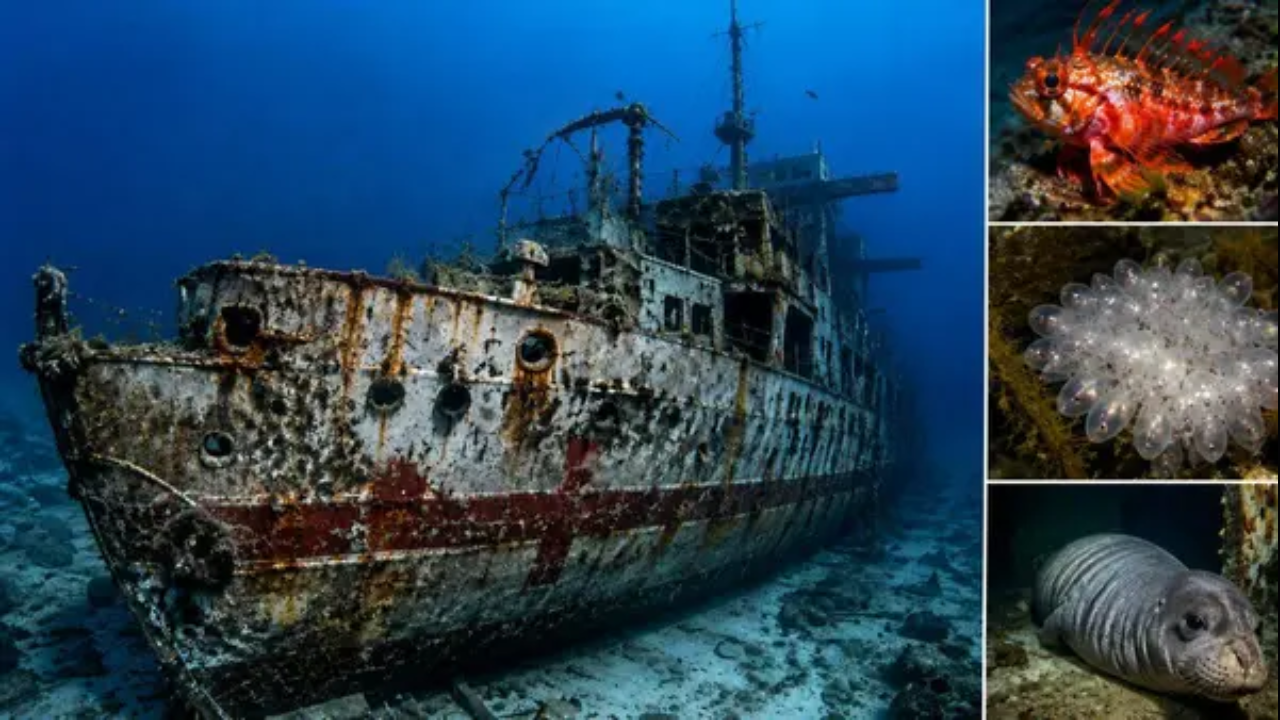
South Australia sank ex-HMAS Hobart; 18 years later 50+ fish species were found
Having been decommissioned and sunk in 2002, the ex-HMAS Hobart has evolved into a lively underwater ecosystem. This former Australian warship is now home to more than fifty distinct fish species, while its submerged structure nurtures an array of filter-feeding organisms. Located in a safeguarded marine park sanctuary, it offers an enticing destination for divers eager to explore successful…
Researchers have captured footage of a unique fish species, known as armored sea robins, "moonwalking" on the floor of the South China Sea. This is the first recorded instance of this behavior, reminiscent of Michael Jackson's famous backwards "moonwalk." The armored sea robins, also called armored gurnards, are a subfamily of ray-finned fishes found in deep tropical and warm temperate waters worldwide.
Their specialized, stiffened fin rays function as independent, leg-like appendages, allowing them to move across the seafloor in various directions, including backward, a movement never observed in other fish. The scientists, from Sun Yat-sen University in China, observed the fish using both human-operated and remotely operated underwater vehicles at depths ranging from 1,151ft to 1,551ft (351-473m).
The researchers noted that the fish moved sideways, crab-like, but also backward, an unconventional movement that aids them in probing sediment for prey.
Written by urgent.news from Digital Camera World's reporting — not their text. Machine-written — may contain errors; check the original before relying on it.
This story
This is one outlet's version. Read the fullest account.
- Researchers capture footage of fish “moonwalking” on South China Sea floor digitalcameraworld.com