Urgent.News

What's breaking now, across thousands of outlets.

World

Migration: Dänemark will 2027 in Zentren außerhalb der EU abschieben

Seit Jahren wird in der EU auch auf deutsche Initiative über sogenannte Return Hubs diskutiert – also über Abschiebezentren in Drittstaaten. Dänemark nennt nun ein erstes Datum.

Migration: Dänemark will 2027 in Zentren außerhalb der EU abschieben

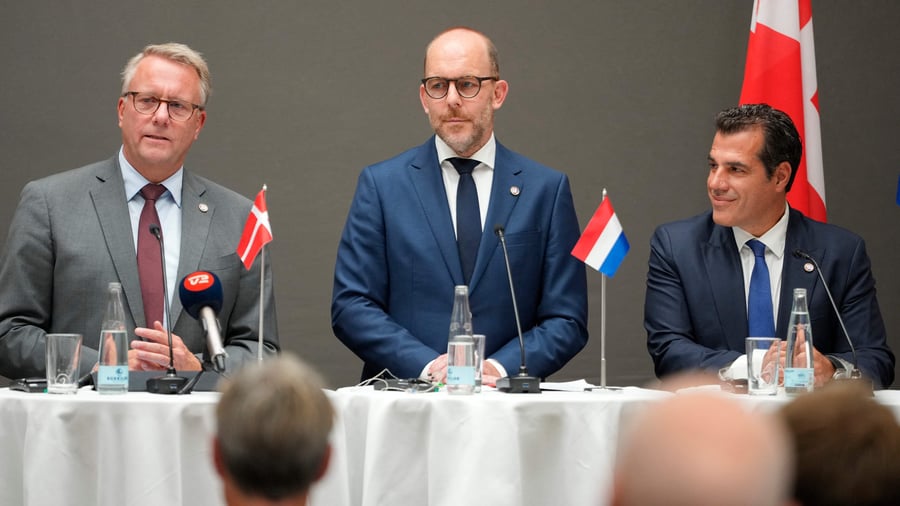
In 2027, Denmark plans to deport first irregular migrants to centers outside the European Union, according to a statement by Morten Bødskov, the Danish Minister for Migration and Integration. This announcement came after a meeting of the working group composed of Germany and other EU countries. However, Alexander Dobrindt, the Federal Minister of the Interior, still hopes to reach an agreement with third countries this year.

The planned detention centers, also called "Return Hubs," are intended to hold individuals who are required to leave but cannot return to their countries of origin, for instance, because their home country refuses to accept them back. Germany has been leading this initiative together with Austria, Denmark, Greece, and the Netherlands.

After a significant meeting in Denmark's capital, Dobrindt announced another meeting scheduled for the end of September in Munich, where he hopes to finalize an agreement with third countries that would facilitate the establishment of Return Hubs. The exact countries involved in this endeavor remain unclear. The ministers involved have reportedly agreed on principles for further action and the implementation of Return Hubs, which must comply with EU law and international obligations.

They also emphasize that these centers should form part of a "common European project" aimed at significantly reducing the number of people entering the EU illegally. The exact details of possible "Return Hubs" have been under discussion for years, and they remain highly controversial. Human rights organizations, like Amnesty International, have expressed concerns over potential human rights violations in these centers and warned against agreements with conflict-ridden and politically unstable nations.

Some politicians, such as Marcel Emmerich, a Green Party spokesman in the German Bundestag, criticized the move as a "shift game that does not solve the problem," arguing that Dobrindt confuses toughness with effectiveness and attempts to distract from his responsibilities during the recent meeting in Denmark.

Written by urgent.news from Handelsblatt's reporting — not their text. Machine-written — may contain errors; check the original before relying on it.

Read the original at handelsblatt.com →

More in World

More from Friday 4 September →