How this summer’s heat and drought impacted crops in Europe – in six charts
Farmers around Europe are dealing with the aftermath of a summer of extreme heat, drought and wildfires that were exacerbated… The post How this summer’s heat and drought impacted crops in Europe – in six charts appeared first on Carbon Brief .
Europe faced a challenging summer marked by extreme heat, drought, and wildfires, all exacerbated by climate change. These conditions have had a profound impact on crop production and yields across the continent. Farmers in various European countries are grappling with the aftermath of this summer's extreme weather events, which have forced them to confront declining crop yields and record low harvests.
The United Nations Food and Agriculture Organization has reported that global food prices are at their highest level since early 2023, a consequence of "heatwaves and energy price dynamics." This rise in prices is attributed to various factors, including blocked fertiliser supplies in the Strait of Hormuz and high fuel costs. The following six charts provide a visual representation of the extent to which this summer's extremes have affected crop production and yields in Europe.
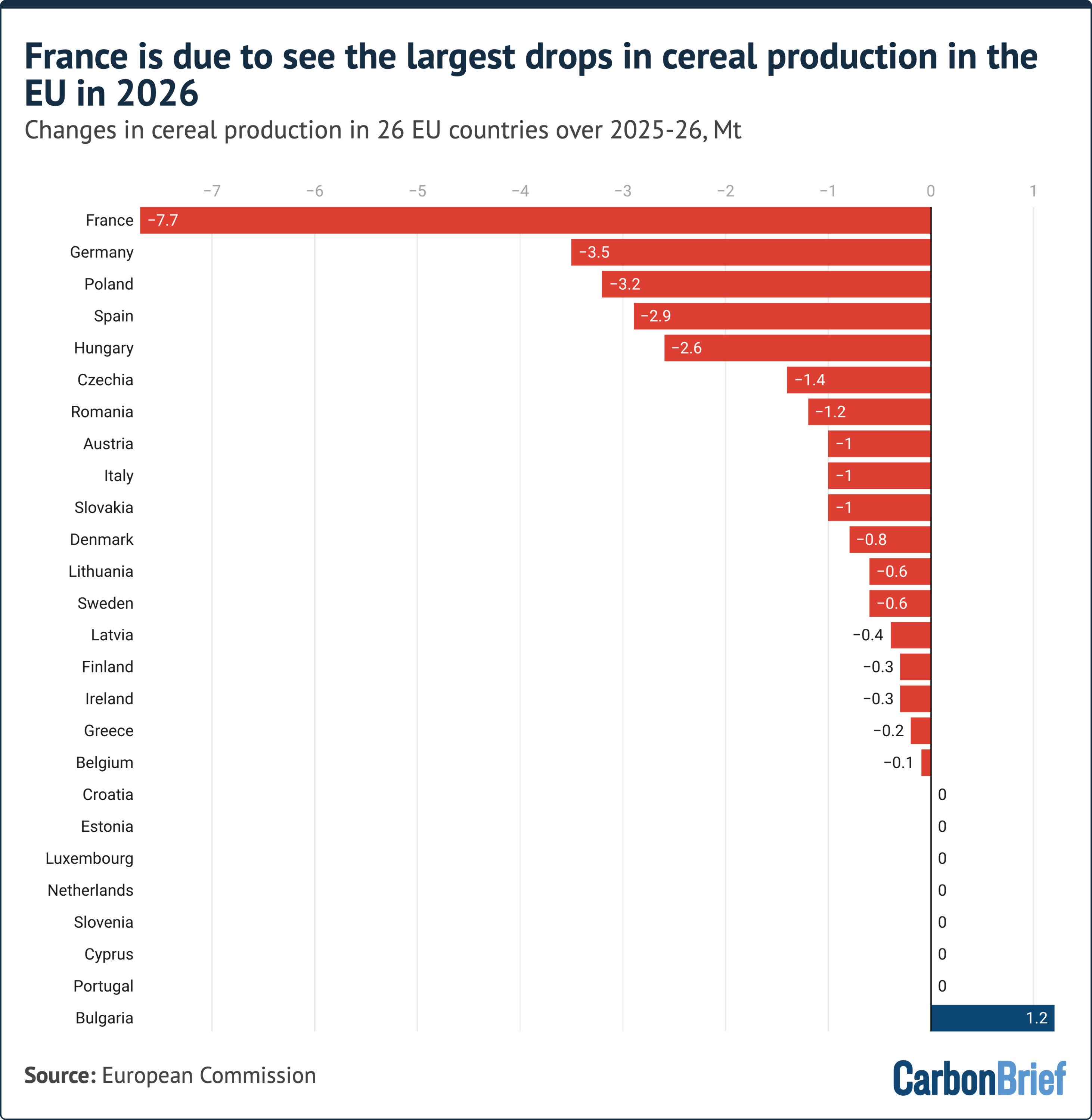
Firstly, most EU countries are anticipating declines in cereal production this year. The persistent heat and drought have put a strain on cereal crops, leading to reduced yields across the region. Secondly, many EU countries are currently recording lower than average crop yields due to the harsh conditions faced by farmers during the summer months.
In addition, the June heatwave resulted in around €2 billion worth of cereal losses. This financial impact highlights the significant economic consequences of the extreme weather events on the agricultural sector. Furthermore, the UK is expected to see a drop in wheat, barley, and oats yields in 2026, with maize production in France anticipated to hit a four-decade low. These projections underscore the severity of the situation faced by European farmers.
Finally, the overall decline in EU grains since 2025 serves as a stark reminder of the long-term implications of climate change on agricultural productivity. As the world continues to experience the effects of rising temperatures and altered weather patterns, the agricultural industry must adapt to these challenges to ensure food security for the future.
Written by urgent.news from Carbon Brief's reporting — not their text. Machine-written — may contain errors; check the original before relying on it.