Five decades, two landmarks, one evolving city
Birla Mandir and The Hindu have witnessed Hyderabad’s remarkable transformation from neighbourhoods into a sprawling metropolis. From the temple, the skyline has risen and spread; through the newspaper’s pages, political upheavals, social change and the city’s economic reinvention have been recorded. Both remain enduring markers of the city’s journey
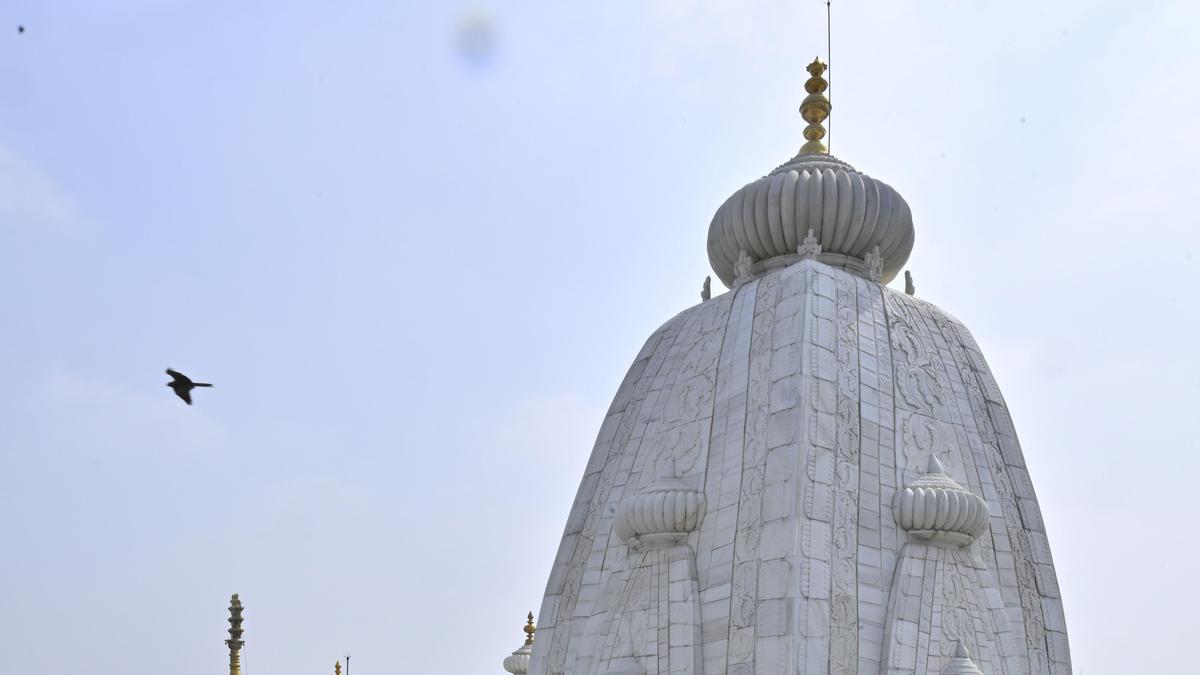
For nearly five decades, two familiar sights have stood witness to Hyderabad’s changing skyline: the white-marble Sri Venkateshwara Temple, known as Birla Mandir, and The Hindu newspaper. Birla Mandir, situated on Kala Pahad, also called Neeladri, has looked over Hyderabad since its opening in February 1976. Six months later, The Hindu established a full-fledged presence in the city, reporting on the ever-evolving urban landscape.
The history of Birla Mandir traces back to the 1960s. Ganga Prasad Birla, an industrialist and member of the Birla family, envisioned building a temple on Kala Pahad after gazing at it from his room at the Hill Fort Palace, also known as the Ritz Hotel, in Adarshnagar. Construction commenced in 1966, and the temple, constructed in white marble, stood above Hussainsagar within a decade.
Unlike most Birla Mandirs across the country, it houses Lord Venkateshwara as the presiding deity, a unique feature among the religious site.
Birla Mandir has stood as one of Hyderabad’s best-known landmarks, attracting not only devotees but also tourists who visit alongside other city attractions like Hussainsagar, Charminar, Golconda Fort, and the Salar Jung Museum. Over the years, as Hyderabad experienced dramatic changes—from the end of the Emergency and political shifts to social upheavals, technological advancements, and the creation of Telangana—Birla Mandir remained relatively unchanged, providing a timeless backdrop to the evolving city.
Jayendra Ramesan, the son of former IAS officer N. Ramesan, recounted his father's involvement in the temple's construction. His father, a devoted follower of Lord Venkateshwara, played a crucial role in bringing the Balaji temple to Hyderabad, working alongside Ganga Prasad Birla and then Andhra Pradesh Chief Minister Kasu Brahmananda Reddy. Ramesan fondly remembers a visit to the temple with his father, where he learned that he was the architect of the temple.
The temple, built using 2,000 tonnes of Makrana marble and blending Dravidian, Utkala, Rajasthani, and Gujarati architectural styles, attracts around 5,000 to 6,000 devotees daily during weekdays and nearly 10,000 on weekends. Occasions such as Vaikuntha Ekadashi, New Year’s Day, and Ugadi can see attendance reach nearly one lakh.
For many visitors, the temple’s atmosphere is the primary draw, welcoming people of all faiths and prohibiting special seva arrangements or separate queues seen at other temples. Executive officer Shyam Kothari emphasized Birla Mandir’s role as a "modern wonder," an open place of worship for everyone, regardless of their background.
Written by urgent.news from The Hindu's reporting — not their text. Machine-written — may contain errors; check the original before relying on it.