City-states of the world, unite!
In a turbulent year, the UAE has passed a severe stress test . Airport volumes and flight schedules are nearly back to normal, thousands of new business licences continue to be issued at pace, and the country has retained its top ranking in the latest Henley and Partners Global Wealth Migration Report. But the more important lesson is not that the UAE proved durable under pressure. It is that in…
In a tumultuous year, the United Arab Emirates (UAE) has demonstrated its resilience amidst challenging circumstances. Airport traffic and flight schedules have returned to near-normal levels, thousands of new business licenses have been issued, and the country has maintained its top position in the Henley and Partners Global Wealth Migration Report. However, the most significant takeaway is not merely the UAE's durability under pressure, but rather the interconnectedness of cities in a global economy.
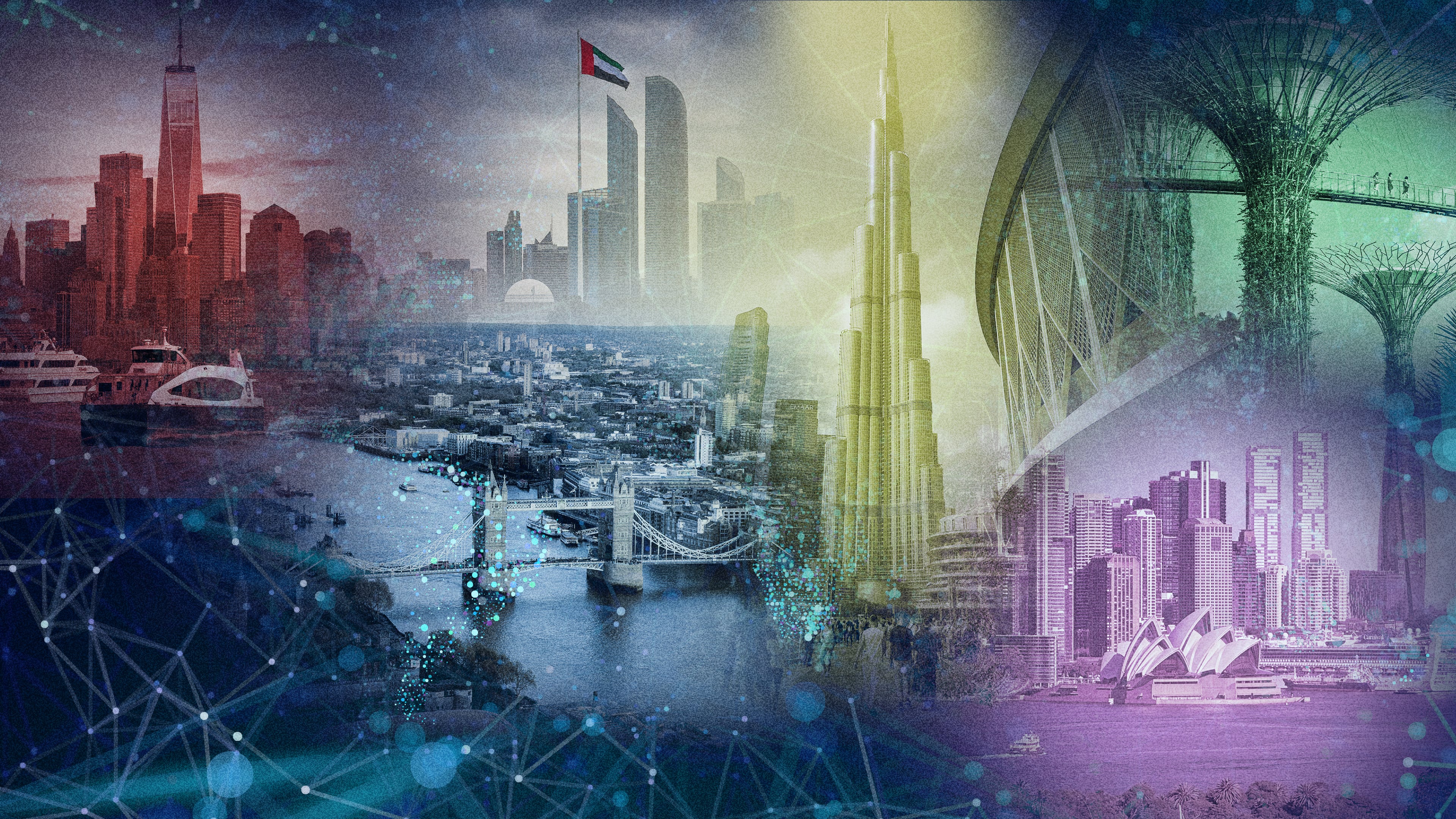
City-states are often portrayed as zero-sum competitors, but this perspective fails to recognize the inherent interlinkages that define their nature. These cities are not simply connected by capital, technology, and people flows; they are defined by these interactions. Each city's identity is significantly shaped by what moves between them. Removing a node within this network alters the entire system.
This concept is not merely theoretical. Consider the prime real estate in London, the investment in American credit funds on Wall Street, the backing of Silicon Valley's venture firms, or the placement of hyperscalers' biggest data centers. These cities also rely on one another for liquidity, customers, data, and credibility. It is becoming increasingly difficult to view them as a "team of rivals" anymore.
The UAE exemplifies this interconnectedness. Over the past five decades, its seven emirates have evolved into a federation far greater than the sum of its parts. Their strengths overlap and compound, with Abu Dhabi's capital markets, Dubai's trade and logistics, and the east-coast ports of Sharjah and Fujairah forming a cohesive whole. Specialization does not equate to fragmentation, and competition can coexist with coordination.
The defining divide in the global economy is no longer geographic, but rather the distinction between cities integrated into global flows and those bypassed by them. This divide has fueled real grievance and reshaped politics in many countries. Professionals working in these hubs are acutely aware of the impact when a disruption in one node ripples through the system. Cities that can remain open under pressure have become a competitive advantage, attracting talent and capital that thrive in such environments.
The UAE has weathered multiple shocks, including oil-price collapses, global financial crises, a pandemic, and recent regional disruption, emerging each time more capable and better connected. Real estate in Khor Fakkan, for example, grew from handling 1,500 containers a week to over 50,000 within months as the nation adapted to a disrupted Hormuz Strait. This adaptability was not improvised during the crisis, but rather built over time through established corridors and partnerships.
The UAE's strategic partnerships, such as those with Singapore and southern China's Greater Bay Area, illustrate the importance of these relationships. Bilateral trade between the UAE and Singapore stands at over $20 billion, with Singapore holding more foreign direct investment in the UAE than any other Gulf country. Similarly, the UAE is the largest Gulf investor in Singapore.
Additionally, the UAE's ties with Guangzhou, a key source of electric vehicles, demonstrate the importance of these interconnected urban nodes within the global economy.
Moreover, knowledge flows through similar networks. New York University Abu Dhabi, for instance, serves as a node in a network co-anchored with New York and Shanghai. The Mohamed bin Zayed University of Artificial Intelligence attracts faculty and researchers from numerous countries, amplifying global collaboration. Singapore's research alliances with the Massachusetts Institute of Technology and others further exemplify this global cooperation.
In conclusion, the UAE's ability to adapt and thrive during turbulent times underscores the importance of interconnectedness in a globalized economy. Cities that are deeply connected, both within their federations and across nations, possess a competitive advantage that allows them to remain efficient in normal times while remaining adaptable in abnormal ones.
Written by urgent.news from The National Business's reporting — not their text. Machine-written — may contain errors; check the original before relying on it.
This story
This is one outlet's version. Read the fullest account.
- City-states of the world, unite! thenationalnews.com