City-states of the world, unite!
In a turbulent year, the UAE has passed a severe stress test . Airport volumes and flight schedules are nearly back to normal, thousands of new business licences continue to be issued at pace, and the country has retained its top ranking in the latest Henley and Partners Global Wealth Migration Report. But the more important lesson is not that the UAE proved durable under pressure. It is that in…
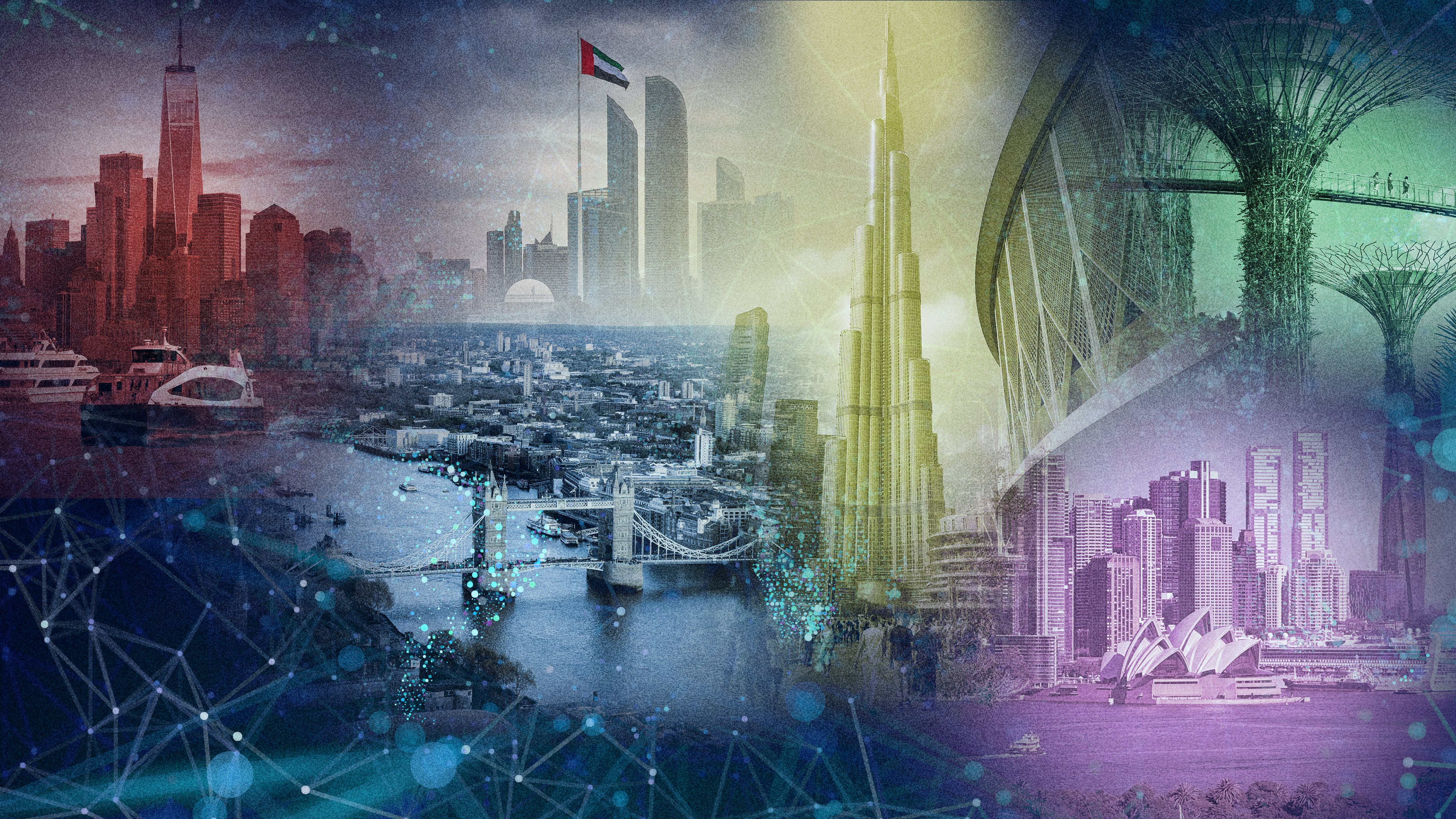
In a challenging year, the UAE has demonstrated its resilience through its major cities. Airport volumes and flight schedules are nearly normal, thousands of new business licenses are issued promptly, and the country maintains its top rank in the latest Henley and Partners Global Wealth Migration Report. However, the most significant takeaway is that no single city in the UAE weathered the crisis alone.
Despite commentators often portraying leading economic centers as competing against each other, the reality is that these cities are interconnected and interdependent.
The top 10 cities in the world account for nearly 20% of global gross domestic product (GDP). These cities form a network, defined by the flows of capital, technology, and people that move between them. Removing one node from this network would alter the entire system. This interconnectedness is not just abstract; it is a crucial aspect of globalization.
Cities still compete for headquarters, capital, and talent, but they also rely on one another for liquidity, customers, data, and credibility. The UAE exemplifies this interdependence, with its seven emirates growing into a federation that combines their strengths, such as Abu Dhabi's capital markets, Dubai's trade and logistics, and Sharjah and Fujairah's ports.
The defining division in the global economy is no longer geographic; it runs between cities deeply integrated into global flows and those bypassed by them. This division has fueled real grievances and reshaped politics in many countries. However, the ability to remain operational under pressure has become a competitive advantage. Cities that attract talent and capital tend to weather disruptions better than those that do not.
The UAE's experience is not unique. Singapore, a small, open, and trade-dependent city-state, has also demonstrated anti-fragility throughout its history, weathering various crises and emerging stronger each time. For instance, the closure of the Strait of Malacca would impact Singapore's economy significantly, affecting Asia's energy security, global manufacturing, technology supply chains, and trade flows.
The UAE's east coast, which previously handled about 1,500 containers per week, managed to increase its capacity to more than 50,000 containers by July, with over 8,000 lorries a day transporting cargo inland and to ports across the upper Gulf.
These partnerships are not isolated instances. Bilateral trade between the UAE and Singapore stands at over $20 billion and extends beyond oil and gas. Singapore holds significant foreign direct investment in the UAE, and the UAE is the largest Gulf investor in Singapore. Additionally, the UAE and the Greater Bay Area in southern China have established strong trade ties, with trade between the UAE and Hong Kong reaching $15 billion.
The UAE's Abu Dhabi Global Market has also formed financial services partnerships with Shenzhen's Futian District, and Guangzhou has become a key source of electric vehicles popular in the UAE market.
These examples illustrate how cities and nations can leverage their interconnections to build systems that are efficient in normal times but adaptable in abnormal situations. The UAE's strategic investments in infrastructure and partnerships have enabled it to scale capacity quickly during times of crisis. By recognizing the importance of these interdependencies, cities and nations can work together to create a more resilient and interconnected global economy.
Written by urgent.news from The National UAE's reporting — not their text. Machine-written — may contain errors; check the original before relying on it.
Also reported by 1 other outlet
- City-states of the world, unite! thenationalnews.com