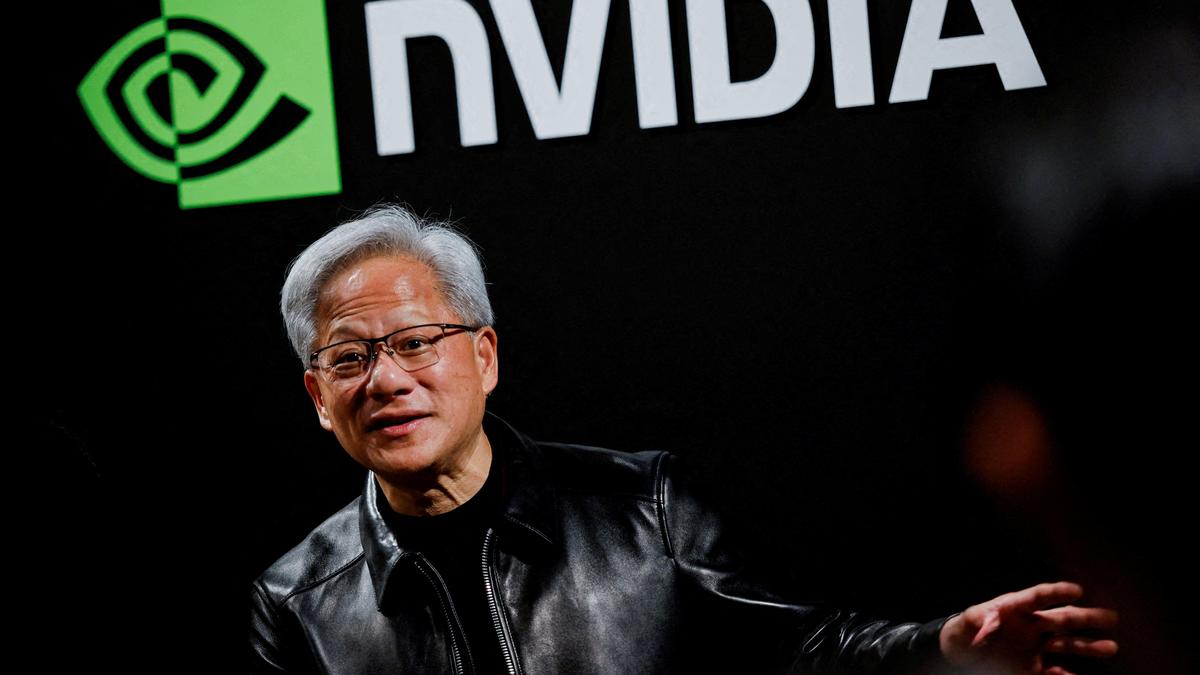
A profile of Hugging Face, which started in 2016 to build a sassy chatbot for teens; CEO Clément Delangue says he approached Nvidia this summer to pursue a deal (Wall Street Journal)
The startup began as an emoji-named app for teens before becoming a crusader for open-source AI
Welcome to Eye on AI. Emily Forlini here, filling in for Beatrice Nolan. In today’s issue, Nvidia has agreed to acquire open-source AI platform Hugging Face for $13 billion. OpenAI unveiled its GPT-6 model, Google presented the Gemini 3.8 Flash model, and ChatGPT experienced its second outage in three days, along with Claude and Grok.
Nvidia's $12.93 billion deal for Hugging Face, founded in 2016 by three French entrepreneurs named Thomas Wolf, Samuel Laskin, and Julien Chaumond, marks a significant startup exit for the company. Initially named after the 🤗 emoji, Hugging Face grew into a trusted repository for AI developers over the past decade.
The deal highlights the importance of open-weight models, like those hosted on Hugging Face, for Nvidia's future business. As competitors develop their own chips and reduce reliance on Nvidia GPUs, open-weight models could become a core revenue stream for Nvidia. Hugging Face currently boasts 18 million individual users and 200,000 enterprise clients, with CEO Clément Delangue aiming to reach 100 million AI builders in the next few years.
Despite NVIDIA's acquisition, Hugging Face remains committed to being an open platform where developers can freely choose models, frameworks, and computing platforms. However, there are concerns that the acquisition may subtly influence the open-source ecosystem to favor Nvidia's hardware. While Nvidia will not require Nvidia compute for Hugging Face, some worry that the company's significant influence on the platform could lead to a tilt in favor of Nvidia and its competitors.
Written by urgent.news from Fortune's reporting — not their text. Machine-written — may contain errors; check the original before relying on it.
This story
This is one outlet's version. Read the fullest account.
- Nvidia to buy AI platform Hugging Face for US$12.9b news.rthk.hk
- Nvidia bags Hugging Face, AI models play leapfrog and CrowdStrike doubles down on AI siliconangle.com
- Nvidia Is Buying AI Platform Hugging Face for $13 Billion securityweek.com
- Hugging Face goes from a ‘scrappy’ startup named after an emoji to $13 billion Nvidia acquisition fortune.com
- Nvidia’s $12.93 Billion Hugging Face Deal Expands Jensen Huang's AI Platform Beyond Chips fool.com
- Nvidia’s $12.93 Billion Hugging Face Deal Expands Jensen Huang's AI Platform Beyond Chips nasdaq.com
- Nvidia to buy AI platform Hugging Face for $12.9 billion thehindu.com
- Nvidia puts its money where its mouth is on open weight AI, moving to buy Hugging Face for $13 billion pcgamer.com