A High-Resolution Look at Singapore’s Water Budget
Simulations that account for nuanced interplay between hydrological and plant processes could help guide urban water management.
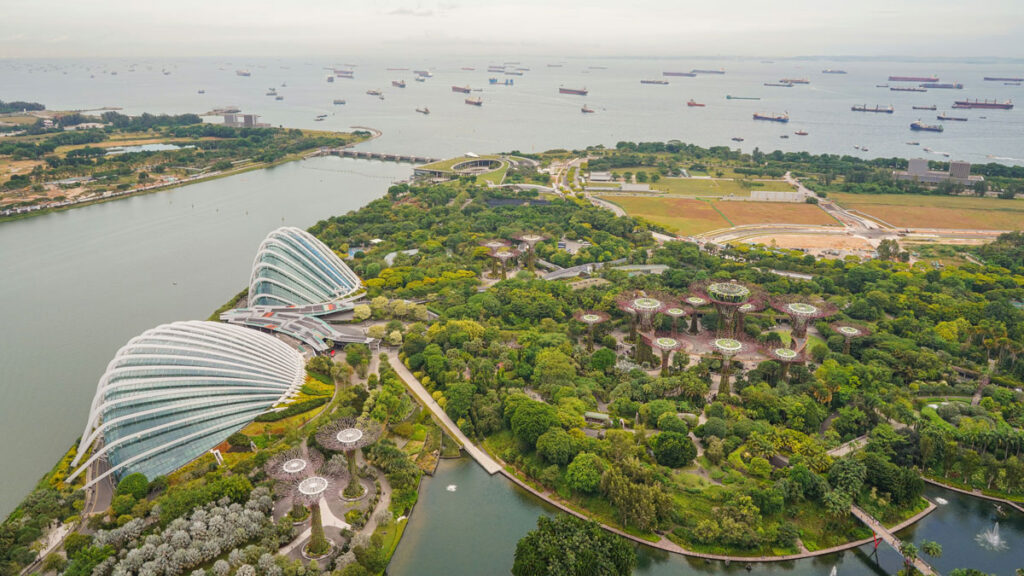
Singapore, a tropical city-state known for its lush greenery amidst dense urbanization, faces water management challenges due to climate change and increasing population density. Scientists from Water Resources Research have developed a high-resolution ecohydrological model to better understand the intricate relationship between urban vegetation, climate change, and the built environment across the country. This model can simulate multi-decadal scenarios at an hourly timescale and a spatial resolution of just 250 meters.
The researchers found that deforestation and urbanization have had a surprisingly limited impact on Singapore’s energy balance, largely due to reduced transpiration from diminishing urban vegetation. As impermeable surfaces expanded to cover 35% of the land, water runoff increased by 16.5%, while sensible and latent heat fluxes rose by 4.6% and decreased by 11%, respectively.
Looking ahead, the team predicts that a continued decrease in transpiration from urban plants could offset the effects of increased evaporation and a drier atmosphere, suggesting that variations in rainfall will be the primary driver of Singapore’s water budget in the future.
However, the simulations also show that extreme drought years, like those occurring during El Niño conditions, could lead to severe water shortages in Singapore’s rainwater harvesting systems, one of the country’s four primary water sources. The study highlights the potential for implementing similar high-resolution modeling techniques in other tropical cities, such as Los Angeles and Jakarta, which also rely heavily on local water resources.
The findings could aid in planning and policy-making for sustainable water management in the face of mounting climate change and urbanization pressures.
Written by urgent.news from Eos's reporting — not their text. Machine-written — may contain errors; check the original before relying on it.