3 easy wins to modernise Hong Kong’s education system
Much has been said about Hong Kong’s vitality as a higher education hub. Yet, a radical rethink of our primary and secondary school system is equally necessary. The need for a blueprint has never been clearer. Our world is increasingly defined by the powerful forces of automation enabled by artificial intelligence (AI), geopolitical tensions and flux, as well as conflicting values and…
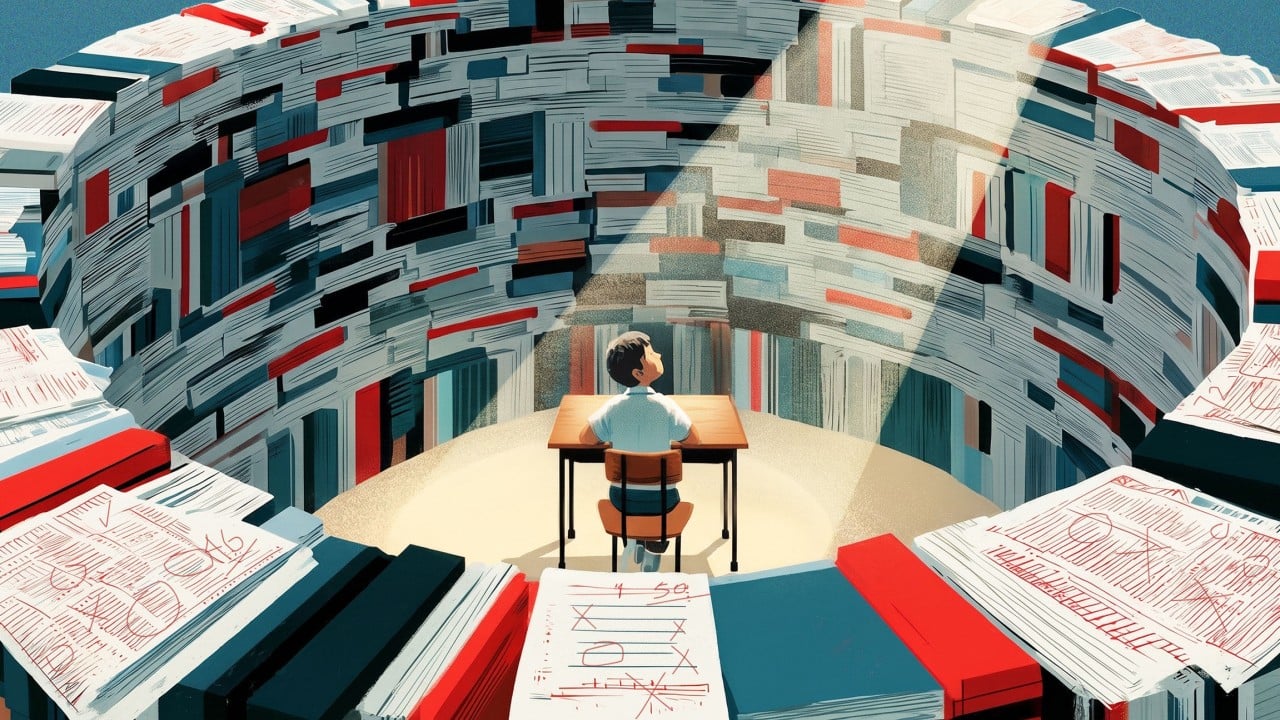
Hong Kong's education system must evolve to keep pace with the demands of a rapidly changing world, marked by automation, geopolitical tensions, and diverse perspectives. The report highlights three key areas for improvement: assessment methods, global exposure, and language and cultural education.
Firstly, the way students are assessed needs to change. Traditional rote memorisation and recall-based tests are becoming less effective in the age of AI. Instead, there should be a greater emphasis on verbal communication and dialogical discussions. Shorter, well-designed exams that test higher-order skills, such as evaluation and comparison, should be introduced, along with mandatory oral examinations to encourage flexibility and critical thinking.
This approach not only counters the replicability of text-based outputs by AI but also equips students with valuable presentation skills relevant to various professional settings.
Secondly, students should be encouraged to explore the world beyond Hong Kong. While the city prides itself on being a "superconnector" and a bilingual metropolis, its education system could do more to foster linguistic and cultural understanding. Currently, only six "Other Languages" are offered during secondary education, with Arabic and Bahasa Indonesia/Malay missing from the list.
Expanding language offerings to include Arabic and Bahasa Indonesia/Malay, which are spoken by billions, would better position Hong Kong as a hub for understanding Asia. Greater linguistic and cultural training will also enable students to engage in more meaningful interactions during study abroad programs and internships.
Lastly, Hong Kong must internationalise its secondary school curriculum. The Diploma of Secondary Education (DSE), the city's university entrance examination, could serve as a model for internationalisation. Introducing alternative curricula, such as the International Baccalaureate or A-levels, into public schools would provide students with more options and flexibility.
Policymakers should also promote the strengths, values, and uniqueness of the DSE on a regional and international level. By taking a more proactive approach to internationalisation, Hong Kong can equip its youth with the skills and knowledge needed to thrive in an increasingly interconnected world.
Written by urgent.news from South China Morning Post - Hong Kong's reporting — not their text. Machine-written — may contain errors; check the original before relying on it.