Toxic wildfire haze spreads across South East Asia as 'super' El Niño intensifies
Millions of people have been exposed to the smog, with more than 12,000 children suffering respiratory issues.
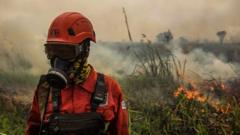
Toxic haze from wildfires is engulfing regions of Indonesia and spreading to Malaysia, Singapore, and the Philippines, as a prolonged El Niño event intensifies the crisis. Millions of people in Southeast Asia have been exposed to the smog, with pollution levels in some areas exceeding 15 times the World Health Organization's recommended limit.
Since mid-July, fires have been raging across Sumatra and Indonesian Borneo, fueled by a Super El Niño that has exacerbated drought conditions. In July alone, Indonesia's Health Ministry documented over 50,000 respiratory infections linked to land and forest fires, with more than 12,000 cases involving children under five. A 19-year-old teaching assistant in Banjarbaru described the smog in her classroom as so thick that she couldn't even see her feet.
A 23-year-old mother from nearby Pengayuan village reported her three-year-old daughter developing a cough, sore throat, and runny nose. In the Philippine island province of Palawan, residents reported similar symptoms, including itchy eyes, nose, and throat. Malaysia has also reported a rise in asthma and conjunctivitis cases as air quality nationwide worsens.
Indonesia's forest and peatland fires are not a new issue, dating back to the Suharto era when vast areas of rainforest and peatland were cleared for logging, plantations, and development. Today, large-scale fires are often linked to the expansion of industrial plantations and commercial land use. Environmental groups, researchers, and government investigations have pointed to human activity as exacerbating the crisis, with drained peatlands, industrial timber estates, and oil palm plantations making landscapes more vulnerable to burning.
What makes the wildfires in Indonesian Borneo particularly concerning is that they are burning through one of the world's largest tropical peatland ecosystems. While peatlands typically act as carbon reservoirs, they can become "carbon bombs" when drained or burned, releasing massive amounts of carbon into the atmosphere. The current Super El Niño is expected to worsen the situation, potentially burning an area as large as 11 million hectares this year, which would be on par with one of Indonesia's worst wildfire seasons from 1997 to 1998.
Indonesia's forestry minister has warned that the battle to extinguish the current wildfires is entering a critical phase, with September expected to be the peak of the El Niño event.
Written by urgent.news from BBC World's reporting — not their text. Machine-written — may contain errors; check the original before relying on it.
This story
This is one outlet's version. Read the fullest account.
- Toxic wildfire haze spreads across South East Asia as ‘super’ El Niño intensifies peopledaily.digital
- Toxic wildfire haze spreads across South East Asia as ‘super’ El Niño intensifies myjoyonline.com
- As the climate changes, South Asia's farmers rethink how – and what – they grow channelnewsasia.com
- Toxic wildfire haze spreads across South East Asia as 'super' El Niño intensifies bbc.co.uk