Spacecraft bound for Mercury faces ‘tricky’ arrival
The BepiColombo mission launched from Earth in 2018 to study the smallest planet in our solar system, with the aim of placing the two probes into orbit around it.
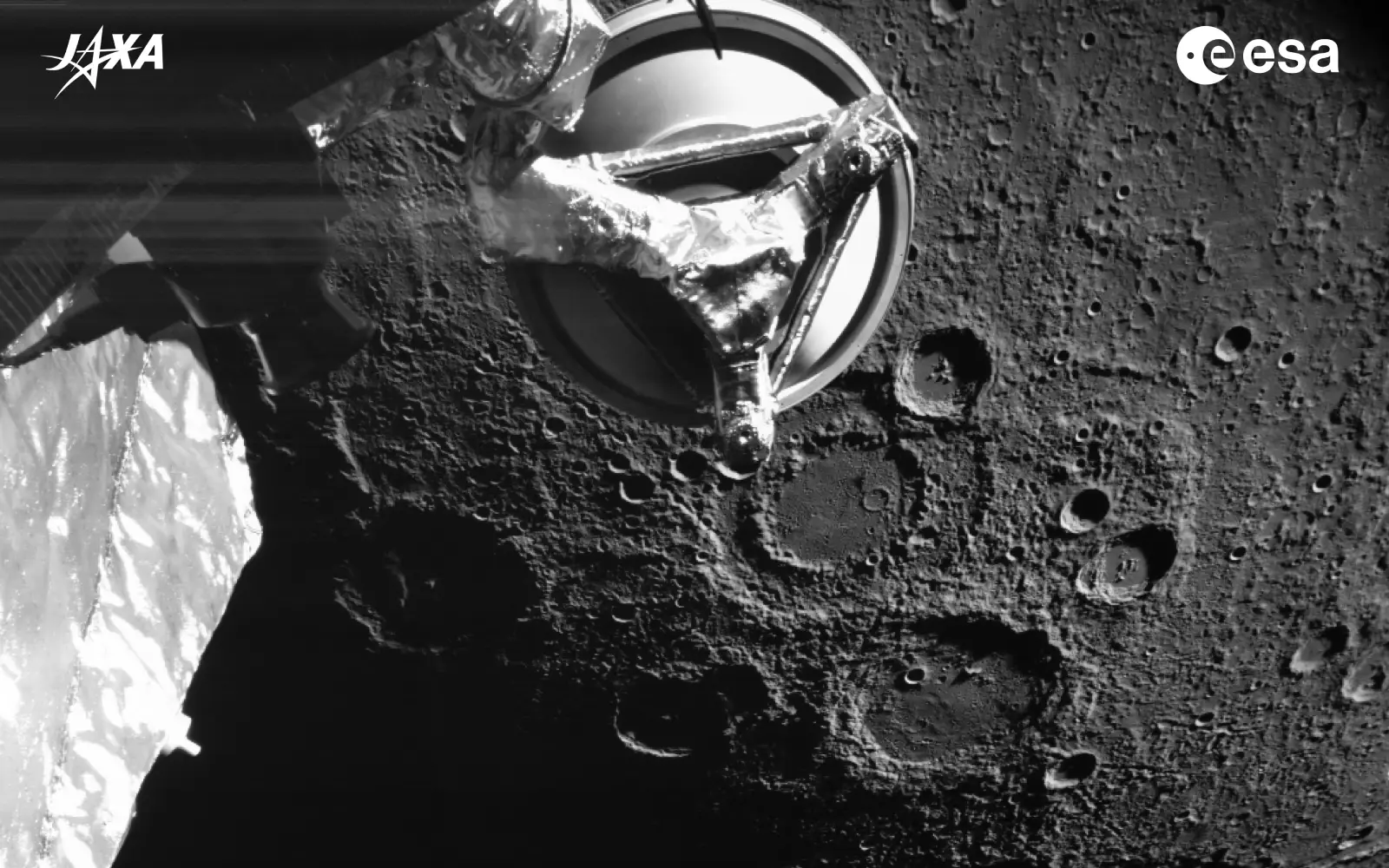
Mercury, a planet only slightly larger than Earth's moon, presents a formidable challenge for spacecraft attempting to approach due to its weak gravitational pull, making it susceptible to incineration or being lost in space. On Thursday, a spacecraft carrying European and Japanese probes will conclude an eight-year journey to enter Mercury's orbit, despite the high-risk maneuvers required for the study of the sun-baked planet.
Named the BepiColombo mission, the spacecraft embarked from Earth in 2018 on a winding path to investigate the smallest and least understood celestial body in our solar system. The objective is to deploy the two probes into orbit, but first, the spacecraft must endure a months-long arrival phase, which the European Space Agency (ESA) has described as the most operationally challenging planetary arrival sequence ever attempted.
Mission manager Santa Martinez of ESA emphasized the ambitious nature of the mission, stating that Mercury is a particularly challenging destination due to the extreme environment so close to the Sun. The strong gravitational pull of the planet's tiny mass makes it difficult for spacecraft to approach without being destroyed or lost in space. To overcome these obstacles, the spacecraft had to travel over 10 billion kilometers, executing a series of nine flybys to adjust its trajectory.
Once the probes are separated from the transfer module and enter their respective orbits, the MPO will study Mercury with unprecedented precision, passing as close as 480 km from its surface. Meanwhile, the JAXA Mercury Magnetospheric Orbiter (Mio) will focus on the planet's space environment and magnetic field, orbiting at distances up to 11,000 km from the planet's surface.
Communication with the spacecraft presents a significant challenge, as Mercury is 63 million km away from the Sun and 200 million km from Earth at the time of the arrival. This distance results in a 30-minute delay between ground operations and the spacecraft's execution of commands, necessitating autonomous navigation during the separation process. Despite potential complications, the mission team remains prepared to adapt to unforeseen circumstances.
Mercury, the least studied of the four rocky innermost planets in our solar system, has long been a subject of mystery. Past missions, such as NASA's Mariner 10 in 1974 and MESSENGER in 2011, have provided limited insights into the planet's magnetic field, iron core, and distinctive surface features. With a €1.7 billion budget and sixteen instruments, the BepiColombo mission promises to offer unprecedented views of Mercury, opening a new chapter in our understanding of the solar system.
Written by urgent.news from Free Malaysia Today's reporting — not their text. Machine-written — may contain errors; check the original before relying on it.
This story
This is one outlet's version. Read the fullest account.
- Spacecraft bound for Mercury begins 'tricky' arrival phys.org
- Spacecraft bound for Mercury faces ‘tricky’ arrival freemalaysiatoday.com
- Spacecraft bound for Mercury begins 'tricky' arrival channelnewsasia.com
- Spacecraft bound for Mercury faces ‘tricky’ arrival citizen.co.za


