Korean shamanism terms
• Musok and mugyo are common names for Korean shamanism. Musok is an older term associated with shamanism as a folk tradition, while mugyo is a newer term often used in more scholarly contexts. • Mudang is the gender-neutral term for shamans. The less common "baksu" refers exclusively to male practitioners. • Mansin is a respectful term for shamans, meaning “10,000 spirits.” • Sinbyeong, or…
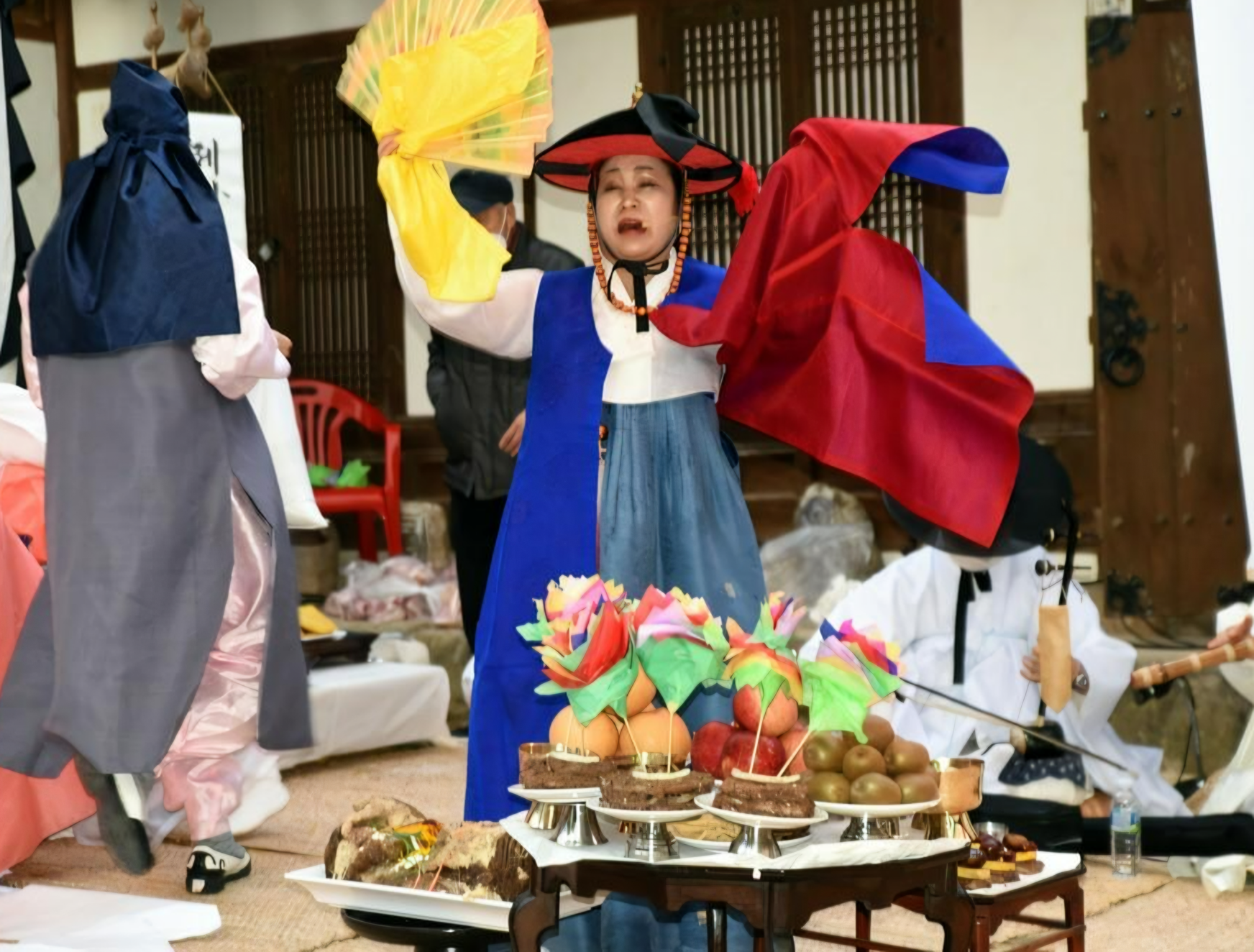
Korean shamanism, known as Musok and Mugyo, encompasses two common names for the practice. Musok, an older term, is tied to shamanism as a folk tradition, whereas Mugyo is a newer term frequently employed in scholarly discussions.
Mudang serves as the gender-neutral term for shamans, while the less common Baksu specifically refers to male practitioners. Mansin, a term of respect for shamans, translates to "10,000 spirits."
Sinbyeong, or "spirit sickness," is an illness experienced by those chosen by spirits. This condition typically manifests as a period of poor health, encompassing both physical and psychological symptoms, which subsides upon the individual's initiation as a shaman.
Gangsinmu become shamans through spirit possession, following a period of sinbyeong. They are called to the practice as a result. Seseupmu, on the other hand, are shamans who inherit their positions within families, without typically experiencing sinbyeong.
The rituals employed in shamanic practice, known as Gut, incorporate various elements such as music, singing, chanting, and dance. These performative aspects are transmitted orally and through practice between generations.
Written by urgent.news from The Korea Times's reporting — not their text. Machine-written — may contain errors; check the original before relying on it.
This story
This is one outlet's version. Read the fullest account.
- Korean shamanism terms koreatimes.co.kr