Korean shamanism terms
• Musok and mugyo are common names for Korean shamanism. Musok is an older term associated with shamanism as a folk tradition, while mugyo is a newer term often used in more scholarly contexts. • Mudang is the gender-neutral term for shamans. The less common "baksu" refers exclusively to male practitioners. • Mansin is a respectful term for shamans, meaning “10,000 spirits.” • Sinbyeong, or…
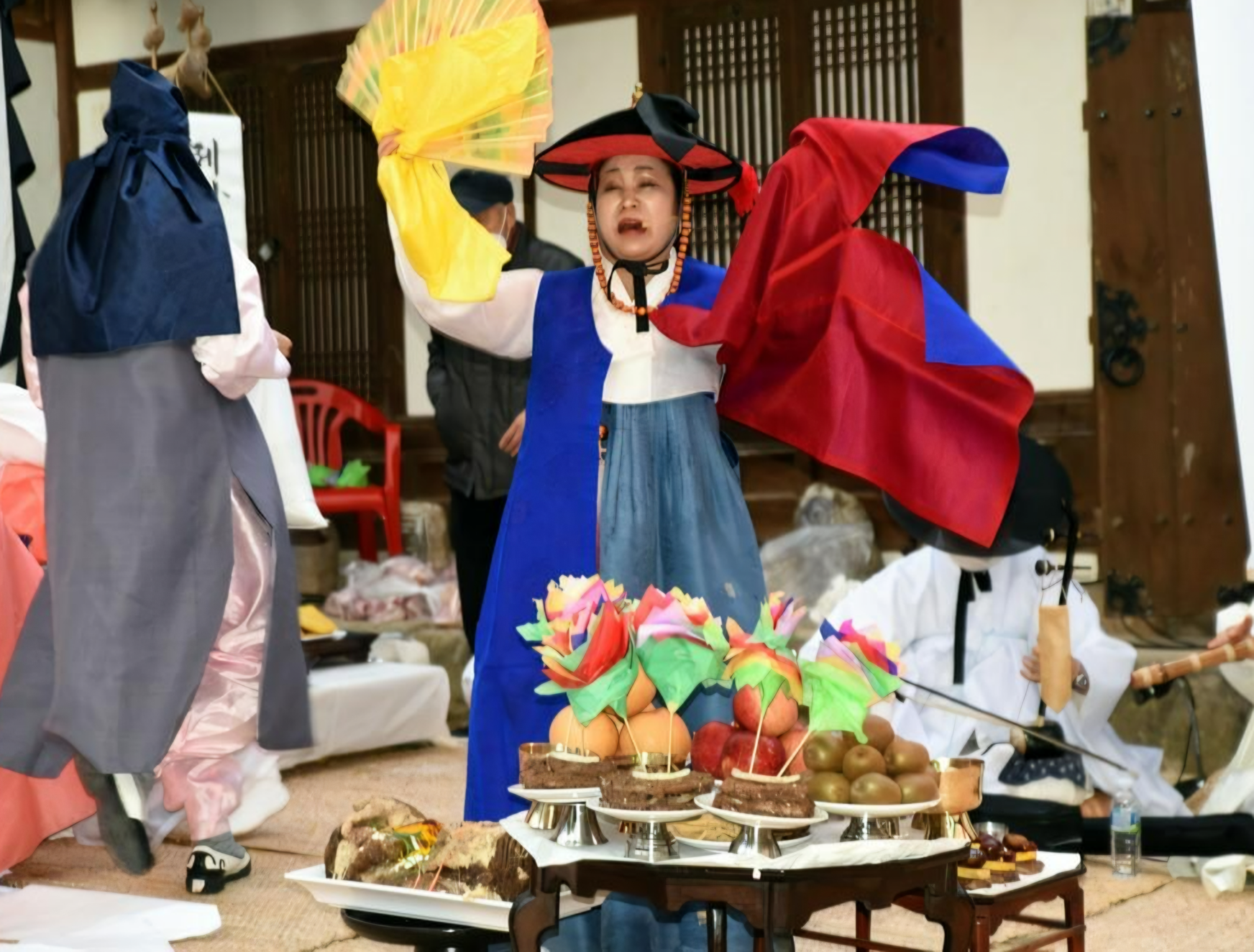
Korean shamanism, known as Musok and Mugyo, is a folk tradition deeply rooted in the country's cultural heritage. Musok, an older term, refers to shamanism as a traditional practice, while Mugyo is a more scholarly term often used in academic contexts.
Mudang is the gender-neutral term for shamans, encapsulating both male and female practitioners. Baksu, a less common term, specifically denotes male shamans.
Mansin, a respectful title for shamans, translates to "10,000 spirits," signifying their connection to and influence by spiritual entities. Sinbyeong, or "spirit sickness," is an illness that affects individuals called by spirits. This condition typically manifests as a period of poor health, both physical and psychological, but subsides after the person is initiated as a shaman.
Gangsinmu become shamans as a result of experiencing sinbyeong. They are called to the practice after being possessed by spirits. In contrast, seseupmu are shamans who inherit their positions, typically through family lineage. They do not usually undergo sinbyeong.
Rituals are a central aspect of shamanic practice in Korea. These Gut rituals encompass various elements such as music, singing, chanting, and dance. The content of these rituals is transmitted orally and through practice between generations, ensuring the preservation and continuation of this ancient tradition.
Written by urgent.news from The Korea Times's reporting — not their text. Machine-written — may contain errors; check the original before relying on it.
Also reported by 1 other outlet
- Korean shamanism terms koreatimes.co.kr