Constitution review implementation: NCCE, media have critical roles to play—EU
The Deputy European Union (EU) Ambassador to Ghana, Jonas Claes, has stated that the media and the National Commission for Civic Education (NCCE) have critical roles to play as the country prepares for a historic constitutional review process.
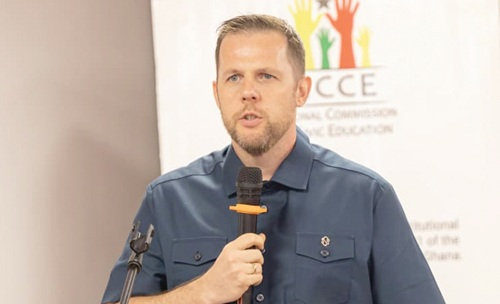
The Deputy EU Ambassador to Ghana, Jonas Claes, has emphasized the crucial roles that the media and the National Commission for Civic Education (NCCE) must play as Ghana prepares for a significant constitutional review process. The review process, which addresses issues such as decentralization, accountability, and human rights, requires extensive civic education to ensure citizens fully understand and can participate effectively. One of the key issues under consideration is the potential abolition of the death penalty.
Claes made these remarks during a media encounter organized by the NCCE in Accra, under the theme “Strengthening Civic Education through Strategic Partnerships.” He reiterated that the NCCE is mandated constitutionally to educate citizens about their rights, obligations, and responsibilities. The EU stands committed to supporting Ghana's civic education efforts and combating corruption and disinformation. Claes highlighted that accurate information will enhance Ghana and Europe's strength and safety.
Regarding press freedom, Claes noted that Ghana currently ranks 39th out of 180 countries in the 2026 World Press Freedom Index, placing it in a relatively strong position. This ranking allows journalists to report facts and provide citizens with accurate information, particularly crucial during election times. He stressed the importance of preserving an independent press as a vital component of a free and democratic society.
Claes identified disinformation as one of the most significant threats to free and democratic societies, as it can manipulate public debate, create suspicion, and erode trust in democratic institutions.
George Sarpong, the Executive Secretary of the National Media Commission (NMC), echoed these sentiments, calling for stronger collaboration among the media, civic education institutions, and other stakeholders to safeguard Ghana’s democracy from the growing menace of disinformation. He stressed that such partnerships are especially important amid increasing digital challenges, media polarization, and preparations for the constitutional review.
Sarpong pointed out that the media, NCCE, and Parliament each have distinct yet complementary roles in fostering responsible citizenship, shaping public discourse, and translating national consensus into laws and policies. The media represents the public sphere where national conversations on citizenship, governance, and the country's direction occur.
Meanwhile, the NCCE prepares citizens for active participation in national affairs, while Parliament provides the institutional framework for decision-making. Sarpong suggested that closer interaction among these institutions is essential to building responsible citizenship, fostering productive public discourse, and translating national consensus into effective laws and policies.
He added that the situation in the Sahel, where disinformation has contributed to instability, serves as a warning for Ghana.
Written by urgent.news from MyJoyOnline Ghana's reporting — not their text. Machine-written — may contain errors; check the original before relying on it.