Concerns over power station fire on Tasmania's power network
An overnight fire that gutted one of Tasmania's hydro power stations raises questions about the effect it will have on the state's power network.
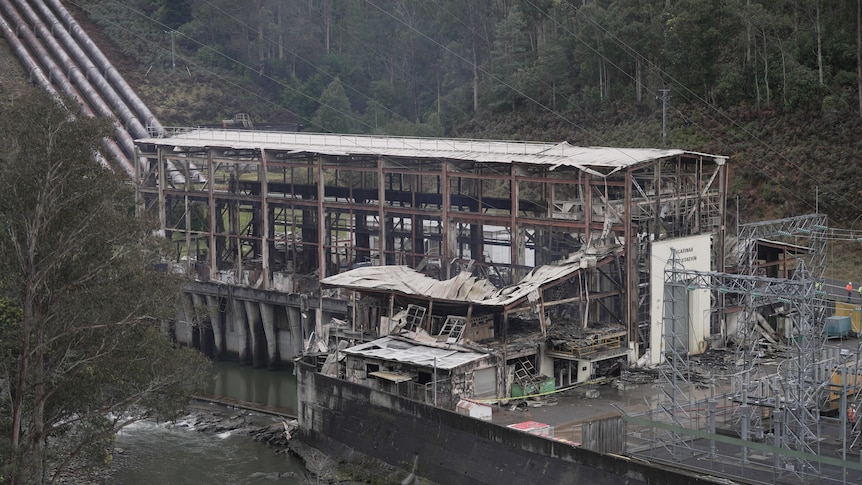
A devastating fire has engulfed one of Tasmania's hydro power stations, raising concerns about the impact on the state's power network. The Tungatinah Power Station, located in the Central Highlands, was the scene of the overnight blaze. While emergency services managed to extinguish the fire, the station is now a shell, rendering it non-operational.
Tungatinah generates around 5% of Tasmania's energy, making it the fifth-largest hydro power station in the state. Despite its smaller size compared to the largest station, the 432MW Gordon Power Station, Tungatinah's loss could still have consequences.
Transmission network operator TasNetworks has confirmed that the power network remains secure, capable of withstanding such incidents. Around 300 customers in the area experienced a temporary disruption in power supply, but no major industries were affected. Tasmania's demand for energy is currently lower due to the recent closure of two smelters, and the 250MW Basslink cable can be utilized to import energy to meet any shortfall.
Hydro Tasmania is exploring its contingency plans, which include the Tamar Valley Power Station's gas generator. This generator has a capacity of 342 megawatts and is expected to be operational by the end of the week. The CEO of Hydro Tasmania, Rachel Watson, expressed confidence that the state will have sufficient generation capacity ready in the coming days.
The state's dams are at their highest levels in 10 years, standing at around 50% of capacity, which is 15% above the prudent storage level for this time of year. Goanna Energy analyst Marc White believes that the current conditions provide an ideal scenario for the catastrophic event to occur, taking into account low demand, strong wind resources, high dam levels, and the availability of Basslink and the gas-fired generation plant.
Tungatinah is part of a larger hydro scheme in the Derwent, comprising 10 major stations and one minor station. Water flows through these stations, generating electricity multiple times. Hydro Tasmania has not yet provided a rebuild price, but the project is expected to cost hundreds of millions of dollars. The company, which is fully insured, may not have to bear the full financial burden.
However, the station's insurance policy will still impact Hydro Tasmania's balance sheet. The power station's production in the past year amounted to $33 million, and it may need to purchase additional energy from the mainland via the Basslink cable.
The main impact of the loss of Tungatinah's power generation is likely to be a decrease in revenue for Hydro Tasmania, potentially leading to smaller payments into the Tasmanian state budget. Less power being generated could also result in Tungatinah needing to purchase more energy from the mainland. Independent economist and former Hydro Tasmania board member Saul Eslake emphasized that the station's importance will persist, particularly if demand for electricity increases, driven by data centers and their willingness to pay commercial power prices.
Written by urgent.news from ABC News AU's reporting — not their text. Machine-written — may contain errors; check the original before relying on it.