Yayoi Kusama’s polka dots were never just dots
Yayoi Kusama, who died at 97 last month, turned hallucinations and a fear of self-obliteration into a global visual language.
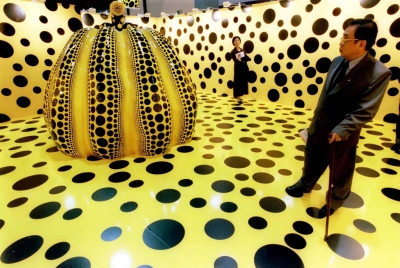
Few visual patterns in contemporary art are as immediately recognizable as Yayoi Kusama's polka dots. They have adorned pumpkins, rooms, trees, handbags and even entire buildings. Despite her passing at the age of 97, these dots will continue to serve as a visual shorthand, allowing millions to identify her work. The dots possess a playful charm that appeals to children, while simultaneously being distinctive enough to function as a global brand.
However, their origins are rooted in a more somber realm. Kusama herself described the dots as hallucinations, obsessive thoughts, and a constant fear of self-obliteration that followed her throughout her childhood.
During an interview conducted in 2016 for the Swedish newspaper Svenska Dagbladet, in preparation for a major Scandinavian retrospective exhibition at Moderna Museet in Stockholm, the reporter asked Kusama about the significance of the dots. This interview has been published in Swedish; however, her original responses, which have not been published in English previously, have been quoted here for the first time.
Despite the fact that the reader's current subscription plan does not permit commenting on stories, it is still important to convey the full narrative surrounding Kusama's dots and their profound meaning to the artist herself.
Written by urgent.news from Japan Times's reporting — not their text. Machine-written — may contain errors; check the original before relying on it.