The Air Marshals Keeping Watch On Eric Swalwell
The FBI made a highly irregular request to monitor one of Trump’s most visible critics.
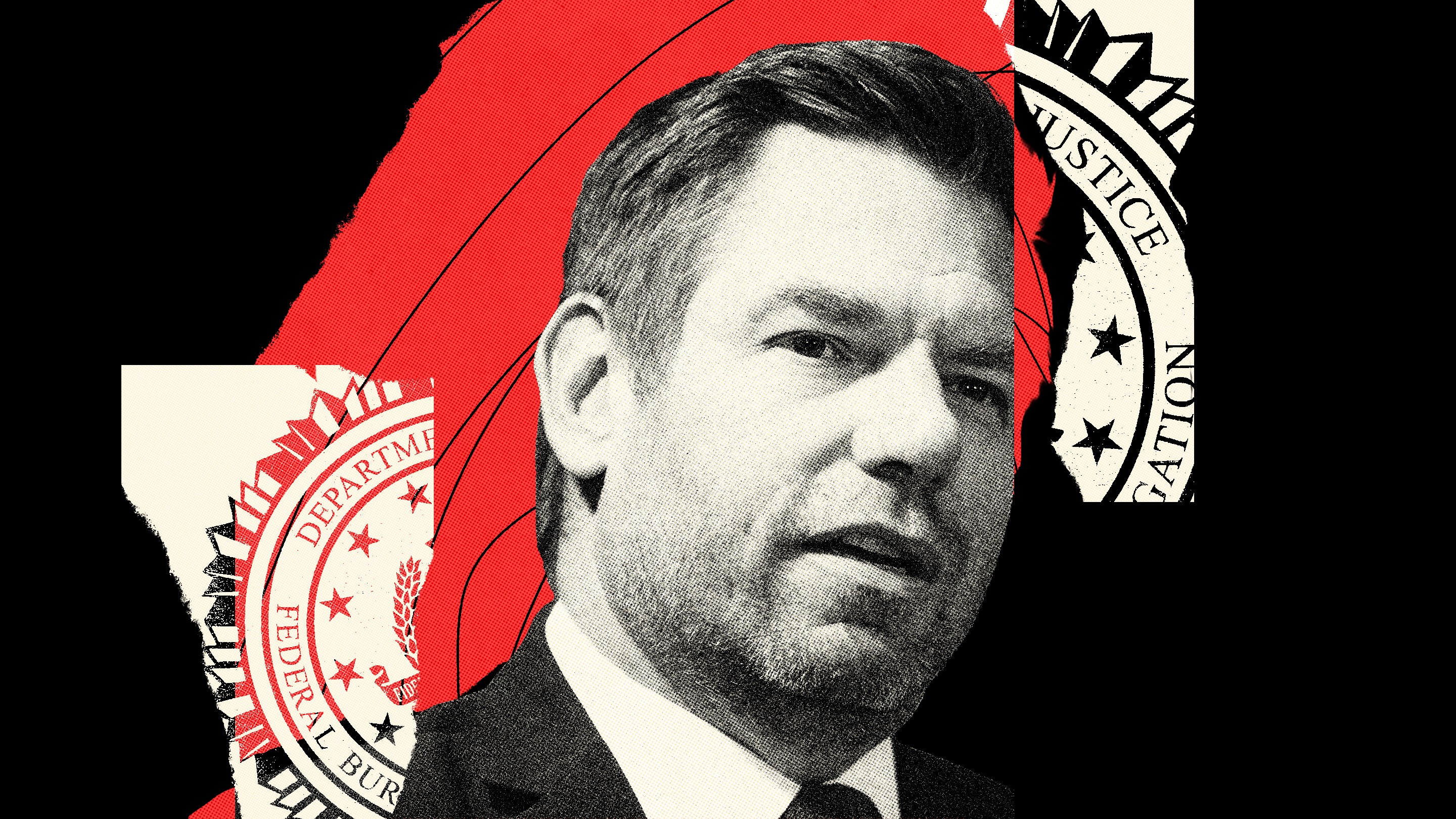
On August 8, former Representative Eric Swalwell embarked on a United Airlines flight from Frankfurt, Germany, to Washington, D.C. Unbeknownst to him, federal agents were monitoring his every move throughout the nine-hour journey. The FBI had requested covert surveillance by the Federal Air Marshal Service to observe Swalwell's electronic devices and ascertain whether they could discern his passcodes, according to unreported records.
Air marshals, trained to remain inconspicuous while observing their targets—typically suspects or potential threats—are tasked with blending in among other passengers. However, Swalwell posed a unique challenge for the Trump administration, as he was a vocal critic of the administration, having participated in the second impeachment trial of President Donald Trump and been called a "scumbag" by Deputy Chief of Staff Stephen Miller.
FBI Director Kash Patel, who sought Swalwell's surveillance, described him as one of the "corrupt actors of the first order" in his 2023 book. The air marshal directive classified Swalwell as the "focus" of an FBI investigation, though no further details were provided. Law enforcement has reason to investigate Swalwell, who has been accused of sexual assault by multiple women, including allegations of rape and unwanted advances.
Swalwell has denied the charges but faces a criminal investigation in Los Angeles and Manhattan. After the flight, Swalwell was searched at San Francisco International Airport, with his phone and computer seized by FBI agents. Documents indicate that the bureau is probing Swalwell's involvement in the sexual assault cases in Los Angeles and New York.
Despite the gravity of the accusations, the FBI's request to the Federal Air Marshal Service to obtain Swalwell's electronic passcodes was deemed unusual. Typically, the FBI does not investigate sexual assault, and obtaining a subject's passcodes is rare even for traditional surveillance targets. Some former law-enforcement officials questioned why the FBI didn't deploy its own agents on the plane for surveillance, as this would have been routine.
The use of "Special Mission Coverage" and the FBI's decision to involve air marshals instead of its own agents raised eyebrows among experts, who suggested that such measures were likely because Swalwell was a political adversary of the Trump administration. Swalwell's lawyer stated that his client has been in contact with the Department of Justice and would comply with any requests.
The FBI declined to comment on the matter, and the Transportation Security Administration did not respond to inquiries seeking comment. This unique scenario involving Swalwell is not the only unusual action taken by the federal government in this case. The warrant used to seize Swalwell's electronic devices cited a civil-rights statute historically applied to police officers abusing their authority.
Legal experts believe that the FBI may have used this law to investigate potential evidence of coercion or threats in Swalwell's electronic communications, though the applicability of the law to a legislator is questionable.
Written by urgent.news from The Atlantic's reporting — not their text. Machine-written — may contain errors; check the original before relying on it.