Scientists Intrigued by a Surprising Result in the Search for Dark Matter
Dark matter is the invisible stuff that accounts for roughly 85% of the mass in the universe, and for decades, physicists have been trying to figure out what it's made of. Now an experimental facility located nearly a mile below ground in South Dakota has recorded a single interaction between subatomic particles that doesn't match what's expected from normal matter. Has a dark-matter particle…
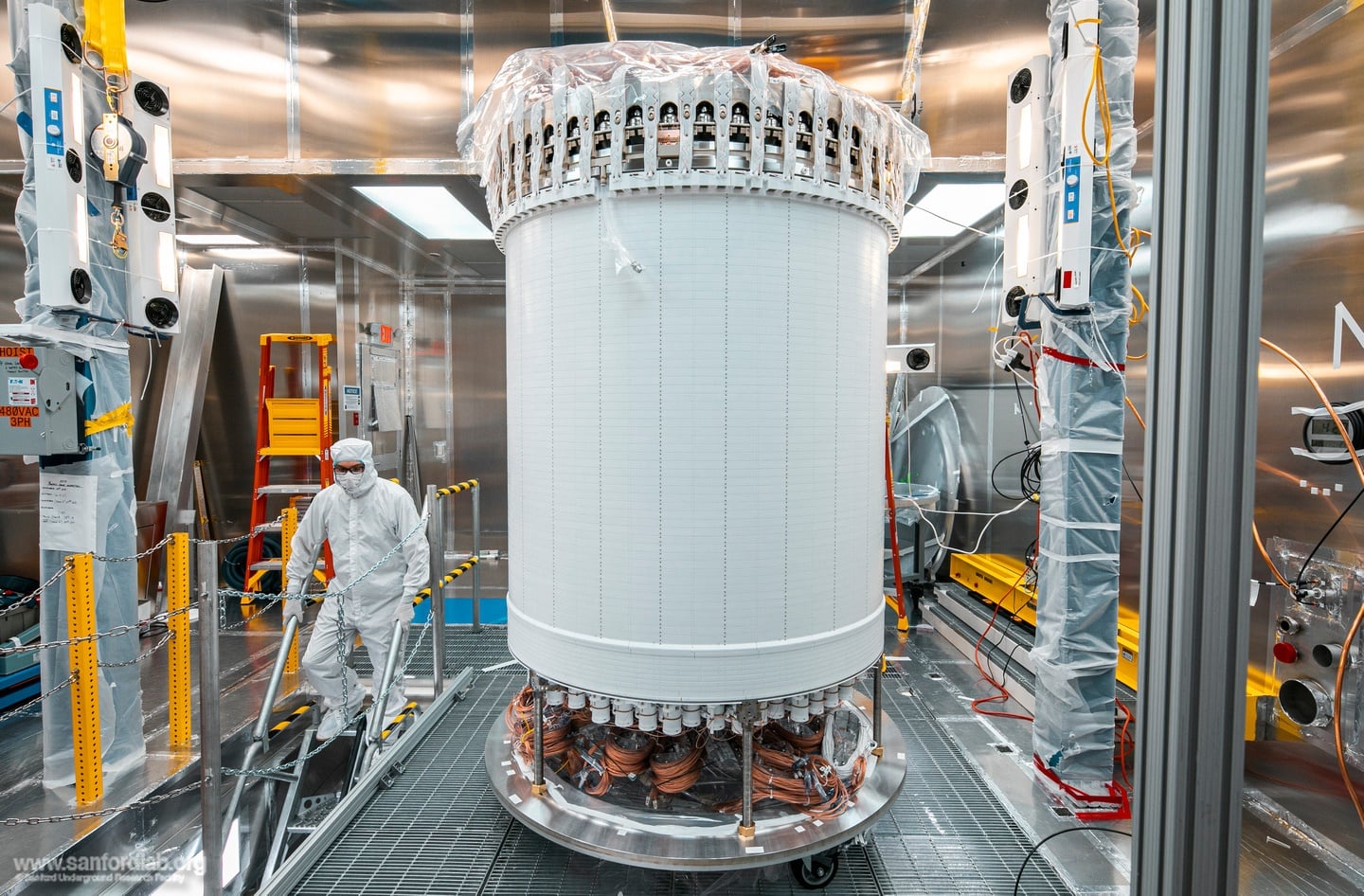
Scientists are captivated by an unexpected finding in the quest to uncover dark matter. At the Sanford Underground Research Facility, a converted gold mine in South Dakota, a detector recorded a single subatomic particle interaction that deviates from expectations for ordinary matter. The anomaly has drawn attention from experts in the field.
The detection took place in a 10-ton tank filled with ultra-pure liquid xenon, designed to capture weakly interacting massive particles, or WIMPs. After reviewing 220 days of data from March to April 2024, researchers observed an event with a spectrum of nuclear recoil energy that defies explanation in terms of known background signals.
While intriguing, the discovery remains unconfirmed, as the significance level was only 2.6 sigma, below the conventional 5-sigma threshold for a discovery claim. The anomaly's mass is estimated to be over 200 times that of a proton, but further evidence is needed to support this hypothesis. Experts emphasize the need for additional confirmation and replication of the findings through further research and laboratory experiments.
Written by urgent.news from Universe Today's reporting — not their text. Machine-written — may contain errors; check the original before relying on it.
This story
This is one outlet's version. Read the fullest account.