LZ Experiment Sees Surprising Result In Search For Dark Matter
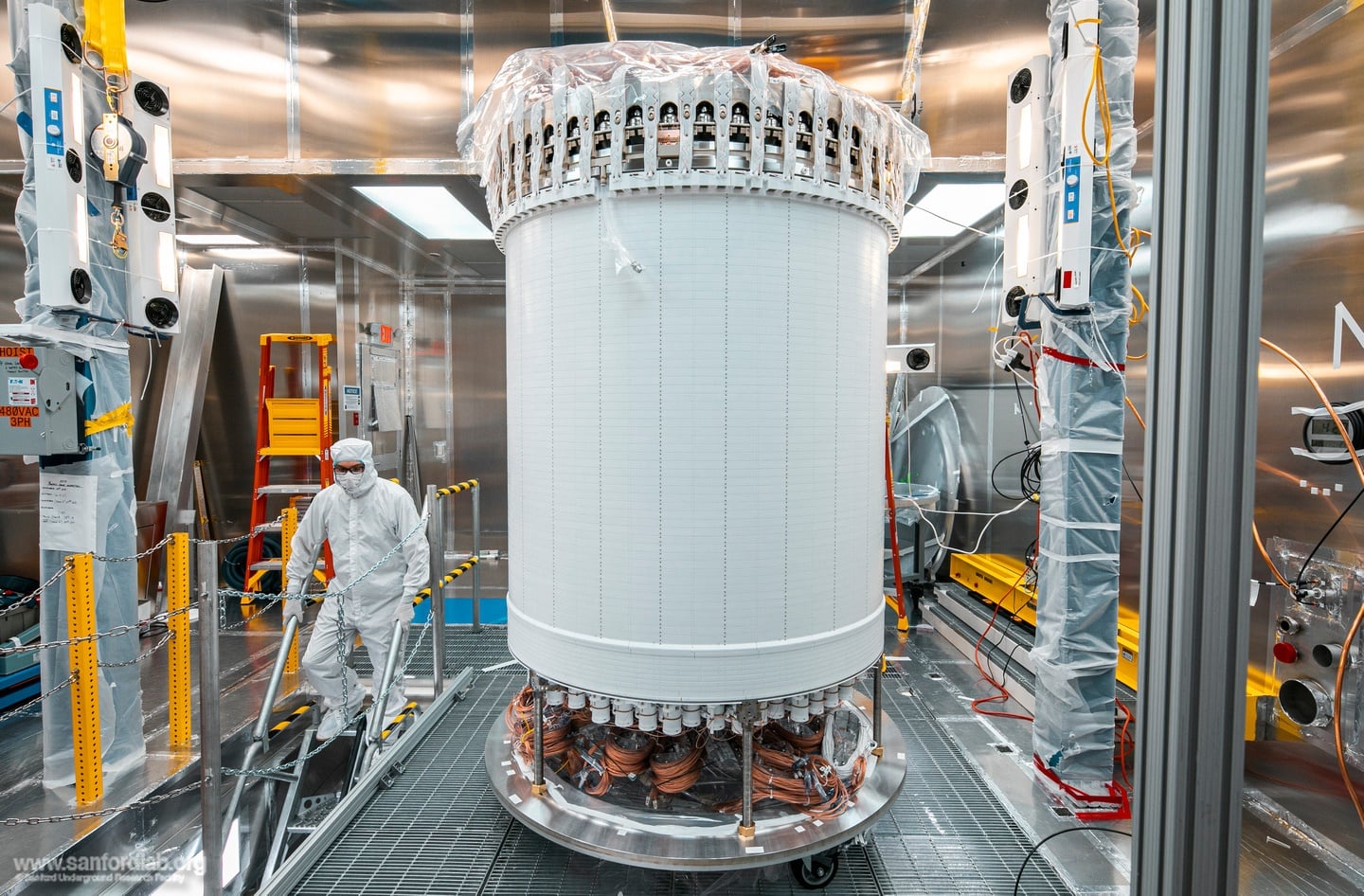
New submitter greytree shares a report from Brown University: LUX-ZEPLIN, an experiment co-led by Brown University faculty and students, observed a particle interaction that could be interpreted as a signal from WIMPs, a dark matter candidate -- but researchers need more data to confirm. [...] The result does not yet meet the statistical threshold required to claim a discovery, but it is the most…
Brown University's LZ experiment, a collaboration led by faculty and students from the institution, detected a particle interaction that could potentially indicate the presence of WIMPs, a proposed dark matter candidate. However, the researchers require more data to substantiate their findings. While the event does not meet the statistical requirement for a discovery claim, it is the most promising hint of dark matter reported by the experiment thus far.
Rick Gaitskell, Brown's physics professor and LZ spokesperson, expressed interest in the event, noting its rarity and low background noise in the expected dark matter region. With only one observation, the team refrains from claiming a WIMP discovery, instead opting to share the intriguing result with the scientific community. The event, if caused by a WIMP, would likely involve a WIMP mass of 200 GeV/c2 or greater.
LZ's current findings have reached a statistical significance of 2.6 sigma, indicating a 0.5% chance the event could be explained by background noise. The experiment has amassed the largest dataset on dark matter to date and will continue to collect data, enhancing their search capabilities. JiJi Fan, Brown physics professor and theoretical researcher, found the findings intriguing, acknowledging the possibility of other interaction types that could explain the event.
The new results will be presented at the 2026 TeV Particle Astrophysics conference in Japan and published in a paper detailing the findings.
Written by urgent.news from Slashdot's reporting — not their text. Machine-written — may contain errors; check the original before relying on it.