Researchers edit beagle embryos to remove a major dog allergen
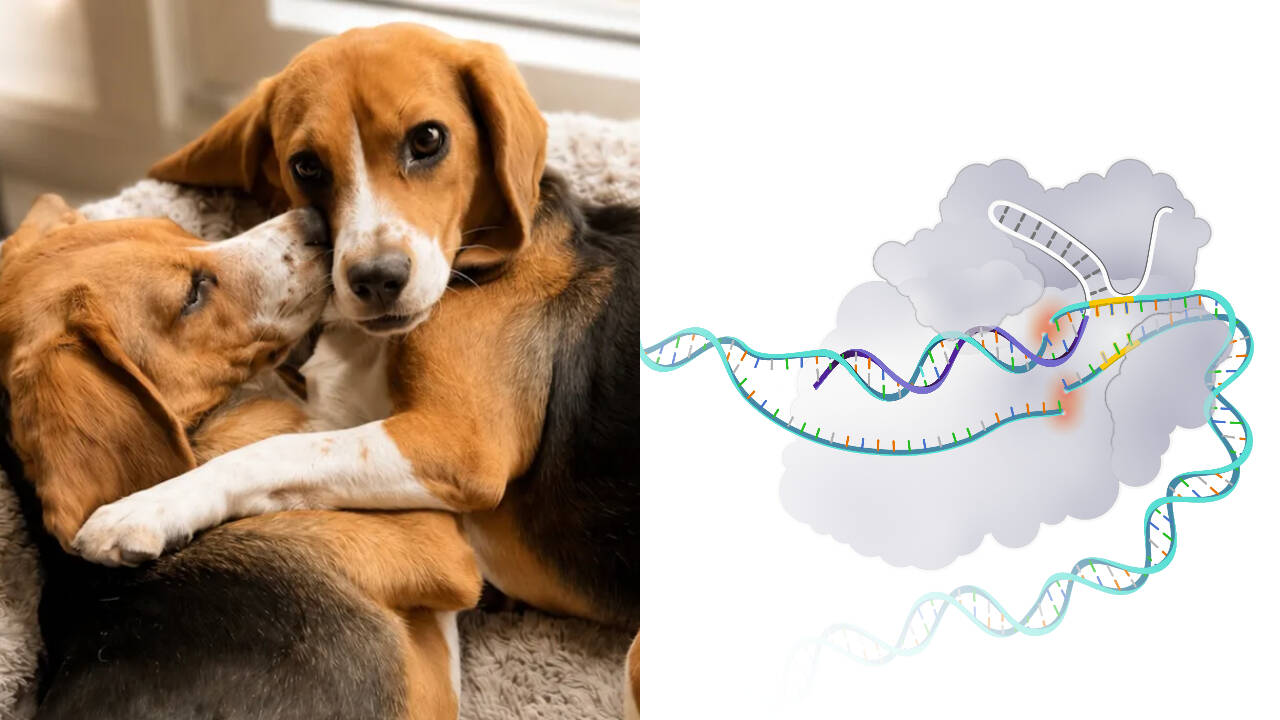
Dogs are frequently referred to as humans' most reliable companions, but for individuals with dog allergies, cohabitating with a canine friend can be challenging or even unfeasible. Researchers at Kindred Companion Sciences have made significant strides in producing dogs that might be more tolerable for allergy sufferers. Utilizing CRISPR technology, the Nobel Prize-winning gene-editing technique, scientists have successfully removed a gene responsible for producing Can f 1, a major protein linked to dog allergies.
This groundbreaking study, published on August 5 in the CRISPR Journal, gave rise to two female beagles named Alfie and Bailey, born in September 2024. Although these dogs bear a resemblance to regular beagles, tests indicate that they contain undetectable levels of the targeted allergen. The project holds a personal significance for Kindred's co-founder and CEO, Matt Walker, a geneticist who has experienced dog allergies throughout his life.
Walker's wife, Maggie, who always desired a dog, finally saw that dream fulfilled with the birth of Bailey, who has not triggered any allergic reactions in Walker. To develop these dogs, researchers extracted skin cells from a beagle, edited the Can f 1 genes, cloned the modified cells, transferred the altered DNA into donor egg cells, and implanted the resulting 25 embryos into a surrogate beagle.
Alfie and Bailey are the only two offspring of this process, which have not been subjected to the FDA's approval yet. The absence of detectable Can f 1 protein in saliva and dander samples from Alfie and Bailey, contrasted with samples from conventional beagles, poodles, and goldendoodles, demonstrates the potential of this gene-editing technique.
Although the research indicates that Alfie and Bailey's health remains unaffected, close monitoring of the animals will continue throughout their lives. The ethical implications of genetically modifying companion animals are still under debate, as some experts argue that gene editing could potentially broaden pet ownership, while others express concerns that the demand for engineered dogs might discourage adoption of stray or unwanted animals.
Written by urgent.news from Times of India's reporting — not their text. Machine-written — may contain errors; check the original before relying on it.