Reliability Testing for Fleet Camera Image Quality Drift
How temperature, vibration, humidity, and corrosion degrade fleet camera image quality over time and why reliability testing must track IQ drift.
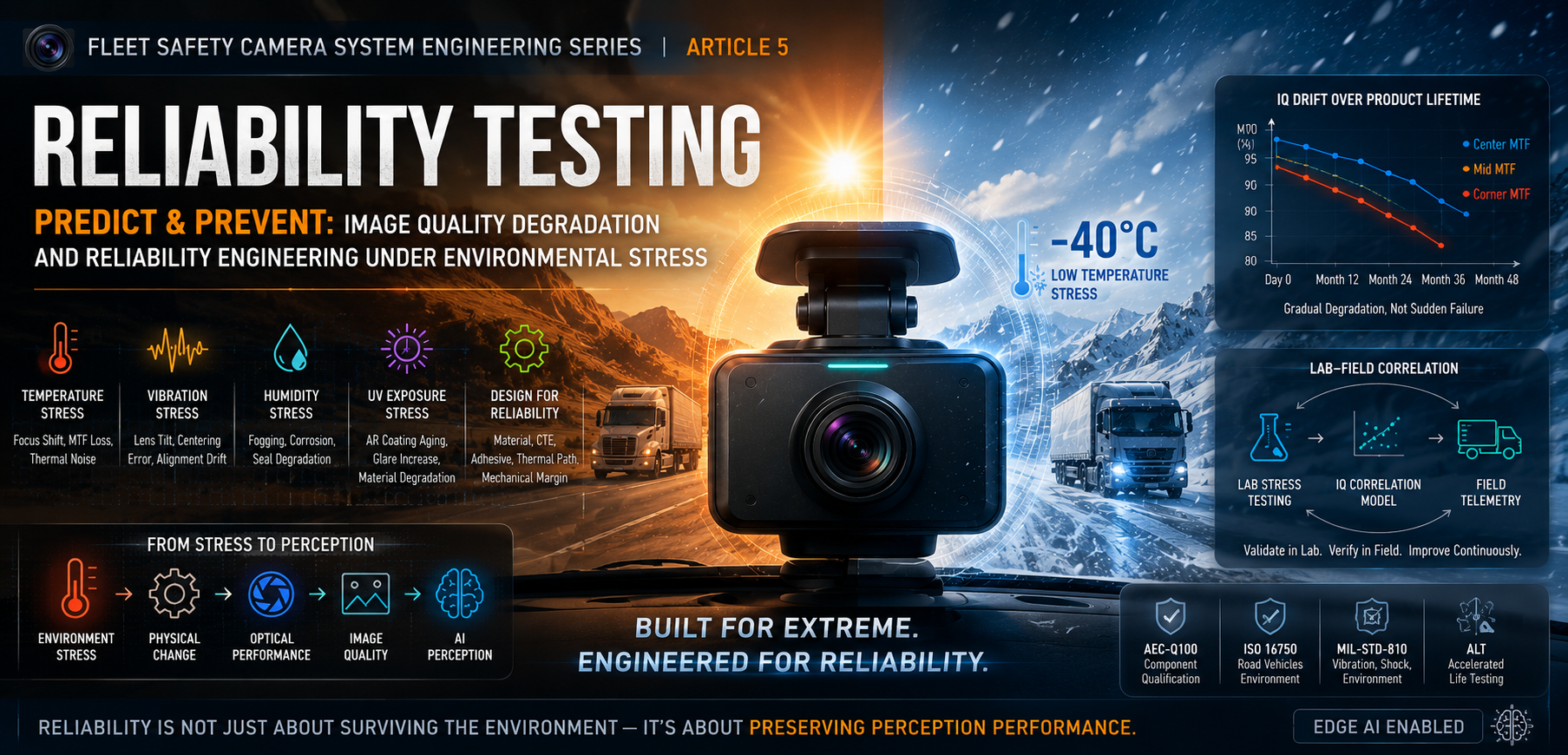
Long-term environmental stresses can gradually degrade camera image quality, leading to performance issues in fleet cameras. Understanding these degradation mechanisms is crucial for designing reliable systems. In-cabin environments experience wide temperature ranges, vibrations, humidity, and road salt that can impact camera performance.
The article explores temperature stress, mechanical stress, and environmental corrosion as key factors affecting image quality. Temperature stress causes lens expansion, focus shift, MTF loss, and detection accuracy decline. Athermalized lens designs and temperature tolerance are essential for maintaining stable imaging. Temperature also impacts sensor electrical performance, with increased dark current at higher temperatures.
By comprehending these stress mechanisms, engineers can allocate tolerance budgets and develop preventive measures during the design phase, ensuring long-term reliability of camera systems in fleet operations.
Written by urgent.news from HackerNoon's reporting — not their text. Machine-written — may contain errors; check the original before relying on it.