Pentagon turmoil deepens as Hegseth consolidates control
The Pentagon has entered a period of profound institutional turmoil, as a crisis of leadership at home converges with a crisis of capacity abroad. Why it matters: Six months into the Iran war, Pete Hegseth presides over a Pentagon with fewer senior leaders, fewer critical weapons and less public accountability than at any point in President Trump's two terms. Zoom in: The most striking departure…
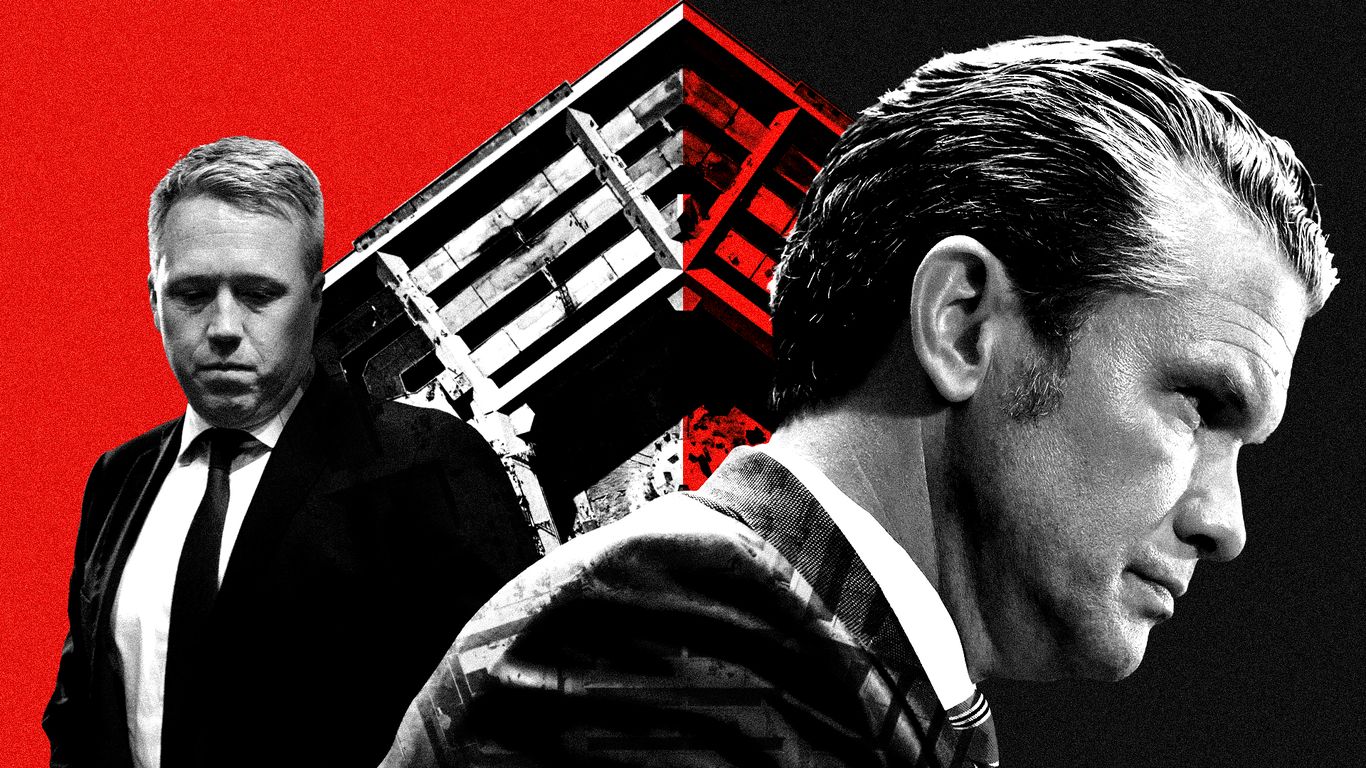
The Pentagon is currently experiencing significant turmoil as leadership and capacity issues intensify, particularly during the ongoing Iran war. Since the start of the conflict six months ago, Pete Hegseth has overseen a Pentagon with fewer senior leaders, critical weapons, and reduced public accountability than at any point in President Trump's two terms.
A notable departure occurred on Monday when Army Secretary Dan Driscoll resigned following months of conflicts with Hegseth over the Army's leadership and modernization. Driscoll, a rising star and Yale Law classmate of Vice President Vance, was once considered a potential successor to Hegseth himself. This resignation, coupled with the previous firing of Army Chief Gen. Randy George, has left the Army without any Senate-confirmed civilian or uniformed leadership during the Iran war.
Hegseth has been actively removing senior officers from across nearly every service, including the chairman of the Joint Chiefs, the Navy's top admiral, and the Army chief of staff. The Washington Post has documented over two dozen top officers dismissed under Hegseth, and the New York Times reports that he has personally removed at least 45 officers from promotion lists this year. These actions represent a significant intervention in a system traditionally insulated from political leadership.
The cumulative effect of these events is a thinner senior command at a critical time when the U.S. military is being tested by the Iran war. Commanders overseeing Europe, the Pacific, and Latin America, as well as the Navy's top officer, have formally objected to extending forces for the conflict. They have warned that prolonged deployments are degrading their ability to address threats in other regions.
The Navy's top admiral informed Hegseth that only a quarter of its destroyers are ready for deployment, and the only dedicated Pacific carrier has been diverted to the Middle East, leaving the U.S. with a significantly reduced arsenal.
Pentagon spokesman Sean Parnell dismissed allegations of disarray and called the media's publication of classified assessments a crime. He maintained that the U.S. possesses a deep, ready arsenal and that claims of shortages are false. However, the Pentagon has become increasingly inaccessible to the public, having not held a formal press briefing since May 5, despite Parnell's early pledge to make briefings routine as part of a transparent Department of Defense.
Despite the turmoil, Hegseth's position has strengthened. He has survived previous controversies, outlasted potential rivals, and consolidated control over an institution often viewed as a bastion of the Deep State. President Trump has reaffirmed his support for Hegseth and requested a record $1.5 trillion defense budget from Congress.
Written by urgent.news from Axios's reporting — not their text. Machine-written — may contain errors; check the original before relying on it.