Kritische Infrastruktur: Wie ist die Stromversorgung geschützt und wer greift sie an?
Warum Sicherheitsbehörden oft im Dunkeln tappen und Betreiber mehr Unterstützung fordern: Wer steckt hinter den Angriffen auf das Stromnetz und wie könnte es besser geschützt werden?
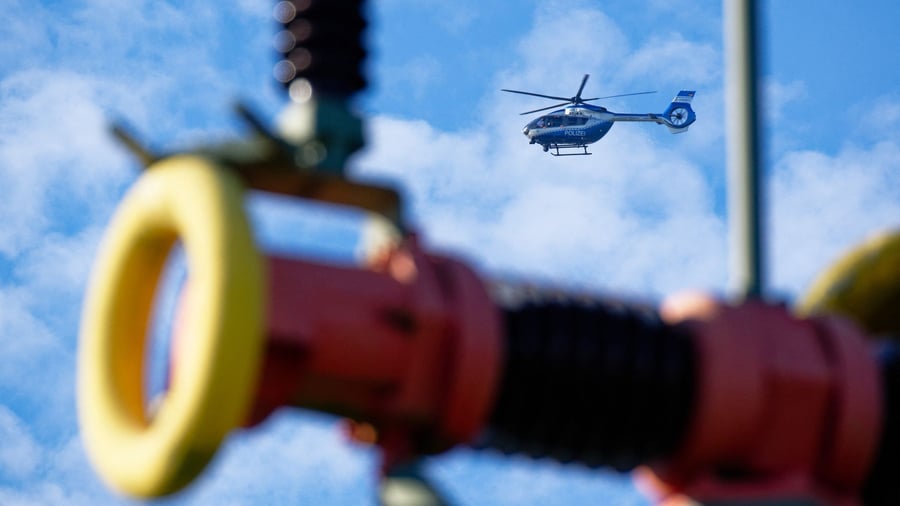
Two recent power outages in Germany, with noticeable effects, demonstrate the protection of critical infrastructure and those who target it. In Brandenburg, unknown individuals used self-assembled missiles, resembling silvery rockets, to introduce conductive material to high-voltage lines at the Turnow-Preilack substation, causing short circuits.
In Bergheim, near Cologne, a deliberate short circuit caused a disruption at a substation, leading to the shutdown of five lignite power plant blocks. However, in both instances, sabotage did not impact the overall power supply. These incidents differ from the 2019 Berlin incident, where a fire at a cable bridge caused a widespread outage affecting tens of thousands of people.
The question of how well Germany's power supply is protected is crucial. The energy sector is considered critical infrastructure, encompassing facilities vital to societal functioning. The Federal Ministry of the Interior states that "in principle, critical infrastructures in Germany are well protected." However, both security authorities and industry operators often express the impossibility of securing every power mast and railway line in Germany.
Protection mainly consists of technical measures and emergency plans. Ingrab Liebing, CEO of the Association of Municipal Enterprises (VKU), notes that "everywhere, something can happen, because despite all the measures taken and to be intensified by companies, there's no 100% security." The Federal Ministry of the Interior assigns the protection of critical infrastructures as a core responsibility to both the state and economy, central to Germany's security policy.
Over the past three years, legal obligations for critical infrastructure operators have intensified, including risk analyses and reporting of security incidents. Operators, however, are dissatisfied with the overall sparse findings on numerous sabotage cases in recent years. Liebing states, "the culprits must finally be brought to justice."
The VKU seeks financial support from the federal government and states for effective protection concepts, emphasizing that the state should not shift its responsibility for public safety to companies. The Federal Network Agency considers the two recent incidents "very serious" and underscores the importance of enhancing protection against physical threats with the KRITIS umbrella law, which entered force in March.
Agencies report working on identifying and securing weak points and improving collective response capabilities in case of outages. Information on those behind the attacks on power and rail networks remains scarce. Security authorities have not yet found conclusive evidence, suspecting left-extremist motives in several sabotage cases, particularly due to confessed letters of confession assessed as authentic.
In a publication by the Domestic Intelligence Service, it is stated that energy, information technology and telecommunications, transport and traffic, as well as state and administration, are primarily targeted by destructive actions and arson. The Federal Ministry of the Interior asserts that attacks on critical infrastructure serve the interests of repressive state aims, focusing on satisfying capitalist profit interests and consolidating power.
The second and third scenarios, involving hybrid attacks allegedly orchestrated by Russia, are currently speculative. The Ministry of the Interior described Russia's objective as creating the impression that the German state cannot protect its citizens. Hybrid warfare encompasses military, economic, intelligence, and propaganda tools, including cyberattacks and public opinion manipulation.
Written by urgent.news from Handelsblatt's reporting — not their text. Machine-written — may contain errors; check the original before relying on it.