India’s solar boom is outpacing the grid’s ability to absorb clean power
AgenciesWhen India’s power demand surged at the height of summer, the country struggled to meet evening needs as air conditioners ran longer amid hotter nights. Despite this demand...
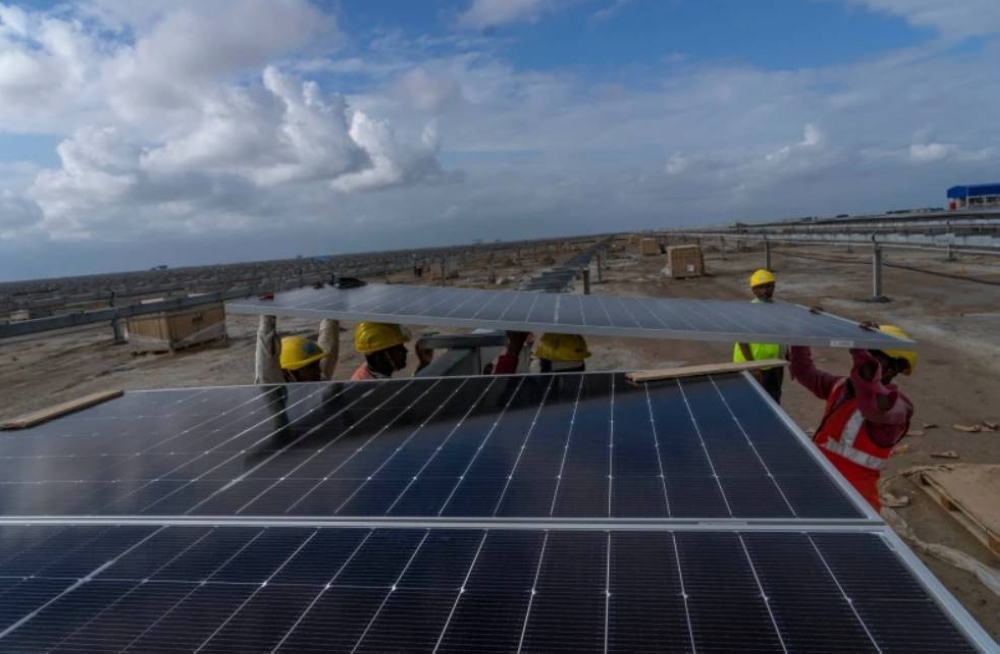
India's solar power production has been outpacing the country's ability to effectively integrate the clean energy into its grid, according to recent data. In the past 15 months, nearly 11 terawatt-hours of solar generation remained unused due to curtailment, as the grid struggled to absorb the excess clean electricity. This issue arises as India continues to experience high summer temperatures and poor monsoon rains, driving up demand for power for cooling and irrigation.
With the world's largest population and significant greenhouse gas emissions, India is rapidly expanding its renewable energy capacity, particularly solar. However, the country faces significant challenges in transmitting and storing the excess electricity generated by solar and wind farms. Experts argue that merely building more solar and wind farms is no longer sufficient; the nation must also invest in transmission lines, battery storage, and a more adaptable power system to manage the fluctuations in renewable energy output.
Despite having more than 300 gigawatts of clean power capacity, India still relies heavily on coal-fired power plants, with coal accounting for the majority of its electricity generation. The primary reason for this reliance is curtailment, which occurs when a wind or solar plant produces more electricity than the grid can accommodate.
Energy analysts argue that curtailment leads to financial losses for clean power developers and hinders the country's transition to renewable energy sources. Another challenge lies in the high concentration of renewable energy generation in the western states of Gujarat and Rajasthan, which have nearly 50% of India's solar power capacity.
These areas quickly become congested with transmission lines, limiting the efficient evacuation of solar power. Furthermore, as India aims to achieve 500 gigawatts of clean electricity capacity by 2030 and 70% of its installed power capacity from non-fossil sources by 2036, the nation faces a critical need for substantial investments in energy storage solutions.
Despite the progress made in recent years, India's storage sector remains far behind the levels required to support the rapidly increasing solar and wind capacity.
Written by urgent.news from Qatar Tribune Business's reporting — not their text. Machine-written — may contain errors; check the original before relying on it.