Golfers despair as rabbits damage one of Australia's best courses
There are fears out-of-control rabbits and the unexpected holes they keep adding to the greens will threaten the legacy of one of the oldest golf courses in Western Australia.
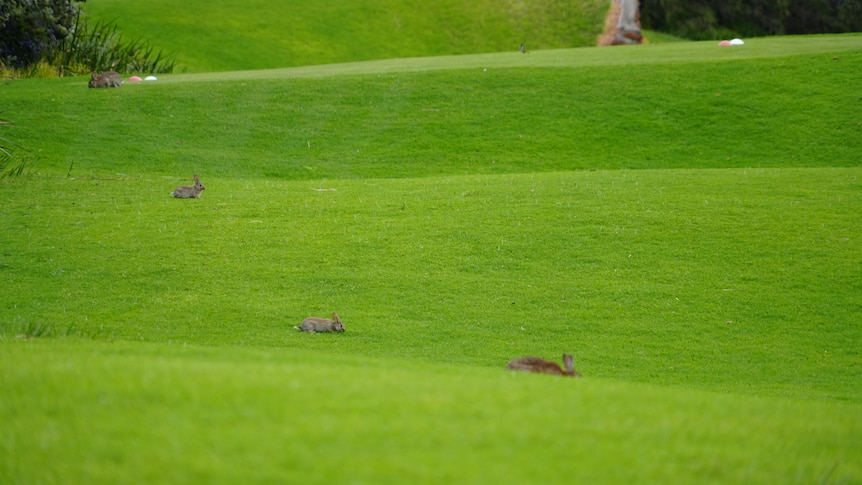
Albany residents describe a devastating infestation of rabbits on a premier golf course and nearby farms, highlighting Australia's inadequate feral animal control measures. The Albany Golf Course, located about 450 kilometres south of Perth, is home to the state's oldest golf club and has recently become one of the top 100 golf courses in the country due to its picturesque coastal greens.
However, increasing numbers of rabbits have posed a significant threat to the course's legacy, with rising damage costs causing the general manager to explore alternative control methods.
City of Albany reserves manager Jacqui Freeman notes that calicivirus and myxomatosis are used to control rabbits in areas causing environmental or amenity damage. However, these controls are losing effectiveness, leading the general manager to consider alternatives like shooting. A local gun retailer reports that more people are engaging in rabbit hunting, with a noticeable increase in the number of rabbits killed.
Albany gun retailer Cooper Daniels recounts that what once took him three or four attempts to kill a rabbit now requires eight, 10, or 12. The farms he visits suffer extensive damage from rabbits, with acres of land destroyed. Similarly, a Cranbrook farmer expresses growing concern over the escalating rabbit problem, citing increasing numbers and the development of resistance to existing control measures.
The federal government has invested $2.6 million in a new rabbit biocontrol study as part of the 2026 budget, aiming to develop updated control measures. The Australian Invasive Species Council welcomes the investment but warns that it could take up to a decade to develop a new virus. Senior advocate James Johnston describes the rabbit population as reaching plague-like proportions, similar to levels seen in the 1990s.
Experts emphasize the need for updated control measures, as rabbit biology necessitates introducing new viruses every 10 to 15 years. Murdoch University wildlife ecologist Trish Fleming underscores this requirement, stating that there will always be a need for new control methods to keep up with rabbits' ability to breed themselves out of existing threats.
The Department of Agriculture, Fisheries and Forestry is working on the recommendations from the National Rabbit Biocontrol Pipeline Strategy, including the development of new control tools.
Written by urgent.news from ABC News AU's reporting — not their text. Machine-written — may contain errors; check the original before relying on it.