Fiber to the Home: Glasfaser-Internet wird einfach kein Verkaufshit
Im Digitalzeitalter wird ein gutes Internet immer wichtiger. Also her mit dem Glasfaser-Vertrag, könnte man meinen. Pustekuchen: Einer Studie zufolge ist das Interesse an Glasfaser ausbaufähig.
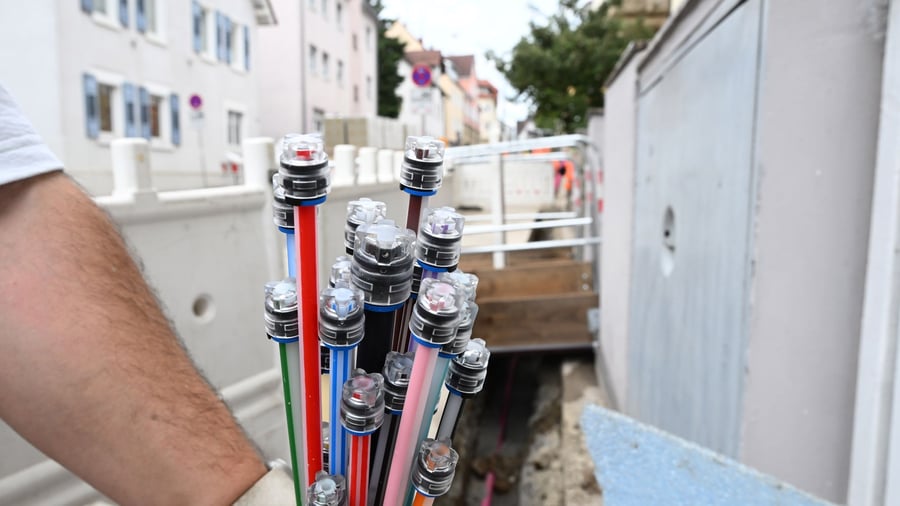
Despite the growth of fiber-optic internet in Germany, a majority of households are not taking advantage of its faster and more stable service. A June analysis by consulting firm IW Consult, commissioned by the Broadband Association Breko, showed a 27.5% uptake rate, nearly the same as a year earlier. There were fiber-optic connections laid out to 28.7 million homes and businesses, but only 7.9 million were actively subscribed to fiber-optic internet services, known as Fiber to the Home (FTTH).
This indicates a high level of reluctance among customers to adopt fiber-optic internet. As of mid-2025, there were 24.3 million homes passed and 6.6 million homes activated. However, not all households without fiber-optic contracts are passive – some are tenants who would benefit from it, but their landlords prevent it. Fiber-optic internet is considered the best technology for internet, with rival technologies like DSL/VDSL and cable TV being outdated models.
The reason for this could be the price of fiber-optic internet, which some experts say is slightly higher, but offers better quality and higher bandwidth compared to copper-based DSL/VDSL. Another factor could be that DSL/VDSL connections are already quite reliable, with Germany having a relatively good VDSL network compared to Europe.
The growing demand for better internet, driven by AI applications, home office work, and the desire for digital participation, is positive. However, the fiber-optic industry faces challenges due to low demand, high expansion costs, investor skepticism, and limited cash reserves. Companies like Deutsche Glasfaser have had to reduce their expansion targets.
Moreover, the market leader Deutsche Telekom and its competitors are divided on whether and when to cut off DSL technology, with Breko demanding a mandatory shutdown by 2035, while Telekom wants to decide for itself. The Magenta Group, a strong fiber-optic builder, has even weaker demand than its competitors. Currently, 57.2% of households and businesses in Germany are expected to have DSL/VDSL internet by the end of the year.
This poses a problem for Telekom competitors, who hope for better business opportunities when DSL networks are gradually decommissioned, thereby automatically increasing demand for fiber-optic internet.
Written by urgent.news from Handelsblatt's reporting — not their text. Machine-written — may contain errors; check the original before relying on it.