China’s multipolar world order must prove it can be peaceful
China has spent years articulating its preferred principles for the world order. In June, it went a step further, bringing many of them together in a white paper on global governance and setting out how its Global Governance Initiative should translate principles into practice. Two ambitions sat side by side: an “equal and orderly multipolar world” and a “universally beneficial and inclusive…
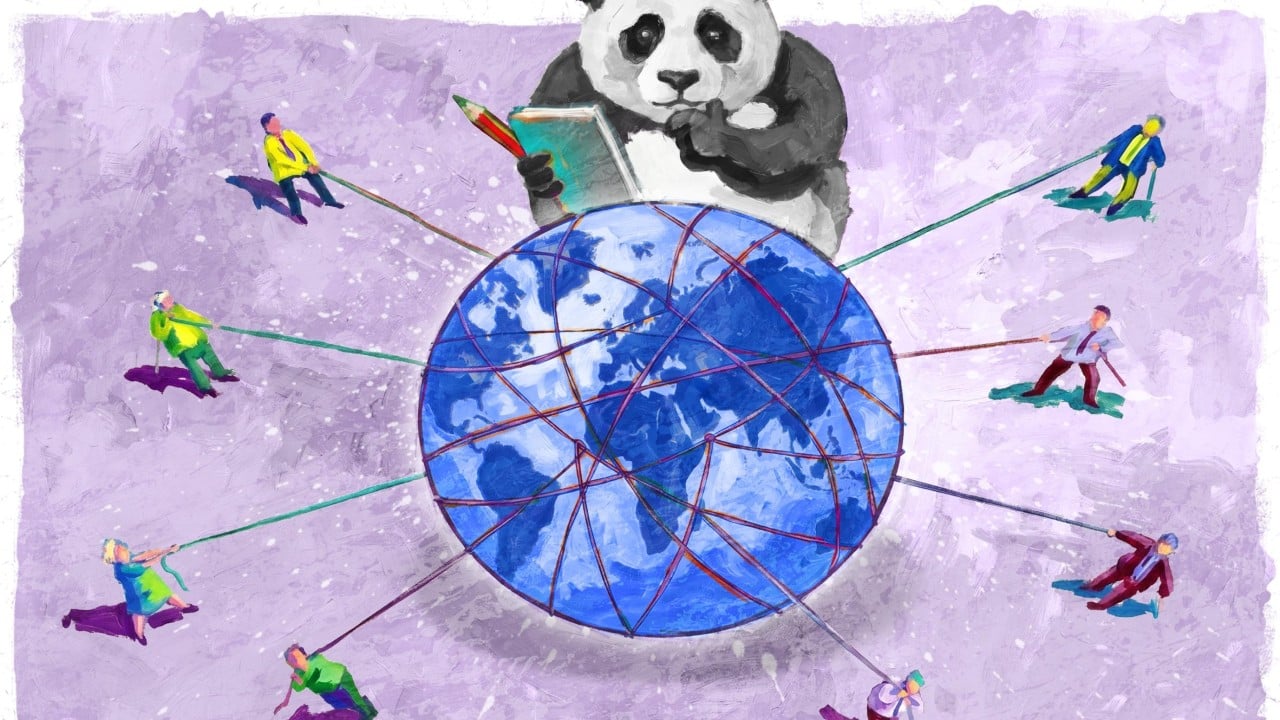
China has long advocated for a multipolar world order, emphasizing the importance of peaceful coexistence among nations with differing political systems. In June, the country took another step forward by publishing a white paper on global governance, outlining how its Global Governance Initiative could translate its principles into practice. Two key ambitions emerged: fostering an "equal and orderly multipolar world" and promoting universally beneficial and inclusive economic globalization.
The timing of this announcement is significant, as world leaders convene in New York for the 81st United Nations General Assembly, focused on "Restoring Trust, Managing Transformation." The term "multipolar" is no longer the primary concern; "orderly" has taken its place. While multipolarity is becoming more conceivable due to the rise of middle powers seeking greater bargaining power among multiple centers of influence, order remains a challenge.
Post-Cold War assumptions that economic integration would reduce political differences no longer hold true.
China's vision for a multipolar world is predicated on the idea that countries of varying political differences can maintain economic connections and coexist peacefully. This proposition holds particular significance for China, as a more diffuse distribution of power could enhance its strategic flexibility, allowing other states to engage with Beijing without being drawn into its sphere of influence.
Nevertheless, the erosion of hierarchy and the weakening of order are not synonymous. While China may benefit from the former, it could become more vulnerable to the latter.
China's economic and geopolitical interests are closely tied to the stability of global trade and supply chains. When faced with insecurity, Beijing places a premium on protection, prioritizing connectivity over connectivity. In this context, China has a vested interest in preventing conflicts from becoming the dominant force shaping a multipolar world, as evidenced by its calls for safe passage through the Strait of Hormuz and its efforts to mediate the Saudi-Iran rapprochement.
While diplomatic breakthroughs, such as the restoration of relations between Saudi Arabia and Iran, signal progress, they do not equate to a durable international order. The challenge lies in designing institutions that can withstand future crises and maintain stability. China has begun to recognize this gap and is exploring the creation of a new regional security architecture, although the specifics remain unclear.
To address this challenge, China could treat global connectivity as a public good, ensuring the smooth functioning of commercial shipping, energy flows, and civilian supply chains even during periods of political turmoil. This approach would not necessitate the replication of American primacy's network of bases, alliances, and security guarantees. Rather, Beijing could help establish institutions that provide stabilizing functions of hierarchy without perpetuating hierarchical structures.
Ultimately, China must demonstrate that it is not only peace-loving but also peace-benefiting, meaning that its economic and political gains are intrinsically linked to international stability. By doing so, China will strengthen its case for a multipolar world order, emphasizing that a world without convergence can still be safe and orderly. If successful, this approach will underscore that multipolarity can be both multipolar and orderly, addressing a critical concern for the international community.
Written by urgent.news from South China Morning Post's reporting — not their text. Machine-written — may contain errors; check the original before relying on it.
This story
This is one outlet's version. Read the fullest account.