China’s multipolar world order must prove it can be peaceful
China has spent years articulating its preferred principles for the world order. In June, it went a step further, bringing many of them together in a white paper on global governance and setting out how its Global Governance Initiative should translate principles into practice. Two ambitions sat side by side: an “equal and orderly multipolar world” and a “universally beneficial and inclusive…
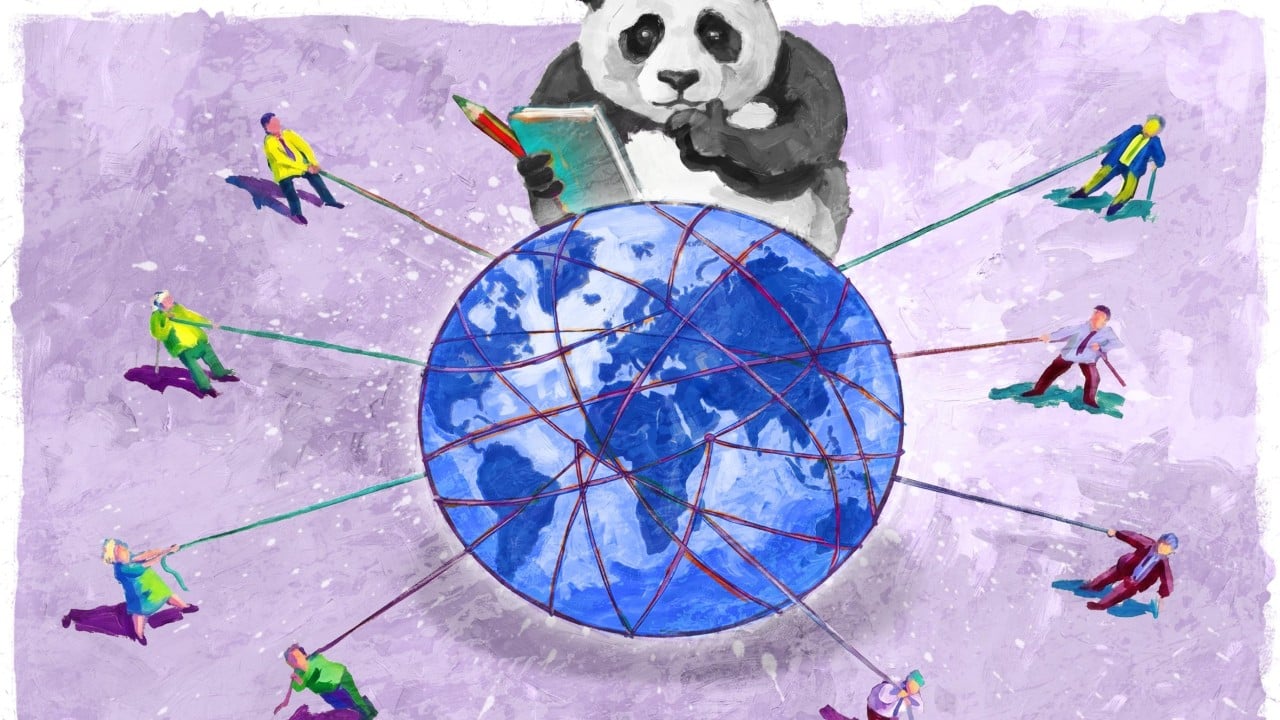
China has long championed the concept of a multipolar world order. Recently, Beijing took this a step further by providing a detailed white paper on global governance, outlining how its Global Governance Initiative should turn these principles into action. Two core ambitions were highlighted: an "equal and orderly multipolar world" and "universally beneficial and inclusive economic globalization".
The timing of these announcements is significant, as world leaders convene in New York for the 81st United Nations General Assembly, with the theme of "Restoring Trust, Managing Transformation".
While the idea of a multipolar world is becoming increasingly plausible, the term now carries the qualifier "orderly". China's vision for such an order hinges on the notion that distinct countries can maintain economic connections and coexist peacefully. This proposition is crucial for China, as a more diffuse distribution of power could increase its strategic flexibility and lessen its dependence on a single power center.
However, the erosion of hierarchy and order are not mutually exclusive; China can reap the benefits of the former while simultaneously facing the risks of the latter.
The political economy of Chinese power is intricate. Instability, whether through war or coercion, poses a threat to both China and the United States. In such scenarios, alliances, intelligence networks, and security guarantees become invaluable. However, China's influence is primarily rooted in sectors such as manufacturing, trade, infrastructure, ports, commodity flows, investment, and supply chains.
These assets operate optimally when there is peace and stability. Conversely, a turbulent world emphasizes protection over connectivity.
Historically, the post-Cold War era was characterized by an expectation that deeper economic integration would bridge political differences. Yet, today, the confidence in history having a single political destination has waned. The challenge lies in sustained coexistence. China's vision for a multipolar world, grounded in the idea that fundamentally different nations can still remain economically connected, faces the hurdle of sustaining coexistence amidst geopolitical tensions.
China's strategic interest lies in preventing insecurity from becoming the defining feature of a multipolar world. The Saudi-Iran rapprochement in 2023, brokered by Beijing, signifies a potential shift in diplomatic dynamics. However, a single diplomatic breakthrough does not guarantee a lasting order. While Beijing has articulated a framework for its preferred international order, the challenge remains in creating the necessary institutions that can endure crises.
China is increasingly aware of this gap and is considering the establishment of a regional security architecture to address such challenges.
To achieve this, China must transition from being seen as peace-loving to being peace-benefiting. This entails demonstrating that China's wealth and influence are intrinsically linked to international stability. Moreover, China must evolve into a peacemaker, capable of assisting governments in reaching agreements and establishing mechanisms to maintain these agreements amidst disruptions.
In a post-Cold War era, convergence was expected to facilitate peaceful coexistence. However, China now has the opportunity to prove that a non-convergent world can still be safe and orderly. If successful, this approach would not only challenge American power but also showcase the benefits of multipolarity in maintaining international stability.
Written by urgent.news from Reuters Business via SCMP's reporting — not their text. Machine-written — may contain errors; check the original before relying on it.