ADI helps bridge Malaysia's skills gap, says MEF
KUALA LUMPUR: Malaysia’s workforce challenge is no longer only about producing graduates, but ensuring they possess the right skills to meet the rapidly changing demands of industry.
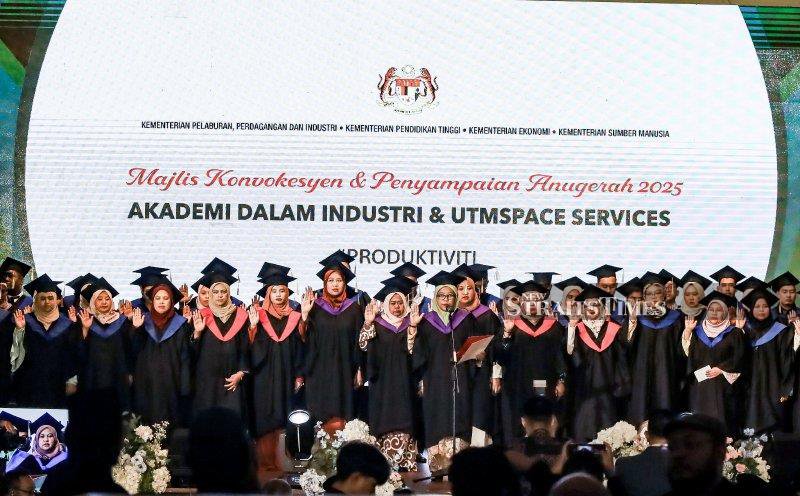
KUALA LUMPUR: Malaysia faces a workforce challenge that extends beyond merely producing graduates, according to the Malaysian Employers Federation (MEF). The federation highlighted the need for individuals to have the right skills to meet industry's evolving demands through initiatives like the Academy in Industry (ADI). MEF president Datuk Dr Syed Hussain Syed Husman emphasized that ADI could effectively bridge the gap between education and employment by integrating workplace learning with industry-recognised qualifications.
Syed Hussain noted that one major challenge for employers is the mismatch between formal education and workplace competencies. ADI addresses this by combining structured workplace learning with nationally recognized qualifications, such as the Malaysia Skills Certificate (SKM) and diploma programmes. This enables participants to gain practical experience while acquiring competencies directly aligned with industry needs.
Success hinges on continuous collaboration between employers and training providers to ensure curricula remain responsive to technological advancements, automation, digitalization, and evolving workplace requirements. Syed Hussain stressed that skills development should be demand-driven rather than solely qualification-focused. While academic qualifications remain important, employers increasingly prioritize practical skills, adaptability, problem-solving abilities, and workplace readiness.
ADI programmes are particularly valuable because they combine theoretical knowledge with practical application, producing well-rounded graduates ready to contribute from the outset. Sectors such as manufacturing, electrical and electronics, automotive, aerospace, logistics, construction, healthcare, digital technology, and green economy are expected to benefit from ADI.
The work-based learning model embedded in ADI accelerates workforce readiness and improves productivity. Syed Hussain suggested that ADI could serve as an extended talent pipeline for employers, allowing companies to evaluate trainees' technical abilities, work ethic, and adaptability before making long-term employment decisions.
However, he cautioned that retention should not be assumed and should be regularly measured as a key indicator of ADI's effectiveness. To encourage wider adoption, particularly among micro, small, and medium enterprises (MSMEs), Syed Hussain recommended measures like enhanced training grants, tax incentives, simplified administrative requirements, and support for company-based trainer development.
Written by urgent.news from New Straits Times's reporting — not their text. Machine-written — may contain errors; check the original before relying on it.