Abdelrahman ElGendy on Writing From Inside a Prison Cell
On his third night in detention in Cairo, crammed with sixty other prisoners into a four-by-five meter cell, Abdelrahman ElGendy heard the song for the first time. Belly full after being starved for three days, one of his cellmates began
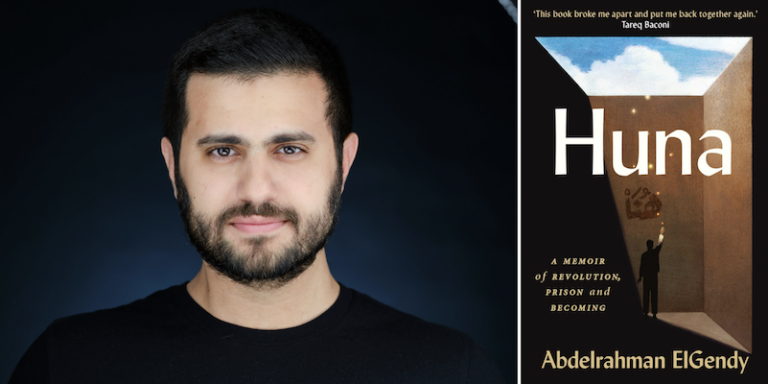
On his third night incarcerated in a cramped Cairo cell with sixty fellow prisoners, Abdelrahman ElGendy first heard the tune "Sawfa Naqba Huna," immortalized by former political detainee Ahmed Fouad Negm. The seventeen-year-old, starved for three days, felt the song's haunting melody, but remained unsure of "here."
ElGendy's memoir, "Huna," follows the six years he spent as a political prisoner in Egypt following the 2013 military coup. The tome traces his journey from overcrowded detention spaces to Egypt's infamous Scorpion prison, as he forms enduring friendships, pursues an engineering degree, and embarks on his writing career—smuggling pages in laundry bags that would later shape this book.
However, "Huna" is not a tale of resilience or hope—it is a poignant exploration of erasure and the struggle to maintain one's humanity within a system that seeks to strip it away. The opening lines read more like a manifesto than a memoir, defying traditional storytelling: "I wrote on walls; I wrote on scraps. I wrote witness in cursive letters; I wrote handles on bolted doors. I wrote around, and through, the noise, and I wrote the noise. I wrote to soothe, to numb; when the frost thawed, again, I wrote."
ElGendy's narrative is structured around the Egyptian oral tradition of 'anbara, wherein one inmate calls the entire cellblock to order from the adjacent cell. By positioning readers as fellow inmates, he diminishes the reader's role as an outside empathizer, and instead fosters a sense of mutual connection.
In the days leading up to "Huna" publication, ElGendy and I discussed the book's structure, the challenges of translating Arabic phrases, and the implications of the term "resilient." He emphasized the book's focus on the 'anbara and the complexities of rendering a text filled with Arabic expressions, while grappling with the inherent violence of the word "resilient."
Written by urgent.news from Literary Hub's reporting — not their text. Machine-written — may contain errors; check the original before relying on it.