Young Positivist writes : Waste trafficking in Ghana
Folks, in a conscious and deliberate effort to raise awareness of climate change and its devastating effects on humans, I have decided to discuss one critical issue that harms our health, environment, and all aspects of our existence: waste trafficking in Ghana and its hazardous effects. For many of you, you are probably familiar with the word “trafficking” because you might know about child…
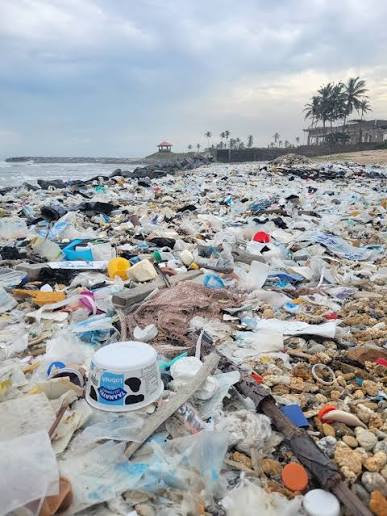
In a bid to raise awareness about climate change and its adverse effects on humans, the environment, and all aspects of human existence, the young Positivist has decided to discuss the critical issue of waste trafficking in Ghana. Though many are familiar with terms like child trafficking, human trafficking, sex trafficking, and drug trafficking, "waste trafficking" is likely a new concept for some.
However, research indicates that two primary causes of climate change are natural (volcanic eruptions, orbital changes, and solar variations) and anthropogenic (human activities). In recent times, human activities have contributed to more greenhouse gas emissions than natural causes.
While Ghana contributes less than 5% of the world's emissions, its contribution is growing rapidly due to the heavy emission activities engaged in. Proponents of this argue that economic needs—food, shelter, and comfort—are driving these activities. However, the author believes that there should be considerations for the environment and all its inhabitants.
According to the United Nations Office on Drugs and Crime (UNODC), waste trafficking is a multi-billion-dollar crime that poses significant risks to human health, ecosystems, and global economic stability. Despite its environmental impact, waste trafficking is difficult to detect and prosecute due to inconsistent regulations and weak penalties. It is not merely about illicit trade but also an organised crime that many engage in.
The author explains that illegal waste typically originates from wealthier countries, such as those in Europe and North America, and is shipped to lower-income countries in Africa and other developing regions. The exporting countries often disregard the consequences for the destination countries, prioritising their financial gains.
Criminal actors exploit loopholes in international waste regulations, disguising hazardous waste as legitimate exports or second-hand goods. Illicit waste trafficking generates around US$10 billion to US$12 billion worldwide annually. In Ghana, around 150,000 tonnes of electronic waste are shipped illegally each year.
The author highlights that Ghana, like other African countries, heavily depends on second-hand goods from other parts of the world. The lack of proper regulations and enforcement in both exporting and importing countries enables this illicit trade. Western and Ghanaian companies benefit from these loopholes and corruption. The author asks why Ghana cannot export second-hand goods to European and American markets, where stringent checks are in place.
The answer lies in the fact that these countries have mechanisms to ensure that goods entering their countries do not pose a threat to their people and the environment. In contrast, Ghana and other African countries face no such scrutiny.
Despite the environmental and health risks posed by illegal waste trafficking, the author acknowledges that it has provided jobs and income for many people in Ghana. The World Bank reports that about 27% of Ghana's population lives in poverty, and hazardous waste generates employment opportunities for its citizens. Internationally, conventions like the Basel Convention aim to regulate and control the transboundary movement of hazardous waste.
The Basel Convention, established in the late 1980s, mandates that exporting countries must obtain advance consent from receiving nations before shipping 'waste'. Ghana has ratified this convention. However, the author questions why there is no similar regulation when exporting countries send hazardous waste to developing countries like Ghana.
Written by urgent.news from MyJoyOnline Ghana's reporting — not their text. Machine-written — may contain errors; check the original before relying on it.
This story
This is one outlet's version. Read the fullest account.