Will self-flying planes transform the skies?
Autonomous crop-spraying aircraft are leading the way in pilot-free flying.
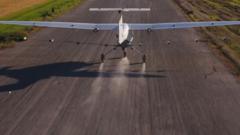
In an alfalfa field in California's San Joaquin Valley, a small crop-spraying plane is flying close to the ground without a pilot. Russ Marotzke, a flight test engineer at Pyka, explains that the pilotless plane can fly lower than a human pilot, reducing spray drift and the need for chemicals. Pyka, a start-up based in a converted WWII hangar, manufactures self-flying aircraft for jobs like crop spraying and cargo delivery.
The company aims to deploy autonomous fixed-wing aircraft, including urban air taxis, for commercial use before the eVTOL industry. While eVTOLs have captured much attention, autonomous planes are seen as the next frontier. Michael Norcia, Pyka's co-founder and CEO, believes a large fleet of passenger-carrying planes could be operational before eVTOLs.
Pyka's crop-sprayer, an electric aircraft with a 11.5m wingspan, has already been used in Brazil to spray crops. The aircraft is fully autonomous, with a computer planning the spray route and handling take-off, landing, and navigation. Autonomous flight is more challenging than autopilot, requiring sophisticated algorithms and strict safety standards.
Despite the challenges, there is potential for autonomous aircraft to address pilot shortages, improve efficiency, and reduce costs. However, concerns remain about safety and the impact on pilot jobs. Companies like Pyka and Windracers are building autonomous aircraft from scratch, while others are retrofitting existing planes.
Written by urgent.news from BBC Business's reporting — not their text. Machine-written — may contain errors; check the original before relying on it.