US Treasury’s Bessent calls on Japan to boost yen through interest rate hikes
US Treasury Secretary Scott Bessent says he believes Japan’s government and central bank will take action that leads to a stronger yen, signalling a strong chance of a Bank of Japan (BOJ) interest rate hike in September. The remarks to CNBC on Monday followed those by Bessent a day earlier, when said he expected BOJ Governor Kazuo Ueda to “do the right thing” on monetary policy to combat yen…
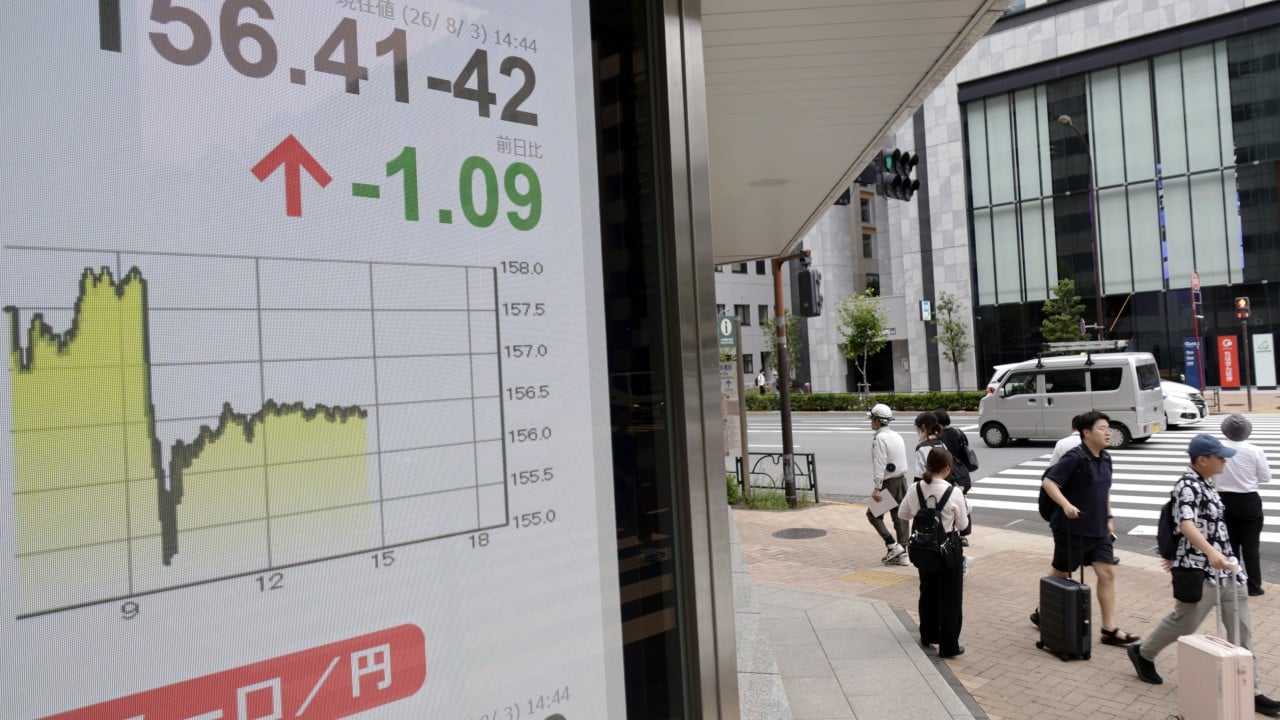
US Treasury Secretary Scott Bessent expressed confidence that Japan's government and central bank would take steps to strengthen the yen, anticipating a potential Bank of Japan (BOJ) interest rate increase in September. This statement came after Bessent's earlier remarks, in which he predicted BOJ Governor Kazuo Ueda would "do the right thing" regarding monetary policy to counteract the yen's depreciation.
Bessent claimed to possess information that was currently unknown to the market, but he reiterated his belief that Japan's government and BOJ would implement measures leading to a stronger yen.
When queried about the likelihood of a rate hike, Bessent indicated that the market had already factored this possibility into its calculations. During a Group of 20 finance leaders' gathering in Asheville, North Carolina, Bessent met with BOJ Governor Ueda and Japanese Finance Minister Satsuki Katayama. The US official, Erin Browne, reported that Bessent advocated for additional rate hikes and stressed the importance of Japan demonstrating its commitment to fiscal sustainability.
Reports suggest the BOJ may raise interest rates during its scheduled meeting on September 17-18, with some analysts anticipating a more aggressive hike than the current twice-a-year policy. A September rate increase, rather than waiting until October, could trigger market speculation that the BOJ may raise rates on a quarterly basis.
The yen's weakening has led to higher import prices and broader inflation, posing challenges for Japanese policymakers. This trend can be traced back to the BOJ's slow rate hike pace, which has maintained a significant interest rate divergence between Japan and the US.
In July, Japan and the US jointly engaged in a yen-buying intervention, aiming to prevent a sell-off in the yen and Japanese government bonds from negatively impacting global markets. Although this move did not establish a stable floor for the yen, Bessent did not view recent yen fluctuations as disorderly. He expressed Washington's stance against participating in another intervention effort to bolster the currency.
In the preceding month, Japan's Finance Ministry disclosed that its intervention efforts amounted to a record 15.4 trillion yen (US$96.4 billion). The US has not disclosed the amount of yen it purchased, but the figure is anticipated to be significantly lower.
Written by urgent.news from South China Morning Post's reporting — not their text. Machine-written — may contain errors; check the original before relying on it.
This story
This is one outlet's version. Read the fullest account.