UPSC Mains Answer Practice — GS 3: Himalayan region’s natural hazards and typhoid control in India (Week 170)
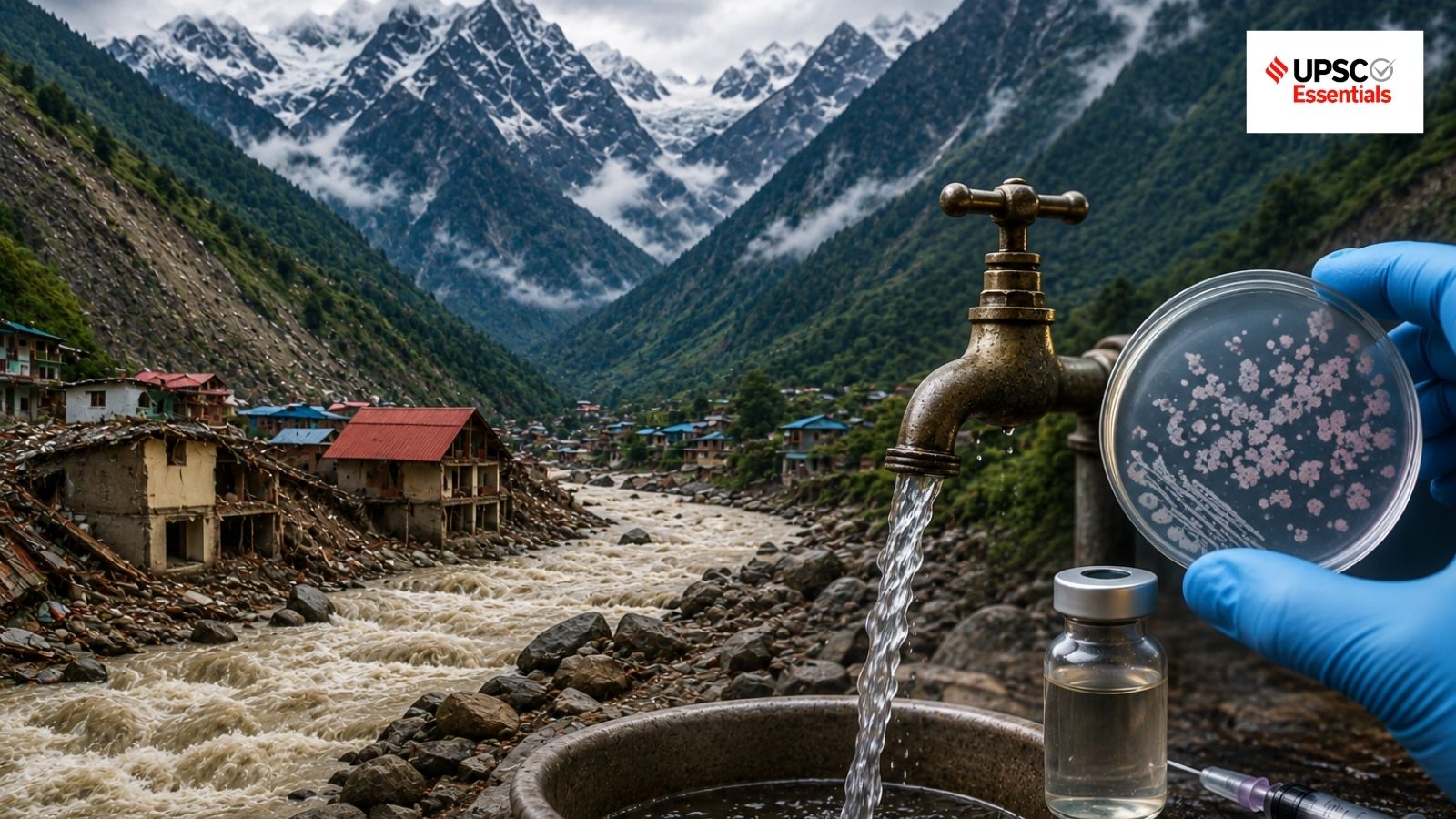
The Himalayan region faces a growing threat from cascading natural hazards, stemming from the complex interplay of glacial processes, steep terrain, and extreme weather events. This vulnerability arises from steep slopes, narrow valleys, and fast-flowing rivers, which amplify the catastrophic potential of unexpected water outbursts, landslides, avalanches, and earthquakes.
Glacial retreats and changing snow conditions contribute to the formation of glacial lakes, increasing the risk of glacial lake outburst floods (GLOFs), debris flows, and flash floods. A single trigger event, such as a glacier collapse, heavy rainfall, or landslip, can initiate a chain reaction, with floodwaters carrying rocks, silt, and ice that undermine river banks, causing secondary landslides and further downstream damage.
The 2023 South Lhonak event in India exemplified this cascading effect, highlighting the vulnerability of the region. Rising temperatures and shifting precipitation patterns are altering the Himalayan cryosphere, heightening the region's susceptibility to extreme events. Rapid infrastructure development, including hydroelectric projects, tunneling, road construction, and heavy tourist traffic, further exacerbates the vulnerability of fragile environments.
Concentrations of settlements and infrastructure along narrow river valleys increase disaster losses. To strengthen disaster resilience in the Himalayan region, several measures can be adopted. These include increasing monitoring of high-risk glacial lakes, landslides, and river flows through the deployment of weather stations, river gauges, satellite monitoring, and advanced technologies like environmental seismology.
Development and settlements should be restricted in high-risk floodplains, unstable slopes, and other hazard-prone areas. Thorough cumulative and multi-hazard risk assessments must be conducted before constructing dams, hydroelectric projects, highways, and bridges. Location-specific evacuation plans, emergency exercises, and dependable last-mile warning systems should be established for vulnerable areas.
The challenges of the Himalayan region transcend political boundaries, necessitating ongoing collaboration and information exchange between India, Nepal, Bhutan, and China. This includes sharing hydrological, weather, climatic, and glacial-lake data, as well as engaging in collaborative scientific research and conducting joint emergency drills.
By combining scientific monitoring, early warning systems, risk-sensitive development, community preparedness, and cross-border cooperation, the resilience of the Himalayan region can be significantly enhanced, enabling sustainable growth in the face of escalating hazards.
Written by urgent.news from The Indian Express's reporting — not their text. Machine-written — may contain errors; check the original before relying on it.