Umsätze sinken: Sparsame Verbraucher: Möbelbranche kommt nicht aus der Krise
Steigende Kosten, zögernde Kunden und Kurzarbeit: Die Möbelbranche steht unter Druck. Selbst Branchenriese Ikea bekommt die Flaute zu spüren. Einen Lichtblick gibt es aber.
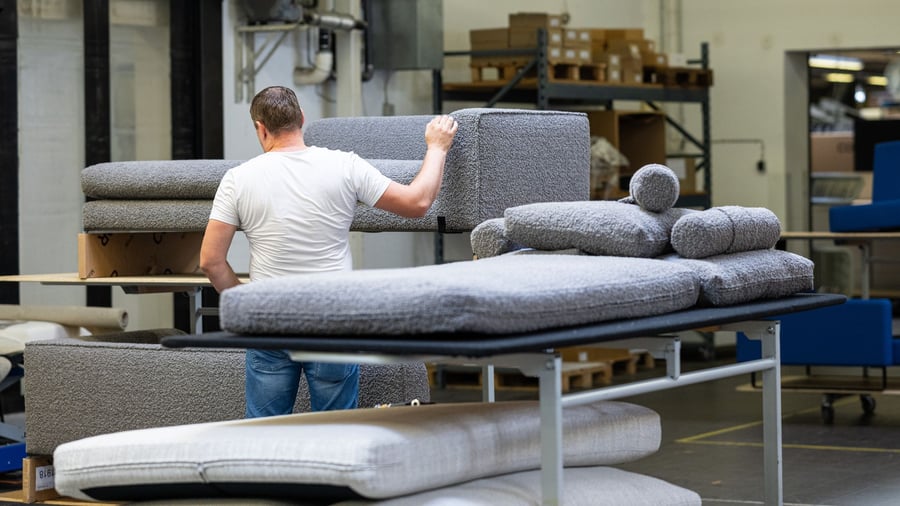
Consumer spending trends are impacting the furniture industry negatively, leading to a decline in sales according to recent reports. The German Furniture Manufacturers' Association (VDM) reported a 2.7% decrease in nominal sales during the first half of the year compared to the same period last year, totaling 7.7 billion euros. While sales of kitchen furniture increased by 1%, other categories, such as bedroom furniture, saw a 10% drop.
The industry is facing challenges due to rising consumer prices, increased spending on leisure, and the construction of new homes. Additionally, fierce international competition is putting pressure on the sector. Kitchen furniture sales are relatively positive, but bedroom furniture sales have plummeted by 10%. The domestic market has also been struggling, shrinking by 4.1%.
The outlook for the year remains gloomy, with no significant recovery expected. "Consumers are postponing larger purchases," says Jan Kurth, VDM's CEO. The furniture industry has been in decline since 2025, with sales hitting their lowest point since 2009. This decline has been exacerbated by consumers' tendency to buy less during the pandemic and to postpone bigger purchases.
The current geopolitical uncertainty and high costs for food, energy, and healthcare are further dampening consumer willingness to spend on furniture. Even Ikea, once a dominant player, is feeling the pressure from competitors like Jysk and XXXLutz, who are offering better price-to-quality ratios. Ikea has announced price cuts for about 1,500 products to attract customers.
The concentration of the industry is also a concern, with many medium-sized producers facing increased competition from larger trading partners. The VDM expects more companies to implement temporary layoffs (Kurzarbeit) to cope with declining output and rising costs. In the past years, the number of businesses with at least 50 employees in the furniture sector declined from 480 in 2018 to 398 in 2025, and the workforce decreased from over 84,600 to under 68,300.
The region of Ostwestfalen-Lippe in North Rhine-Westphalia is a major production hub for the industry. According to the VDM, 40% of member companies plan to implement temporary layoffs. The lower sales volume is coupled with higher costs, putting some firms' survival at risk. Between January and May 2024, 29 manufacturers declared insolvency in Germany, with 38 furniture businesses facing the same fate.
While the number of insolvencies has slightly decreased, the level remains high and above pre-pandemic levels.
Written by urgent.news from Handelsblatt's reporting — not their text. Machine-written — may contain errors; check the original before relying on it.
Also reported by 1 other outlet
- "Crisis not yet overcome": bicycle industry loses sales and jobs handelsblatt.com