UK turned 50 tonnes of coal waste into reef; lobsters arrived within 3 weeks
Researchers created an artificial reef from coal-fired power station waste in Poole Bay. Marine life began colonizing the structure almost immediately after its deployment. Adult lobsters and edible crabs reached the reef within three weeks of its placement. The structure attracted schools of pouting and supported reproduction for several species. This experiment showed industrial waste could…
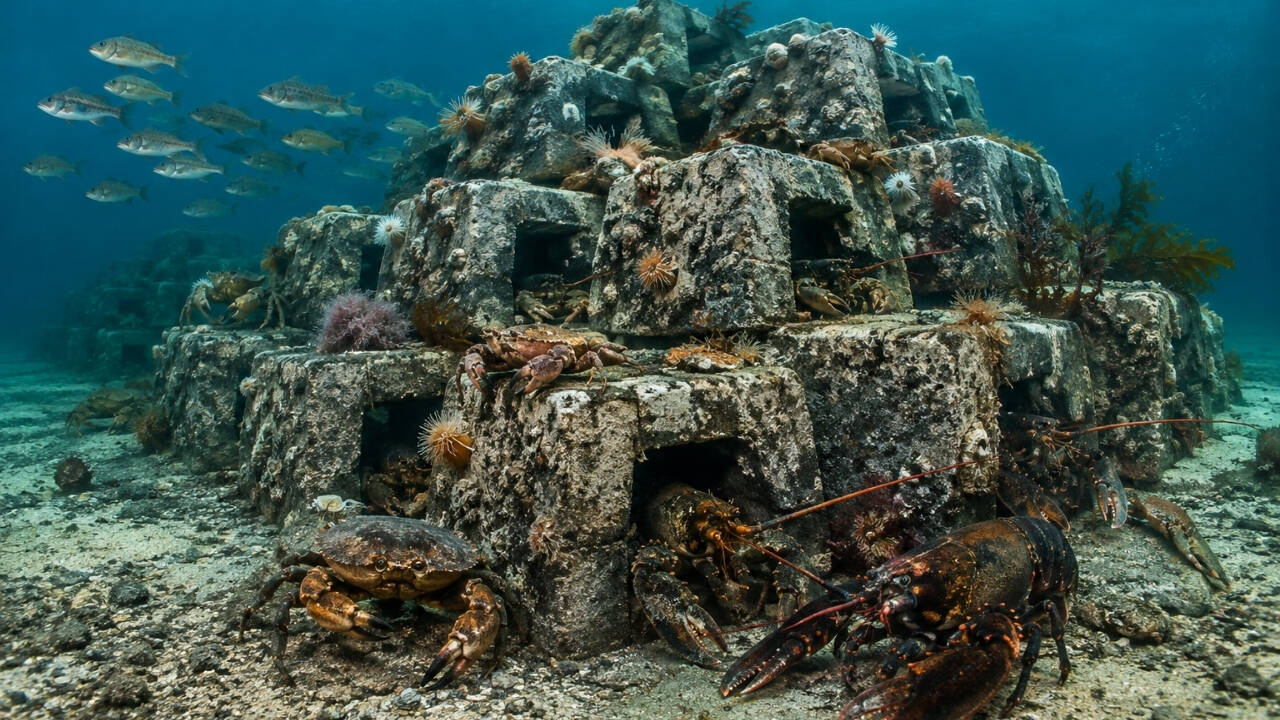
In 1989, marine biologists in the United Kingdom created an artificial reef from 50 tonnes of coal-fired power station waste in Poole Bay, off the coast of Dorset. The waste material, consisting of pulverised fuel ash and gypsum, was formed into blocks and arranged into eight cone-shaped reef units. Researchers positioned the structure 3 kilometres from natural rocky outcrops to study its potential as a marine habitat.
Within three weeks, adult European lobsters and edible crabs from nearby natural reefs migrated to the artificial reef. Over time, the blocks became covered with various marine organisms, including hydroids, bryozoans, barnacles, ascidians, tube worms, sponges, algae, and schools of pouting fish. The reef also attracted several other species, such as corkwing wrasse, lobsters, spider crabs, velvet swimming crabs, hermit crabs, whelks, and nudibranchs.
Some lobsters even established long-term residency on the structure. The experiment aimed to determine if coal-fired power station waste could be used to create artificial reefs while evaluating its environmental acceptability. The study found that different mixtures of pulverised fuel ash and gypsum produced similar biological communities, and no significant ecological problems emerged from incorporating the industrial by-product into the artificial reef.
Written by urgent.news from Times of India's reporting — not their text. Machine-written — may contain errors; check the original before relying on it.