The City Gold Built Is Being Hollowed Out From Below
Johannesburg was born from a gold rush in 1886 and grew into the richest city in Africa on the strength of what lay beneath it. Nearly a century and a half later, that same underground geology has become the city's most dangerous liability. Across Gauteng and the wider gold reef, illegal miners known as zama zamas, Zulu for " those who try" are descending into abandoned shafts by the thousand,…
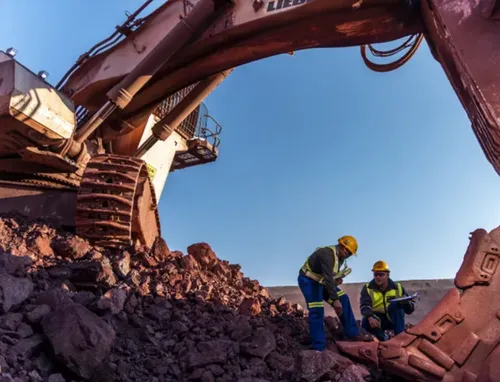
In Johannesburg, South Africa, the informal mining activity known as "zama zama" has caused significant damage beneath the city's foundations. Mining expert David van Wyk estimates there are now over 34,000 irregular miners operating in the country, whose activities have extended far beyond the mining sector itself to impact infrastructure like electricity, water, roads, and building foundations.
City Power, Johannesburg's electricity utility, has warned that underground excavation has compromised ground stability, placing substations, transformers, pylons, and transmission towers at risk of collapse. Zama zama miners are known to strip copper cabling for resale, damage water pipes, and tunnel beneath roads, often emerging near residential areas.
The physical toll of this activity is mounting, as each additional shaft dug beneath Johannesburg's substations and pipelines leads to infrastructure damage that will ultimately be costly to repair. The South African government's response has been military rather than administrative, deploying around 2,200 troops across five provinces this year at a cost of R80 million.
This operation, known as Operation Prosper, has temporarily cleared some sites, but the miners often return once troops withdraw. The most extreme case occurred at Stilfontein in late 2024, where authorities blockaded a shaft, cutting off food and water to force out an estimated 4,000 to 4,500 miners, some of whom reportedly survived on a mixture of toothpaste and toilet paper.
While enforcement-only strategies have failed to address the underlying economic issues driving zama zama mining, other countries like Ghana and Peru have taken different approaches. Ghana has spent a decade battling its own version of the crisis, known as galamsey, with military crackdowns temporarily clearing sites but failing to prevent their return.
In Peru, meanwhile, efforts to formalize the informal mining sector under regulated conditions have been implemented, though with mixed results. The economic logic behind zama zama mining is that lucrative black-market prices for gold ($160 a gram) in a country with high unemployment (near 40%) make raids alone insufficient to address the problem.
The physical toll of illegal mining in Johannesburg is significant, with each new shaft potentially costing the city more to repair than the cost of a single military operation. The government faces a choice between temporary crackdowns, as seen in Ghana, or a more comprehensive attempt at formalization, akin to Peru's efforts. Either path is necessary to prevent further damage to the city's infrastructure and address the root causes of the crisis.
Written by urgent.news from IOL's reporting — not their text. Machine-written — may contain errors; check the original before relying on it.