Starship could create more debris than an anti-satellite test if it explodes in orbit
As Starship, the world’s largest and most powerful rocket, gears up for an attempt to finally reach Earth’s orbit, experts say the risk of an in-flight catastrophe – and a cloud of debris – “needs to be of concern”. Elon Musk’s SpaceX is expected to launch the Starship spacecraft and Super Heavy booster for the launch system’s 14th test flight and first orbital test flight later this month.…
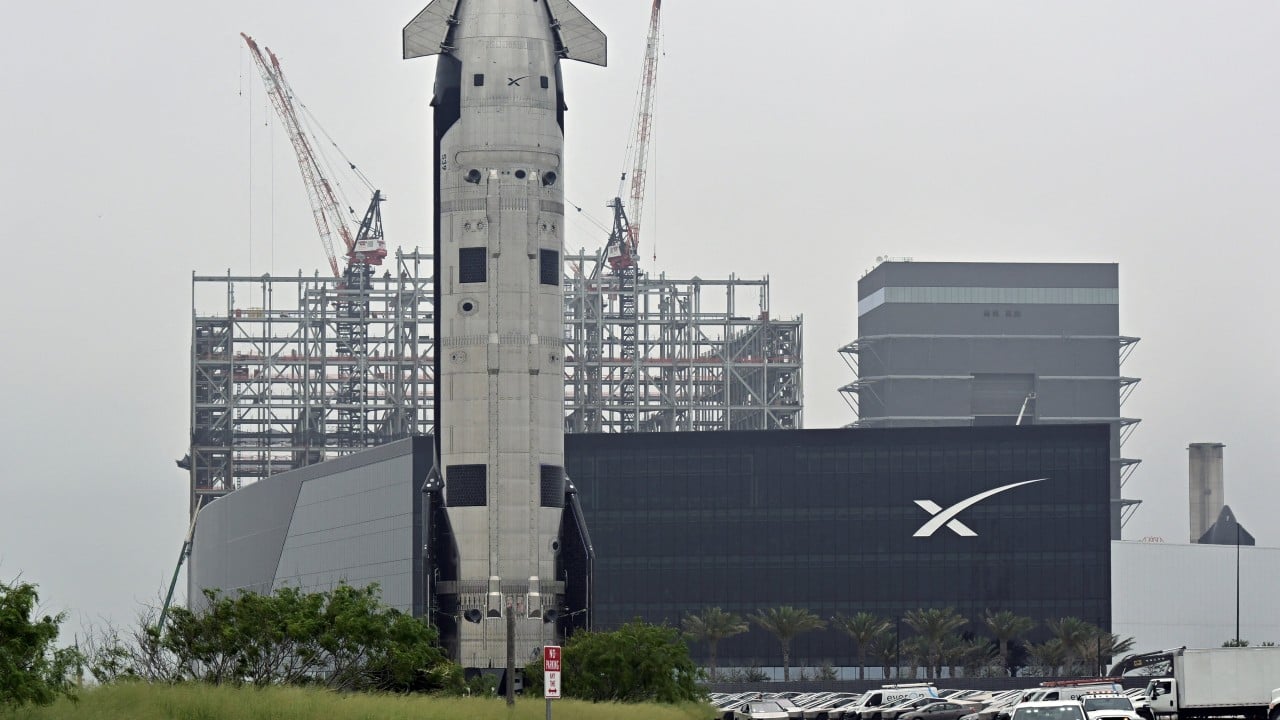
Experts warn that the upcoming Starship orbital test flight could generate more debris than a previous anti-satellite test if the rocket's upper stage were to explode in orbit. Starship, the world's largest and most powerful rocket, is set to launch later this month for its 14th test flight and first orbital test. If the Starship's upper stage were to detonate in orbit, it could create a significant amount of debris, potentially posing hazards to spacecraft and humans.
Moriba Jah, an aerospace engineering professor at The University of Texas at Austin, compared the potential consequences of an in-flight disaster to the 2021 Russian anti-satellite test, stating that the debris generated could be "a few scales larger" in size. The Russian test, which intentionally destroyed a defunct Soviet satellite, resulted in 1,500 trackable pieces of debris and hundreds of thousands of smaller fragments.
SpaceX, the company behind Starship, has been awaiting final regulatory approval from the US Federal Aviation Administration (FAA) for the test flight. The FAA regulates commercial space launches and ensures safety oversight, but it does not extend to in-orbit activities.
The reusable Starship launch system consists of a powerful 72-meter Super Heavy booster and a 52-meter, 100-tonne Starship upper stage, both designed for multiple launches and landings on Earth. A variant of the Starship, called the human landing system, is set to participate in NASA's Artemis program to return astronauts to the lunar surface.
Astronauts aboard the Orion spacecraft would be transported to and from the moon using the Starship HLS or Blue Origin's Blue Moon landing system. The Starship HLS would need to be fuelled with around 1,500 tonnes of liquid oxygen and liquid methane propellant, requiring multiple docking missions in low-Earth orbit.
While Starship has experienced several incidents in recent years, including a launch failure in April 2023 and an explosion during a test stand in June 2022, experts emphasize that the potential for debris remains a concern.
Written by urgent.news from South China Morning Post's reporting — not their text. Machine-written — may contain errors; check the original before relying on it.
This story
This is one outlet's version. Read the fullest account.