Nvidia GB300 DGX station desktop PC goes on sale for almost $91,100 — 7x costlier than a 256GB RAM Mac Studio M5 Ultra but with 748GB RAM
Supermicro's new $91,100 AI workstation offers 748GB of memory, dwarfing Apple's Mac Studio while targeting labs, not casual home users.
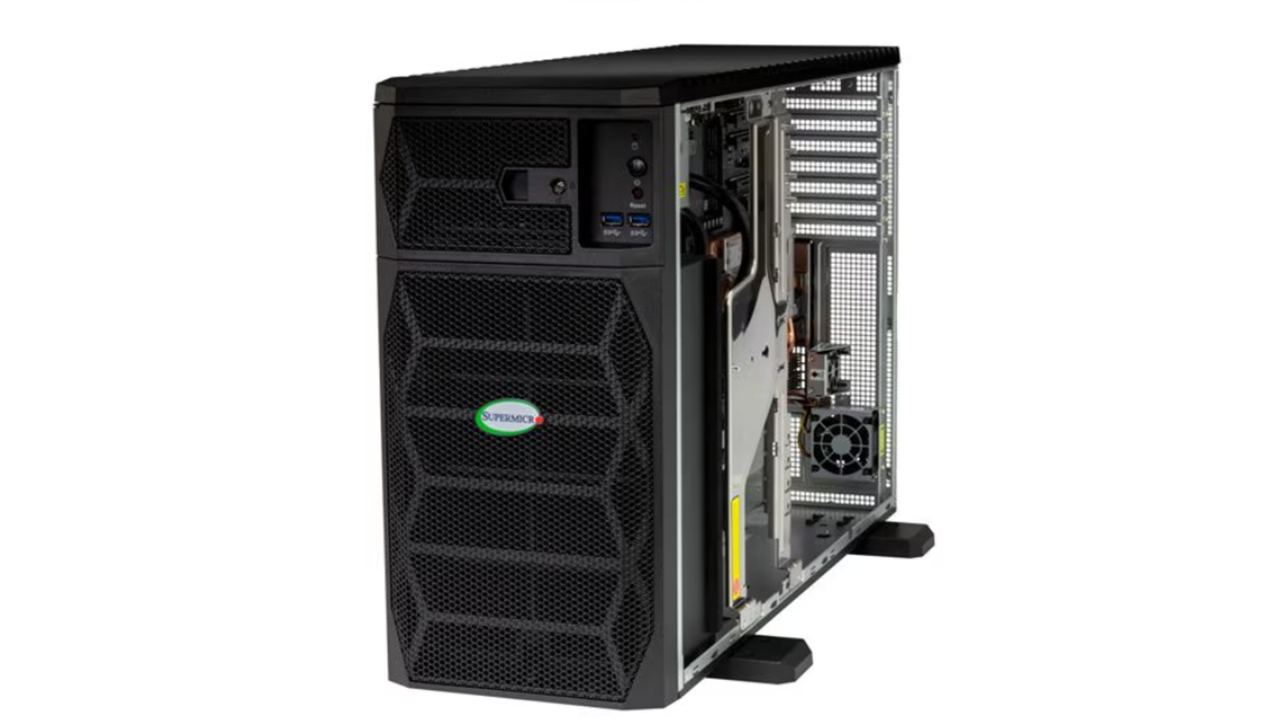
Supermicro has introduced a new workstation priced at nearly $93,000, featuring an Nvidia GB300 Grace Blackwell Ultra superchip. The workstation, priced at $92,887.47 before tax and shipping, boasts an impressive 748GB of memory, comprising 496GB of system memory connected to the Grace CPU and 252GB of HBM3e memory on the Blackwell Ultra GPU.
This configuration provides users with nearly three times the memory capacity compared to Apple's Mac Studio M5 Ultra with 256GB RAM. The workstation is designed for heavy AI workloads, pairing a 72-core Grace processor with a Blackwell Ultra GPU, enabling the support of trillion-parameter models locally. Storage options include a mix of 1.92TB and 960GB M.2 NVMe drives, with additional M.2 slots for further expansion.
Networking is handled through dual 400GbE ports, and the system offers extensive connectivity options, including USB ports, a mini display output, and IPMI support. Nvidia claims the system delivers up to 20 PFLOPS of FP4 performance, tripling the inference speeds of its H200 chip. Cooling is managed through a direct-to-chip liquid system, complemented by several fans within a compact tower or rack-mount chassis.
The system's power draw is minimal, thanks to a single 1600W supply rated at 94% efficiency. Supermicro's workstation is targeted at research labs and enterprises that require large models to run locally, rather than the home or office needs of creative professionals and general users. While Apple's Mac Studio, priced at $12,299, offers strong performance for creative work, the Supermicro workstation's focus on AI workloads and high-performance capabilities comes with a significantly higher price tag, reaching over $90,000.
Volume buyers can negotiate further discounts, making the system more accessible for research and laboratory settings.
Written by urgent.news from TechRadar's reporting — not their text. Machine-written — may contain errors; check the original before relying on it.