Nepal's rescuers navigate mud-swamped tunnels for hundreds of missing workers
The death toll in Nepal has crossed 1,000 from the deadly floods that tore through an area on the border with Tibet on August 26, and nearly 4,000 people remain missing. six days on hopes for survivors are dimming, but rescuers focused on a network of hydropower sites along the Trishuli River are holding out hope. Of the roughly 900 workers missing, some 500 people are believed to be trapped in…
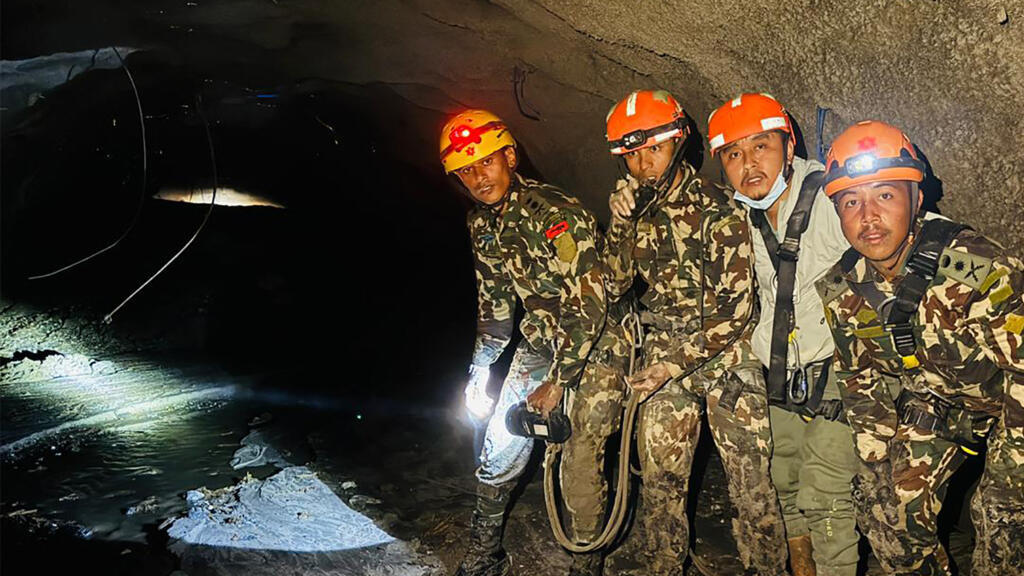
A week after a catastrophic Himalayan flood claimed over 1,200 lives, rescue teams in Nepal are making desperate efforts to locate any survivors trapped in the tunnels of hydropower projects. The flood, caused by a glacier collapse near Nepal's border with China, devastated numerous towns and valleys, leaving more than 4,200 people missing.
Amshu Kiran Shahi, a board member of the Nepal Electricity Authority, expressed confidence that there might be survivors in the tunnels, stating that they are "very confident" about the possibility of life being present due to provisions of food and water within the buildings. However, authorities warn that the likelihood of finding survivors elsewhere is diminishing.
Phanindra Paudel, a senior official at Nepal's National Emergency Operation Center, emphasized the decreasing hope of finding survivors, stating, "We pray and are hopeful. Hope is hope." The Prime Minister, Balendra Shah, reiterated the government's commitment to continuing the search and rescue operations, with the priority being to locate the missing and provide support to those affected.
Major rescue operations are underway or planned at four hydropower projects, with the strongest prospects of finding survivors at two sites where about 90 people are missing. These sites contain chambers with air supplies, and rescuers are attempting to reach around 900 missing workers. Specialized rescue teams from India, China, and the United States are involved in the tunnel rescue attempts.
Residents in affected areas, such as Nuwakot and Rasuwa, are grappling with psychological distress following the disaster, as reported by Save the Children. Many children show signs of fear and anxiety due to witnessing the widespread destruction and loss of loved ones. The government is working to restore power, telecommunications, and transport links, with 95% of telecom services restored by Tuesday.
Overall, the disaster marks one of the most significant challenges faced by human civilization, as acknowledged by Prime Minister Shah.
Written by urgent.news from Channel News Asia's reporting — not their text. Machine-written — may contain errors; check the original before relying on it.
This story
This is one outlet's version. Read the fullest account.